1982 STATISTICAL REPORT
In 1982 the Brookline Bird Club enriched its Massachu-setts Life Species List to 376 with the addition of Townsend’s Solitaire, viewed at West Tisbury on January 3rd. Dr. Bob Timberlake’s Falmouth trip made the profitable visit to Martha’s Vineyard. We actually have two life lists; the longer one includes hybrids, subspecies, color morphs, geographical races, and escaped birds. To this list we have now added the rare Sutton’s Warbler, discovered at Mt. Auburn Cemetery on May 8th, bringing the grand total to 398 identifiable birds.
During the past twelve months, BBC scheduled 229 field trips. Of these, 199 were reported, ten were weather cancelled, and 20 failed to reply. Of the reported trips, 83 were all day, 83 were morning, nine afternoon, 18 were evening, and six were weekend events.
Our Massachusetts Check List totaled 306, including Ipswich Sparrow and Sutton’s Warbler. There were 17 write-ins on the Massachusetts Audubon Society Check List as follows:
Townsend’s Solitaire West Tisbury 1/3
Golden-crowned Sparrow Holyoke 1/30
Golden Eagle Quabbin 2/14
Northern Raven Quabbin 2/14
White-fronted Goose Newburyport 2/20
Hoary Redpoll Nantucket 3/20
Western Grebe Scituate 3/28
Sutton’s Warbler Mt. Auburn 5/8
Summer Tanager Mt. Auburn 5/20
Chuck-will’s Widow Martha’s Vineyard 5/28-30
Kentucky Warbler Westport 5/30
Prothonotary Warbler Sharon 6/12
Royal Tern Plum Island 7/12
Lesser Black-backed Gull Harwichport Boat Trip 9/21
Blue Grosbeak Nantucket 10/1
Arctic Loon Plum Island 11/28
Ipswich Sparrow Plum Island 12/12
Seen in 1981, but missed in 1982 were 11 species, namely:
Black Vulture Dovekie Varied Thrush
Brewer’s Blackbird Egyptian Goose Western Kingbird
Brewster’s Warbler Red Phalarope White Pelican
Clay-colored Sparrow Ruddy Shelduck
Please notify me if you can document any of these on a 1982 Massachusetts BBC field trip.
Interesting gains over 1981 included the following:
Northern Shrike Newburyport 1/1
Townsend’s Solitaire West Tisbury 1/3
Lark Sparrow Whately 1/17
Golden-crowned Sparrow Holyoke 1/30
Golden Eagle Quabbin 2/14
Thick-billed Murre Scituate 3/28
Western Grebe Scituate 3/28
Sutton’s Warbler Mt. Auburn 5/8
Hooded Warbler Plum Island 5/15
King Rail Lynnfield 5/16
Gray-cheeked Thrush Mt. Auburn 5/28
Caspian Tern Plymouth Beach 6/5
Royal Tern Plum Island 7/12
Black Skimmer Monomoy 8/21
Orange-crowned Warbler Plum Island 9/18
Arctic Loon Plum Island 11/28
Ipswich Sparrow Plum Island 12/12
During the past year, 62 trips were scheduled in the Newburyport area, 15 being limited to Plum Island. The 57 reporting trips listed 257 species, plus Ipswich Sparrow. Missed were the Marbled Godwit, Parasitic Jaeger, Kittiwake, all alcids, Gray-cheeked Thrush, Pine, Connecticut and Mourning Warblers, Chat, White-winged Crossbill, and Clay-colored and Lincoln’s Sparrows. To offset these misses were excellent views of all the listed owls except Barn Owl, all the listed Falconiformes, and all the listed terns including Royal, Caspian, and Black Terns.
The Century Run was held on May 16th. The tally reached 84 by 7:30 a.m. in Boxford. At 11 a.m. there were 109, and at West Newbury’s check point the list reached 136 at 4:30 p.m. When the point of exhaustion came at 9:30 p.m., the grand total was an enviable 156! (And they missed four herons, both bitterns, snipe, Least Tern, Screech Owl, Nighthawk, Horned Lark, Cedar Waxwing, and Vesper, Field, and Lincoln’s Sparrows.)
Our two Nantucket trips netted 138 species including 85 Razorbills, gained from the ferryboat. The Maryland weekend tallied 132 southern species. Eight Acadian Flycatchers were heard and seen. Four Black Rails were heard, not seen.
Our Martha’s Vineyard trips gave us 120 species, with Barn Owl the favorite.
The wonderful excursion to Machias Seal Island added 117 species and “no House Sparrows”, to quote the leader. Forty-three Mt. Auburn walks responded. Six April visits were weather cancelled and we failed to list Yellow-bellied Sapsucker, Brown Creeper, Golden-crowned Kinglet, Tree, or Fox Sparrow there this year. The annual total was 115.
Six reporting Ipswich trips listed 135 species. Specialty of this area was a nesting Red-tailed Hawk, quite visible from Argilla Road. Ten Cape Ann trips reported 110 species, with Harlequin Ducks, Glaucous Gull, Purple Sandpipers, Kittiwakes, Black Guillemots, and Screech Owl being reliable favorites, and Red-bellied and Red-headed Woodpeckers, special gains.
One Cape Cod and four Monomoy trips responded, with a total of 109 species. Marshfield and the South Shore gave us 108, Manchester and Westport areas each tallied 102, New Hampshire and seven Concord, Massachusetts trips equalled 87 species. Other lists were Bridgewater 77, Bolton 76 (with Yellow-throated Vireo, Goshawk, Yellow-billed Cuckoo, and Willow, Alder, and Least Flycatchers), Berkshires 71, Wayland 70 (with Eurasian Widgeon, Turkey Vulture, and Broad-winged Hawk), Marblehead 65 (with Olive-sided Flycatcher and Chat), all boat trips together 65, Winthrop 63, Middlesex Fells 59, Quabbin 58, Millis 58, Natick 55, Falmouth 55 (with a Razorbill in the Cape Cod Canal), Saugus 51, Sharon 50, Owl Prowl 47 (with Great Horned Owl in Milton and Long-eared Owl in West Roxbury), Squantum 43, Mystic Lakes 42 (with Red-headed Woodpecker and Redpolls), Newton 41, Mt. Wachusett 37, Wells, Maine, Mt. Tom, Salem Boat Trip, and Plymouth Boat Trip each 35, Plymouth Beach 34, Belmont and Western Massachusetts trip 33, Harwichport Boat Trip 32, Lynnfield and Fresh Pond tied at 29, Boston 24, Weymouth 19, IRWS 17, Lexington 16, and our visits to Wellesley, Canton, and North Andover cancelled or unreported.
Our sea trips are very popular and each was contributory. The Salem trip in August found Sooty (one) and five Manx Shearwaters, Parasitic Jaeger, Forster’s and Black Tern, and even a Cattle Egret (flying over Salem Harbor). The Harwichport trip in September studied two Cory’s and 50 Greater Shearwaters, two Pomarine Jaegers, Parasitic Jaeger, Kittiwakes, and two Lesser Black-backed Gulls. The trip out of Plymouth on Halloween Day featured three Cory’s, 1500 Greater, and five Sooty Shearwaters, eight Manx Shearwaters, 500 Gannets, six Pomarine Jaegers, four Iceland Gulls, 300 Kittiwakes, and a Northern Fulmar.
Each month something new was added to the checklist:
January 106 May 89 September 10
February 14 June 5 October 4
March 27 July 3 November 1
April 37 August 9 December 1
Honorable mention is given for Massachusetts high totals for one day afield:
January 54 Timberlake Falmouth
February 53 Nielsen Newburyport
March 59 Giriunas Newburyport
April 62 Altman Newburyport
Davis Bridgewater
May 127 Drummond Newburyport
June 83 Prybis New Hampshire
July 63 King Newburyport
August 78 d’Entremont Newburyport
September 95 Giriunas Newburyport
October 86 Blaisdell Newburyport
November 65 Giriunas Newburyport
December 29 VanCor, Henderson Newburyport
The morning walk with the highest total was 103 species on May 16, Ipswich, led by Ida Giriunas. The afternoon walk of July 19 at Plum Island, led by Chris Corley led with 62, and the top evening walk was the Hale’s Plum Island trip on July 26. The Maryland weekend trip was tops with 132.
“Through drifting snow and cutting sleet
I’ve trudged and toiled, my friends to greet;
And tug’d beneath my lumb’ring gear,
To wish you all a Happy New Year.”
In January, birders are confident and anticipatory as we set out to log 300! Those who started at Newburyport on New Year’s Day earned 45 species toward that goal including Snowy Owl, Glaucous Gull, Boreal Chickadee, Northern Shrike, and Lapland Longspur.
Next morning, Cape Ann’s northwest winds blew fiercely and the zero wind chill was brutal. Never mind the cracking winds and tear-filled eyes. There were 11 Red-necked Grebes, Harlequin Ducks, Sharp-shinned Hawks, Purple Sandpipers, Black Guillemots, Snow Buntings, and the Red-headed and Red-bellied Woodpeckers at Lanesville Cemetery to keep us eager and rewarded.)
Birders who attended the Falmouth trip found themselves whisked to Martha’s Vineyard on January 3rd. For the Townsend’s Solitaire! Their peregrinations also gained 12 Redheads, Carolina Wren, and Fox Sparrow on the mainland.
Hamilton’s Barred Ow! was visited by Cape Ann birders on the 16th.
Three well-bundled members met Ida Giriunas on the 17th as sub-Arctic cold surged over Newburyport. It was a wonderful blue and white day; the sting of the air was exhilarating. Plum Island, closed in snow drifts, was left to the Snowy Owls. Discovery came elsewhere: Barrows’ Goldeneye, Goshawk, Short-eared Owls, ten Pine Grosbeaks, 12 Pine Siskins, and at Ipswich, Virginia Rail, Snipe, and Swamp Sparrow.
The Quabbin trip was horribly and dangerously colder that day. Getting out of the car was an adventure. One member was treated for frostbite (temperature, —5; windchill, —30). Gains were six Bald Eagles, Boreal Chickadees, Snow Buntings, Redpolls, Pine Siskins, Pine Grosbeaks, and 30 White-winged Crossbills. Plus a Lark Sparrow at Whately.
On the 23rd, Steve Grinley and the Hales shared 1 1/2 hours of birding at Newburyport before the big storm hit. Plum Island gates were closed again, anticipating the storm, so a drive up the Merrimack ensued. Twelve Common Mergansers were off the Gould-Shawmut, and the Bald Eagle coursed past. As the snow started whirling down, a Brown Creeper was left behind and all decided to scoot for home.
As the month concluded, Boston Harbor birders found 3000 Greater Scaup at Winthrop, Barrow’s Goldeneye at Hough’s Neck, 635 Bufflehead, 8000 Common Eider, 100 White-winged Scoters, and 270 Red-breasted Mergansers. A Hooded Merganser, 290 Purple Sandpipers, Redpolls, and Snow Buntings were seen too.
On February 7th, Bill Drummond was pleased to report two Saw Whet Owls and two Long-eared Owls; one Saw Whet was at Plum Island, all others at Salisbury. How we relish wild weather! The 13th was snowy and blowing, and the visibility was nil. Even the seals were ashore, huddled along Magnolia’s sea ledges. Undaunted, our leaders exuded joy as they introduced new members to six Harlequin Ducks which had scrambled onto a surf washed rock at Bass Rocks, East Gloucester.
A Golden Eagle, nine Bald Eagles, Turkey, and Golden- crowned and Lark Sparrows were BBC valentines from Quabbin and points west.
Half of the February 20th trip departed with Bill Drummond to see a Hawk Owl in Lebanon, Maine. Those who didn’t go enjoyed a brief snowfall and listed two Screech, Great-horned, two Long-eared, and two Short- eared Owls, four Red Crossbills, and five White-fronted Geese. An immature Bald Eagle and a Black Duck floated on an ice floe in the Merrimack River, off Cashman’s Park.
Ipswich Beach was barren on the 27th. Jim Berry trekked through a mile of the interior dunes and saw absolutely nothing. Best birds of his day were two Rough-legged Hawks over Nelson’s Island and two Redwings at Ipswich Shopping Plaza.
The scheduled leader for our March 7th Cape Ann trip was stranded in New Hampshire with car trouble. The Hales agreed to substitute and met the only other participant at the Fisherman’s Statue. Visibility was poor, birds scarce, and the wind was icy cold. In Dora’s words, “9 a.m., let’s go. 11 a.m., enough. End of walk.”
Nine Owl Prowlers started at 5 a.m. on the 14th, which turned out to be too late to hear owls. One Great Horned and one Long-eared were found. Two drake King Eiders at Nut Island received much attention as they fed with several Commons at close distance. Grackles, Redwings, and Robins were everywhere.
Newburyport trippers on the 14th saw five Ring-necked Ducks at the pumping station, and then listed raptors: four Red-tails, three Red-shouldered, 20 Rough-legs, Bald Eagle, four Harriers, and ten Kestrels.
A singing Field Sparrow started off the morning of the 20th. Members toured Plum Island, Rowley, and Salisbury, gaining two Little Gulls, Merlin, and six Canvasbacks.
Two Wood Ducks flew in and perched in a tree at Hardwick Center on the 21st. Five Turkey Vultures, Goshawk, seven Red-tails, Red-shouldered Hawk, six Bald Eagles, nine Turkeys, Pileated Woodpecker and two male BLUEBIRDS made this a very special trip.
Dave Brown led a splendid run from Squantum to Scituate on the 28th. Wind chill was again a problem, and birders were not allowed to explore the Squantum Airport due to tightened security. All experienced the drama of a male Great Horned Owl sitting in the open, drawing crows to him to lure them away from the female, sitting at the nest with a ball of fluff at her side. The Western Grebe was seen between Third Cliff and one-quarter mile north, close enough to note its red eye. In Milton, fun was made of the crow that flashed — white inner primaries, like that Skua some of us keep missing.
Suddenly it was Spring. On April 4th there were Snowy Egrets, Black-crowned Night Herons, Phoebes and Tree Swallows, and Fox Sparrows everywhere on Plum Island. It was warm and lovely. Then came a blizzard, and disaster. A week later the Robins were just standing on exposed bits of fields and in the roads at Byfield. As the melting progressed, 100 Snow Geese were seen on Plum Island.
An April rain stopped just in time on the 13th. The peepers started calling and the Woodcocks tuned up at IRWS in Topsfield. Dr. Al Scott was pleased to hear three to four sky dancers at one time; he feared they had succumbed to the snow. The season’s first Savannah Sparrows were also gained here.
The Wayland trip to Wash Brook Marsh on the 19th of April was a fine one. Eurasian Widgeon and an array of waterfowl in spring plumages, two Turkey Vultures, the season’s first Broad-winged Hawk, Pileated Woodpecker, our first Rough-winged and Barn Swallows, Palm Warblers, and Rusty Blackbirds were gained.
Mt. Auburn’s April 23 walk found our first Swainson’s Thrush. Black and White Warbler, gnatcatcher, Pine and Palm Warblers, and Chipping Sparrow were also listed.
On the 24th, Ida Giriunas found a Dickcissel at Mt. Auburn while the Mt. Wachusett trip counted five Turkey Vultures, Goshawk, nine Sharp-shinned, five Red-tailed, seven Broad-winged, and Marsh Hawk, Osprey, three Kestrels, and two sapsuckers.
Twenty-three members in 15 cars turned out on the first of May to prowl the quiet depths of Crooked Pond’s forest trails. Steve Grinley and Peter Alden wisely divided the group and each submitted a report. In addition to the three Louisiana Waterthrushes found, they saw Upland and Solitary Sandpipers, two Ruffs, Gnatcatchers, and Solitary Vireo.
About 130 birders came to Mt. Auburn on May 8th, to view the Sutton’s Warbler. Worm-eating Warbler, for once, took second place.
The Maryland trip was well attended. Write-ins included two Gull-billed Terns, two Summer Tanagers, 20 Carolina Wrens, 50 Boat-tailed Grackles, five Kentucky Warblers, three Yellow-throated Warblers, Brown-headed Nuthatch, 20 Prothonotary Warblers, and four Black Rails. Also seen were 30 Royal Terns, 15 White-eyed Vireos, eight Yellow-throated Vireos, three Worm-eating Warblers, and many herons and shorebirds.
Seven Cape May Warblers delighted John Nove at Eastern Point, Gloucester, on May 9th, as Craig Jackson explored Breakheart Reservation, Saugus all alone. Despite the rain, all the breeding birds were evident. Craig also listed a raccoon in a tree, a lunching woodchuck, and an unfriendly northern water snake that struck at him every time he tried to pass it.
A Peregrine Falcon at the wardens was the star of the May 15th Plum Island trip. An adult male Hooded Warbler was found. One hundred twenty-seven species later, the group went to Eagle Head, Manchester to spy out the nesting Pileated Woodpeckers.
The morning walk on May 16th toured the varied habitats of Ipswich. The 103 species ranged from Nighthawk to singing Wood Pewee and Golden-winged Warbler, to Orchard Oriole. Twenty-three Warbler species were gained in total.
The 18th at Mt. Auburn found 50 birders “straying their gladsome way to view the charms of nature”—but the advanced growth of leaves made it a song birder’s mecca only.
At Plum Island the Canada Goose goslings were little yellow balls of fuzz, and 100 species were gained: Louisiana Heron, Gallinule, Wilson’s Phalarope, Black-billed Cuckoo, and at Pikes’ Bridge Road, the Golden and Blue-winged Warblers.
John Andrews found the Mt. Auburn songshop to be a great success. “Twenty-two participants listed 43 species and sharpened their skills in that leafy domain.”
On May 22 there were a Willet at Plum Bush, Ruffed Grouse at Pikes’ Bridge Road, and excellent looks at both bitterns at Plum Island’s South Pool. A gorgeous Golden Plover ran amid the dandelions in the pasture at Green Street, Newbury.
Rod Sommers led 40 persons through Mt. Auburn on the 22nd. Most were beginners and the walk was a relaxed, happy occasion — with time to enjoy the Great Horned Owl in the dell and to study the Swainson’s Thrush and the jeweled colors of the Scarlet Tanager, Rose-breasted Grosbeak, and Indigo Bunting.
It rained as May drew to its conclusion. Some trips were poorly attended but birds were available, like a Mourning Warbler at Mt. Auburn. Nesting Least Terns were observed at Dartmouth, plus 16 Ospreys, Whimbrel and Willet, four Carolina Wrens, three White-eyed Vireos, and a Kentucky Warbler.
On the 31st, with a light drizzle evaporating as it fell, Eliot Taylor told the 10 persons on his Natick walk that 80% of birdwatching was bird-hearing. To prove his point he sought out a singing House Finch only to prove it was a first year male Orchard Oriole. He followed another singing oriole only to find it was a Warbling Vireo; a second Warbling Vireo turned into another Orchard Oriole. A memorable exercise. A phoebe, perched in the open, wasn’t tail-wagging. Some thought it was a Pewee. Not in an open field, decided Eliot. The scope revealed an Olive-sided Flycatcher. Finally someone heard a cuckoo calling. Looking up, all saw two elongated ducks coming over the trees. What were Common Loons doing in Natick on the 31st of May? Eliot still wonders about that. His Natick walks are a grand way to learn birding, and his reports are always interesting.
On June 5th, BBC explored Monomoy. The results: Oystercatchers, Willets, 100 Red Knots, Marbled Godwit and a study of terns. In all, ten Arctic, one Roseate, two Least, and 2000 Common Terns were compared. The Portlandica terns were isolated: four Arctic, four Common, and one Roseate.
Twelve members hiked Plymouth Beach for two Oystercatchers, 300 Common, six Arctic, six Roseate, 20 Least, and a Caspian Tern on the same day; and two members walked Ipswich Beach on the evening of June 7th. Binoculars were useless in the teeth of a gale, but they were dressed for the rain and said they enjoyed it thoroughly. The dunes were flooded, but out of the wind they managed to hear two Catbirds and a Towhee singing, giving a grand total of nine species. There were 12 Least Terns on the beach.
A male Prothonotary Warbler was seen feeding the nesting female at Moose Hill, Sharon on June 12th.
Mt. Greylock was sunny for a change and Ravens were seen and heard three days in a row near the Sperry Camp Ground. Five were in view at one time. The trip was profitable with eight Yellow-bellied Flycatchers, four Winter Wrens, and a variety of nesting warblers and thrushes. Most interesting was a subadult Pine Grosbeak.
Our New Hampshire trips were fun, with a moose almost as enjoyed as the Black-backed Three-toed Woodpeckers and singing Gray-cheeked Thrush. Dick and Dora Hale had yet another trip with 3 1/2 hours of birding and 1 1/2 hours sitting in the car due to pouring rain. June 21st, during the supper hour at Plum Island, everyone listened to the news that a son had been born to Lady Diana and Prince Charles. The thunder and lightning storm came over like a 41-gun salute. In addition to Cattle Egret, adult Yellow-crowned Night Heron, and a family of Virginia Rails, there were seven rabbits, a muskrat, and a deer. The Whippoorwill song at Newbury closed the evening.
Overcast weather on the Millis Bird and Butterfly walk kept most of the butterflies out of view. There were Common Sulphur, European Cabbage, Indian and Peck’s Skippers, and Mourning Cloak caterpillars, and for birds, Bobwhite, 200 Bank Swallows, and three Grasshopper Sparrows.
July 4th birders went to Pine Hill, Sharon, to hear the Hermit Thrush at Evensong.
The trip to Machias thrilled members with 800 Razorbills, eight Thin-billed Murres, 1600 Puffins, 15 Black Guillemots, Pomarine Jaeger, and Gray Jays, Northern and Black- backed Three-toed Woodpeckers, and many other joys.
Jim Foley’s Plum Island evening walk was looking for Royal Terns. Finding three of them on the beach near Emerson’s Rocks was a great thrill. July 12th seemed a good time to debate the field marks of Long-billed Dowitchers, from the top of the tower, for much of the evening.
Great Meadows was hot and muggy with excellent views of 16 Virginia Rails, three Sora, four Gallinules, and two Willow Flycatchers, punctuated with the calls of the Long- billed Marsh Wrens.
Two “kangaroo” mice hopped across the Plum Island road on the eve of the 26th.
A gorgeous sunset and cool breeze at the tower top finished the trip as an overhead flight of swallows, terns, ibis, egrets, and herons drew their separate patterns against the orange sky. A superb evening. A heavenly glory with us humans in the glow.
On August 7th, Wayland birders saw a red fox walking through a corn field and discovered a Solitary Sandpiper.
The Least Bittern pleased members on the 14th as Plum Island offered life birds to several newcomers. Whimbrel grazed in the field, Little Gull winged darkly over the harbor and 12 Hudsonian Godwits were identified.
The glamorous birds were at Monomoy; all the large shore birds, and terns, and Black Skimmers.
The Salem boat left the dock with every seat taken. It was a grand day with congenial people and a proverbial banquet of portable food was enjoyed all day. There were whales to watch and good birds, aforementioned. Highlights were the Bay-breasted and Cape May Warblers which flew aboard at sea and perched on the people. Some life pictures were taken to prove how difficult it is to identify a bird in the hand.
September 4th dawned and three good birds were reported on Plum Island. The trip stopped at each spot and saw all three: Baird’s Sandpiper, Peregrine Falcon (perched), and Raven.
The family of Mute Swans at Clark’s Pond, Ipswich included three grown young. A raptor, eating a bird on a tree in the open at Miles River, was finally identified as a Merlin.
Wally Van Cor’s trip to Plum Island saw a Merlin on the 11th, wearing an orange leg band.
Our Hawk watch at Mt. Wachusett drew a hot and miserable day on the 12th. Paul Roberts was less than excited by the sketchy showing. The list was 13 Turkey Vultures, Goshawk, 18 Sharp-shinned, two Red-shouldered and 11 Broad-winged Hawks, Osprey, and a Kestrel. Mt. Tom on the 19th had a good flight of Broad-wings with 480, but only four Turkey Vultures, 20 Sharp-shinned, Coopers, two Red-tailed and Marsh Hawk, and two Kestrels.
George Gove experienced a first for the Newburyport area, waiting for the Salisbury drawbridge! Good birds on the 25th were four Merlins, two Western Sandpipers, 13 Water Pipits, and ten Sharp-tailed and a Seaside Sparrow.
A Yellow-breasted Chat lurked in Marblehead Neck Sanctuary on the 28th.
October featured the Nantucket Weekend. It was cold and windy and Edith Andrews was saying she had not banded many birds at all, in fact it was her worst migration in some years. BBC worked for 108 species. Best birds were Northern Shrike, Connecticut Warbler, Blue Grosbeak, and Vesper and Lark Sparrows.
On October 10 Plum Island birders flushed a Great Horned Owl in the New Pines, viewed another Merlin (perched), saw the Peregrine flying, and encountered both kinglet species everywhere. Winter Wren turned up at Salisbury when sparrows were being counted: 20 Savannah, 25 Juncos, eight Chipping, Field, eight White-crowned, 35 White-throated, Fox, four Swamp, and 20 Song Sparrows were tallied.
A Great Meadows trip welcomed newcomers on the 16th. A Questar scope was examined. The foliage was magnificent as the usual bird residents were pointed-out. Four Pied- billed Grebes and three Ospreys were featured.
The new reservoir behind Cherry Hill Nursery drew members on October 30th. The reason: 450 Ring-necked Ducks were there. Thirty Red-throated Loons were together off Emerson’s Rocks, Plum Island. A Tree Sparrow and 90 Snow Buntings reminded all on this Indian summer day that the cold season was lurking not far away.
In November, “a few prosaic days this side of snow”, members wondered over nine Cattle Egrets at Maplecroft Farm in Ipswich. Reverse migration intoned a knowledgeable voice.
Off Winthrop the ducks were rafting in Boston Harbor again. One thousand Buffleheads, 100 Common Eider, and hundreds of scoters were there on the 7th, along with 30 Purple Sandpipers and 15 Laughing Gulls taking a last look around.
The marshes turned to gold, the sky was blue with puffs of white clouds, and members felt sad—because there were flocks and flocks of interesting-looking shore birds on the interior fields at Maplecroft Farm, Ipswich and they were too distant to identify the birds. And out of bounds.
On the 27th there were five Harlequin Ducks seen at Cape Ann, plus a Cooper’s Hawk, perched and flying with crows.
December called at Plum Island but birds were scarce due to the presence of many hunters off Plum Island and Salisbury. The red berries of the black alder glowed in the swamps and holiday season was in the air. A late Ruddy Turnstone was seen on the 5th as birders recounted Boston Harbor waterfowl, 725 White-winged Scoters, 8000 Common Eiders, and not a King Eider to be seen.
A Red-phased Screech Owl snuggled in a pine tree in Manchester, saving the monotony of the month. December was rather flat, after a humdrum fall.
When it gets this way I turn to a good book. After watching three Ipswich Sparrows at Plum Island on December 12, I remembered the comments of Charles Wendell Townsend in his Birds of Essex County, published by the Nuttall Ornithological Society in 1905. He had a particular interest in the Ipswich Sparrow and suggested looking for it between late October and the end of December, when he found 25 to 30 in one day! First discovered by Mr. C. J. Maynard and collected on December 4, 1868 in the Ipswich dunes, it was thought to be a Baird’s Sparrow until October 1870, when it was determined to be something new. In 1872 it was named the Large Barren-ground Sparrow, but the name Ipswich Sparrow clung as interest in the bird grew. In May 1894, the nesting sites on Sable Island off Nova Scotia were discovered by Dr. Jonathan Dwight, Jr. He published his findings in August of 1895 and remarked that island natives knew it as the Gray Bird. The bird books and official check lists now teil us the Ipswich Sparrow is a race of the Savannah Sparrow. By any name, the BBC greeted it most affectionately as the month of December also became history.
Mary Lou Barnett, Statistician
BBC 7 Seas Whale Watch Trip Report
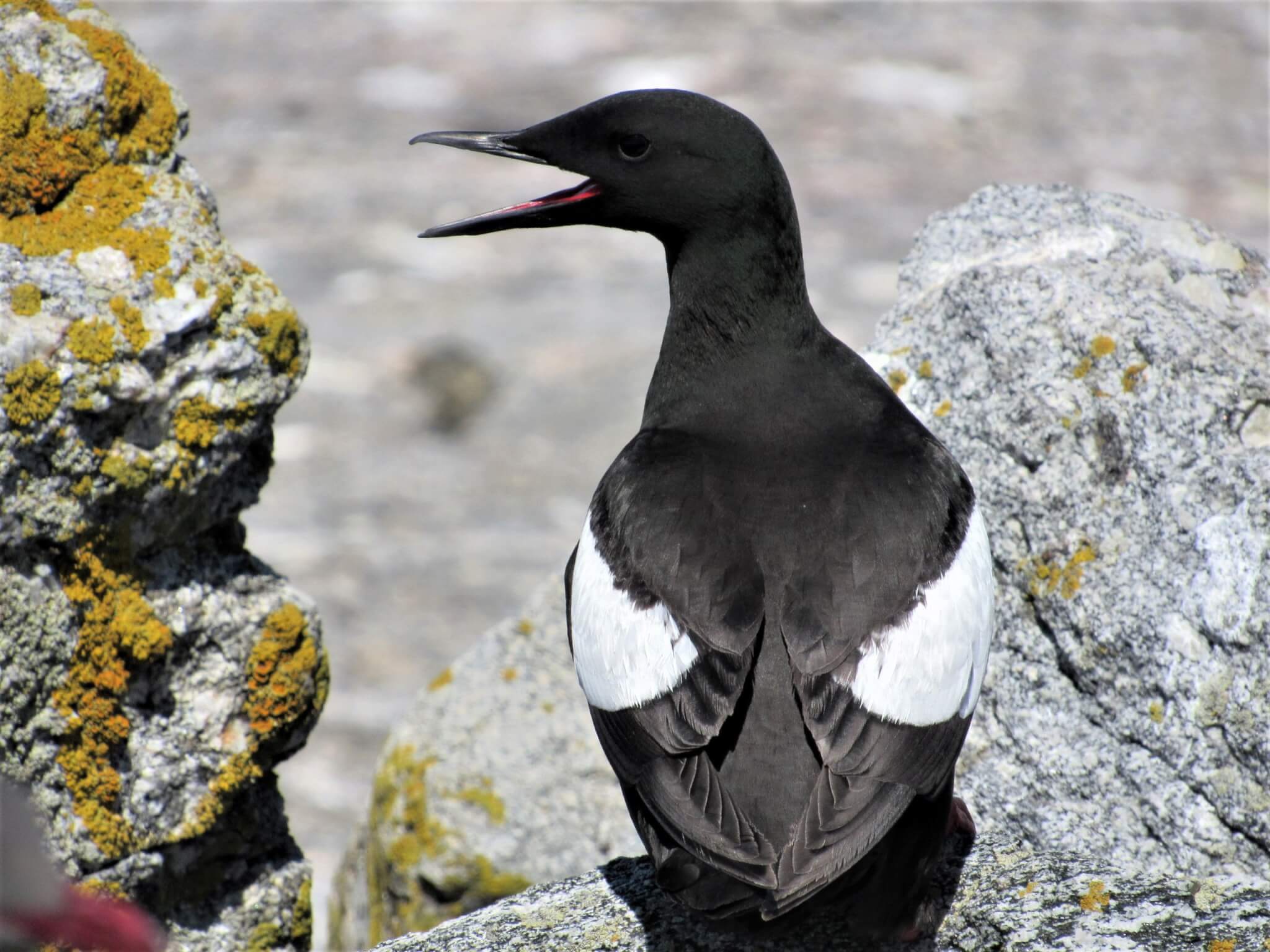
Brookline Bird Club’s 7 Seas Whale Watch Trip Report, 2024 Photo: Black Guillemot, Johnny Owens On a beautiful Saturday morning July 27, 46 club members and friends boarded the 7 Seas sailing vessel Privateer IV out [...]
BBC 2024 trips to Lake Umbagog, NH
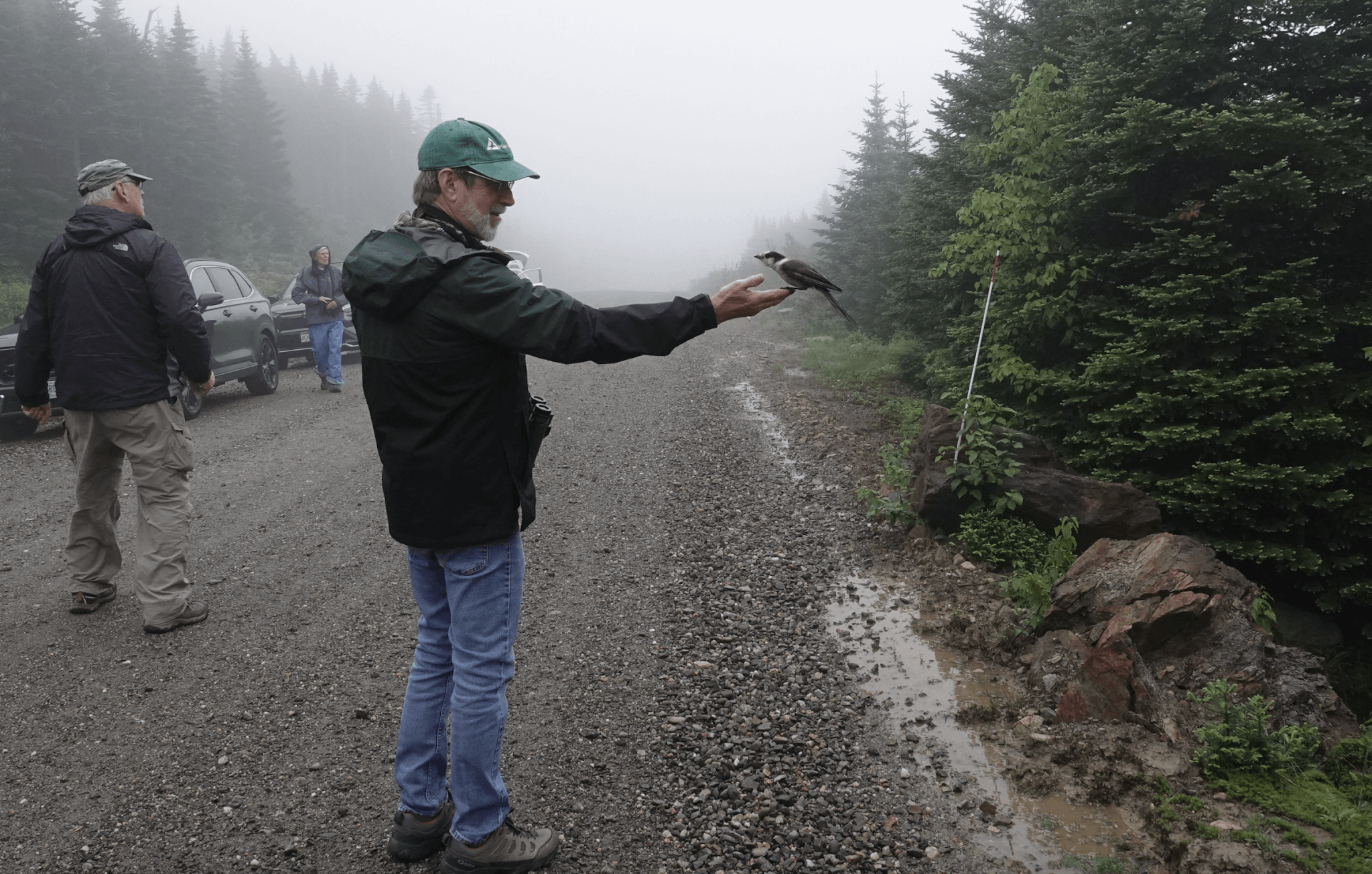
Brookline Bird Club’s 2024 Trips to the Lake Umbagog, NH Region - In early June two groups of BBC members had the opportunity to explore the region near Lake Umbagog in northern New Hampshire. We [...]
Celebrating Black Birders Week!
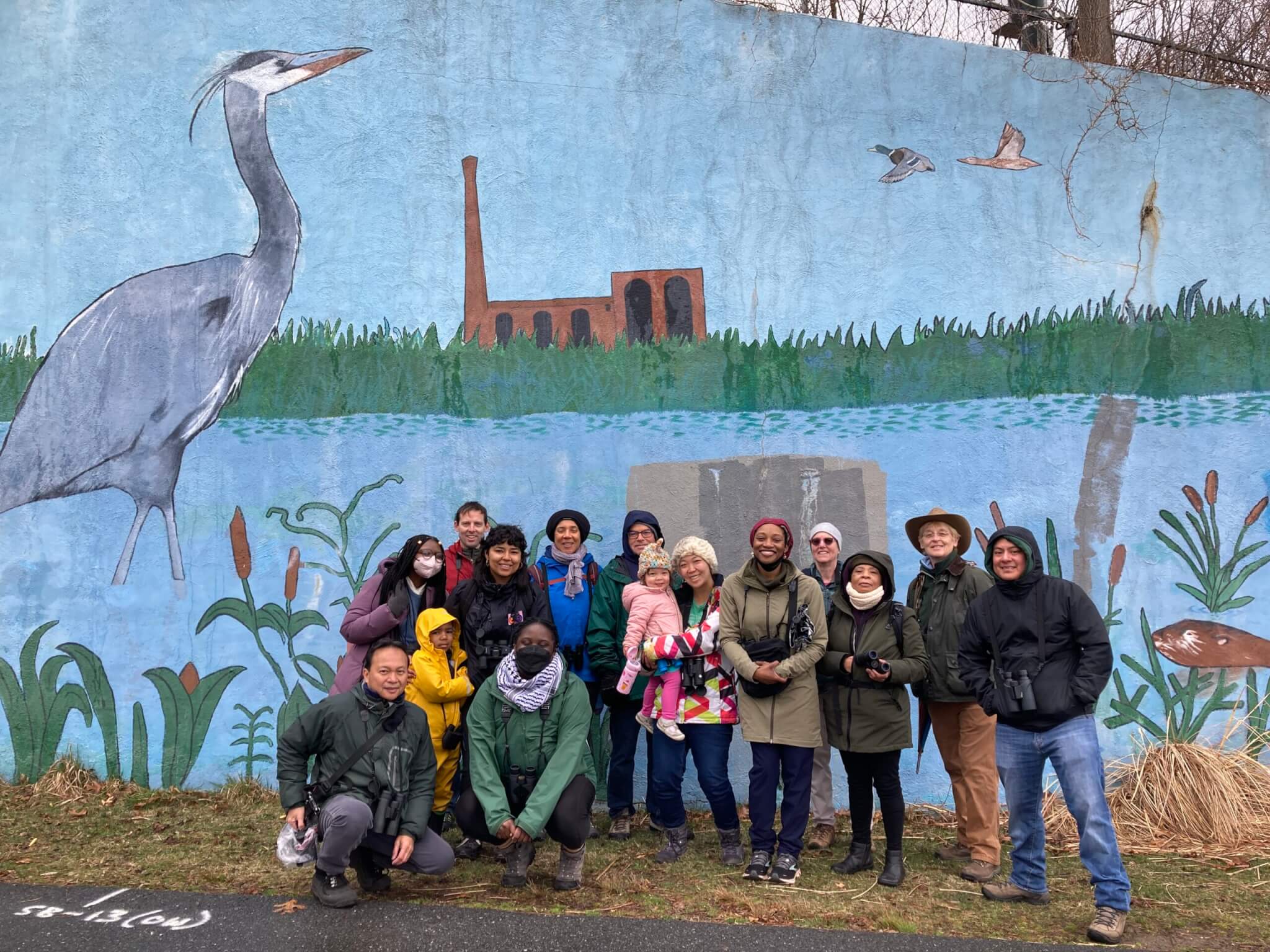
Celebrate Black Birders Week Sunday May 26 - Saturday June 1, 2024 Black Birders Week is a week-long series of virtual and in-person events to promote equitable access to nature, to highlight Black nature enthusiasts, and to increase [...]
2024 BBC scholarship winners
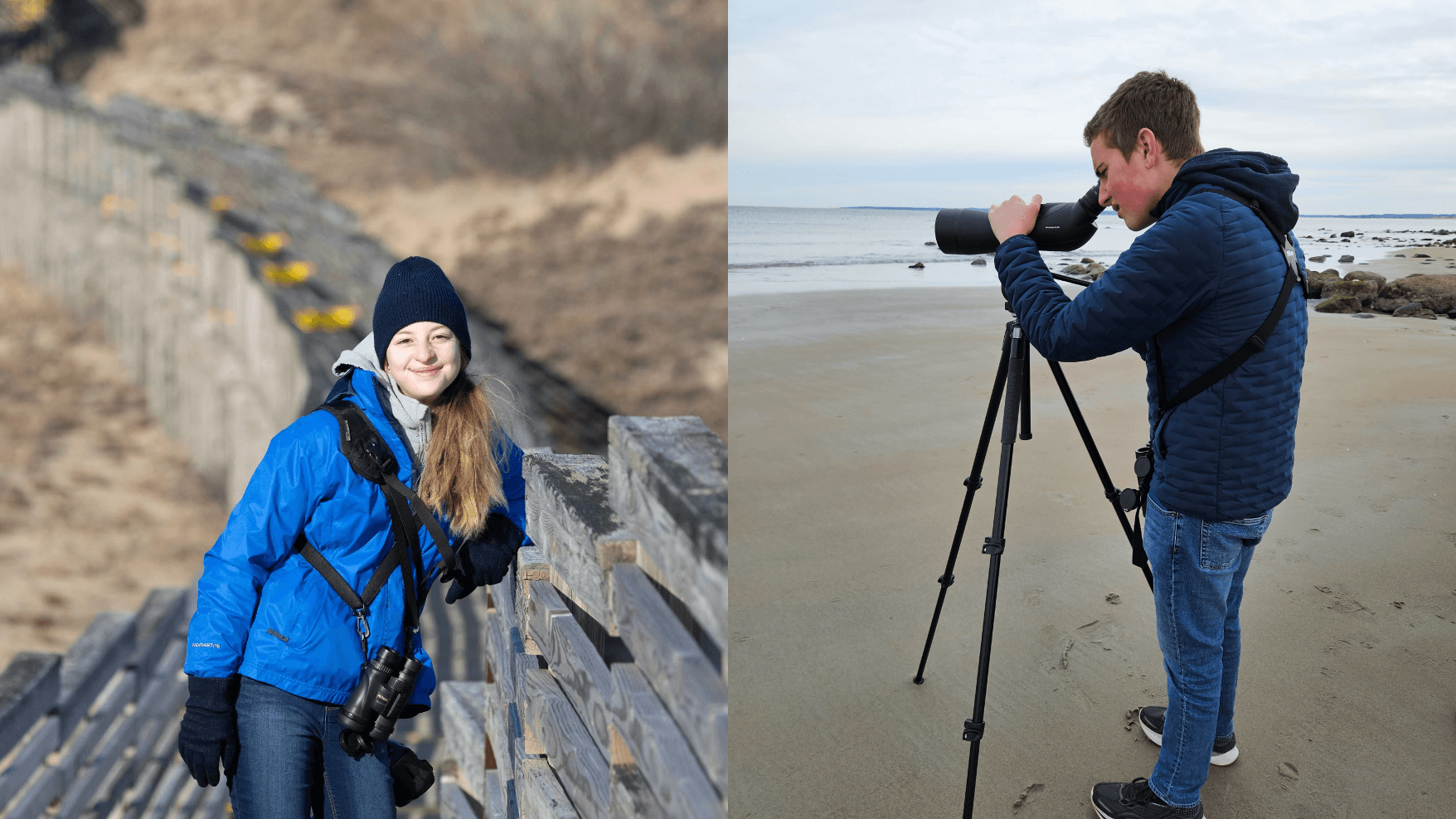
Congratulations to our 2024 BBC Scholarship winners, Evelyn and John! The Brookline Bird Club Conservation and Education Committee is pleased to announce our two annual Bill Drummond Young Birder Scholarship recipients, Evelyn Jones of Lunenburg [...]
Shorebirds and Horseshoe Crabs need your help!
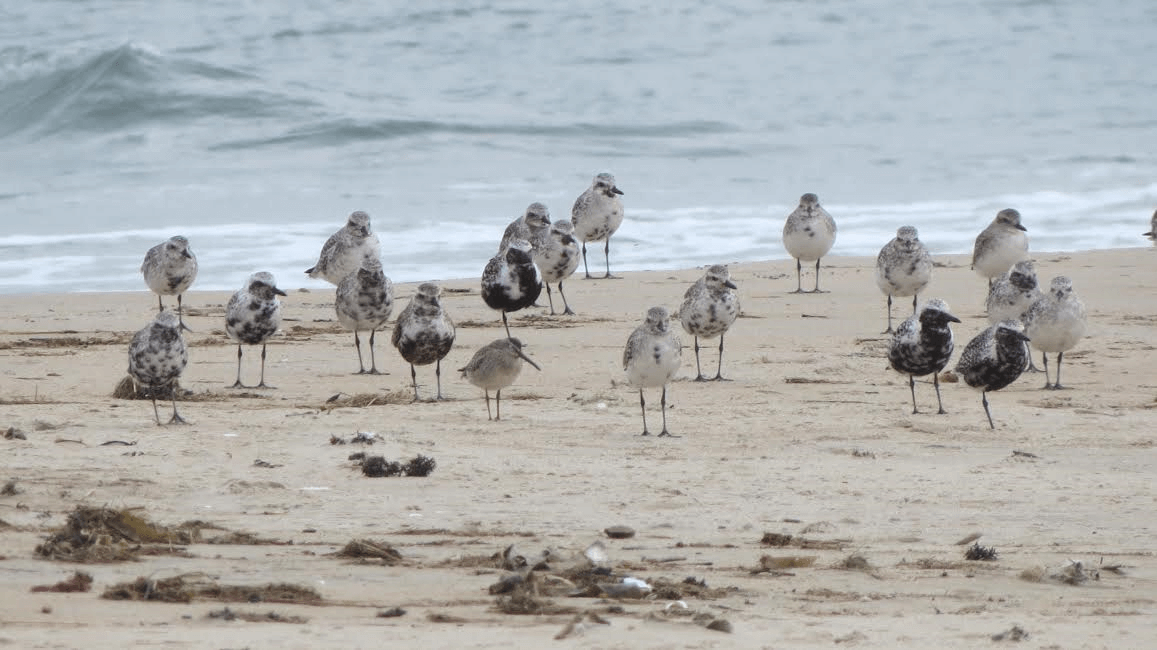
Interested in taking action to protect horseshoe crabs in Massachusetts? Migrating shorebirds depend on their eggs for critical migration fuel and there are multiple ways you can get involved as a concerned citizen: Take [...]
Nuttall Club special event with Peter Kaestner
Peter Kaestner in his Search for 10,000 Species of Birds in the World - A Special Event Sponsored by the Nuttall Ornithological Club Peter Kaestner after seeing his 10,000th world bird species in the Philippines. [...]
BBC 7 Seas Whale Watch Trip Report
Brookline Bird Club’s 7 Seas Whale Watch Trip Report, 2024 Photo: Black Guillemot, Johnny Owens On a beautiful Saturday morning July 27, 46 club members and friends boarded the 7 Seas sailing vessel Privateer IV out [...]
BBC 2024 trips to Lake Umbagog, NH
Brookline Bird Club’s 2024 Trips to the Lake Umbagog, NH Region - In early June two groups of BBC members had the opportunity to explore the region near Lake Umbagog in northern New Hampshire. We [...]
Celebrating Black Birders Week!
Celebrate Black Birders Week Sunday May 26 - Saturday June 1, 2024 Black Birders Week is a week-long series of virtual and in-person events to promote equitable access to nature, to highlight Black nature enthusiasts, and to increase [...]
2024 BBC scholarship winners
Congratulations to our 2024 BBC Scholarship winners, Evelyn and John! The Brookline Bird Club Conservation and Education Committee is pleased to announce our two annual Bill Drummond Young Birder Scholarship recipients, Evelyn Jones of Lunenburg [...]
Shorebirds and Horseshoe Crabs need your help!
Interested in taking action to protect horseshoe crabs in Massachusetts? Migrating shorebirds depend on their eggs for critical migration fuel and there are multiple ways you can get involved as a concerned citizen: Take [...]
Nuttall Club special event with Peter Kaestner
Peter Kaestner in his Search for 10,000 Species of Birds in the World - A Special Event Sponsored by the Nuttall Ornithological Club Peter Kaestner after seeing his 10,000th world bird species in the Philippines. [...]
BBC 7 Seas Whale Watch Trip Report
Brookline Bird Club’s 7 Seas Whale Watch Trip Report, 2024 Photo: Black Guillemot, Johnny Owens On a beautiful Saturday morning July 27, 46 club members and friends boarded the 7 Seas sailing vessel Privateer IV out [...]
BBC 2024 trips to Lake Umbagog, NH
Brookline Bird Club’s 2024 Trips to the Lake Umbagog, NH Region - In early June two groups of BBC members had the opportunity to explore the region near Lake Umbagog in northern New Hampshire. We [...]
Celebrating Black Birders Week!
Celebrate Black Birders Week Sunday May 26 - Saturday June 1, 2024 Black Birders Week is a week-long series of virtual and in-person events to promote equitable access to nature, to highlight Black nature enthusiasts, and to increase [...]
2024 BBC scholarship winners
Congratulations to our 2024 BBC Scholarship winners, Evelyn and John! The Brookline Bird Club Conservation and Education Committee is pleased to announce our two annual Bill Drummond Young Birder Scholarship recipients, Evelyn Jones of Lunenburg [...]
Shorebirds and Horseshoe Crabs need your help!
Interested in taking action to protect horseshoe crabs in Massachusetts? Migrating shorebirds depend on their eggs for critical migration fuel and there are multiple ways you can get involved as a concerned citizen: Take [...]
Nuttall Club special event with Peter Kaestner
Peter Kaestner in his Search for 10,000 Species of Birds in the World - A Special Event Sponsored by the Nuttall Ornithological Club Peter Kaestner after seeing his 10,000th world bird species in the Philippines. [...]
News Categories
Upcoming Field Trips
Field Trips / Events
-
-
Fall Meeting with Scott Weidensaul: The Return of the Oystercatcher – Saving Birds to Save the Planet
Harvard University Geological Lecture Hall 24 Oxford St., Cambridge, MA, United StatesPlease join us on October 23 for our in person Fall Meeting. The evening begins with a social hour at 6:30. The program starts at 7:30 with announcements, a short presentation by our 2026 Hog Island Scholarship winners, and a talk by author Scott Weidensaul – “The Return of the Oystercatcher – Saving Birds to [...]
-
Nahanton Park, Newton and possible other nearby locations
Newton - Nahanton Park 507 Winchester St, Newton, MA, United StatesWe will search for sparrows and other fall migrants at Nahanton Park and a possible other location to be determined nearer the date of the trip.
-
Cumberland Farms Fields River St. Entrance
Halifax - Cumberland Farms - River St 10 River St, Halifax, MA, United StatesWe will walk about 1.5 miles on gravel paths in search of late fall sparrows. This is usually a good spot for Lincoln’s and Clay-colored Sparrows. We never know what else might show up. I will arrive early to listen for Great Horned Owls.
-
Captain John’s Half-Day Pealgic
Plymouth - Captain John's Whale Watching Tour Company 10 Town Wharf, Plymouth, MA, United StatesThe BBC has chartered a private pelagic trip from Plymouth out to deep waters off Stellwagen Bank and beyond. This trip is cosponsored with the South Shore Bird Club and the Cape Cod Bird Club.
-
CANCELLED Fresh Pond Reservation (Early Birders Series) CANCELLED
Cambridge - Fresh Pond - Lusitania Meadow entrance 615 Concord Ave, Cambridge, MA, United StatesCanceled due to the leader being unavailable. Look for future trips with Wyatt leading. Join fellow birders in their 20s-30s as we visit Fresh Pond Reservation! Located in the northwest part of Cambridge, Fresh Pond is home to 162 acres of space consisting of forests, meadows, wetlands, and open water. As we navigate [...]