
BBC August 24-25 Overnight Pelagic Report
This news story is from the eBird trip report filed for the the BBC’s overnight pelagic aboard the Helen H out of Hyannis to the edge of the continental shelf at Hygrographer Canyon. Read the original eBird trip report here.
Many thanks to overnight pelagic organizers Naeem Yusuff, Sebastian Jones, and Marilyn Tillinghast. Thanks to our spotters Pete Flood, John Garrett, Marshall Iliff, and Liam Waters. None of this would have been possible without the fantastic crew of the Helen H, captained by the incomparable Joe Huckemeyer. Thanks to everyone who joined and made this trip possible, who helped spot, and who kept the atmosphere fun and exciting throughout.
On Our Way
BBC Pelagic Trip to Continental Shelf waters 118 mi SSE of Hyannis (and 85 mi SSE of Nantucket). We boarded the Helen H at 6AM on 24 August and steamed offshore for the next several hours, mostly without stopping.
This trip had a bit more excitement than usual. Charts of ocean currents showed a major loop of the Gulf Stream (also known as a Warm-core Ring or Gulf Stream Eddy) that was looping up into the area of Hydrographer and Veatch Canyons and bringing 81° to 82° F Sea Surface Temperatures (SST) into our area. The prospect of true Gulf Stream waters and truly warm water on these trips is always exciting, since it improves our chances for the long wish-list of rarities, including Band-rumped Storm-Petrel, Black-capped Petrel, and—if lucky—a tropicbird or another mega-sighting.
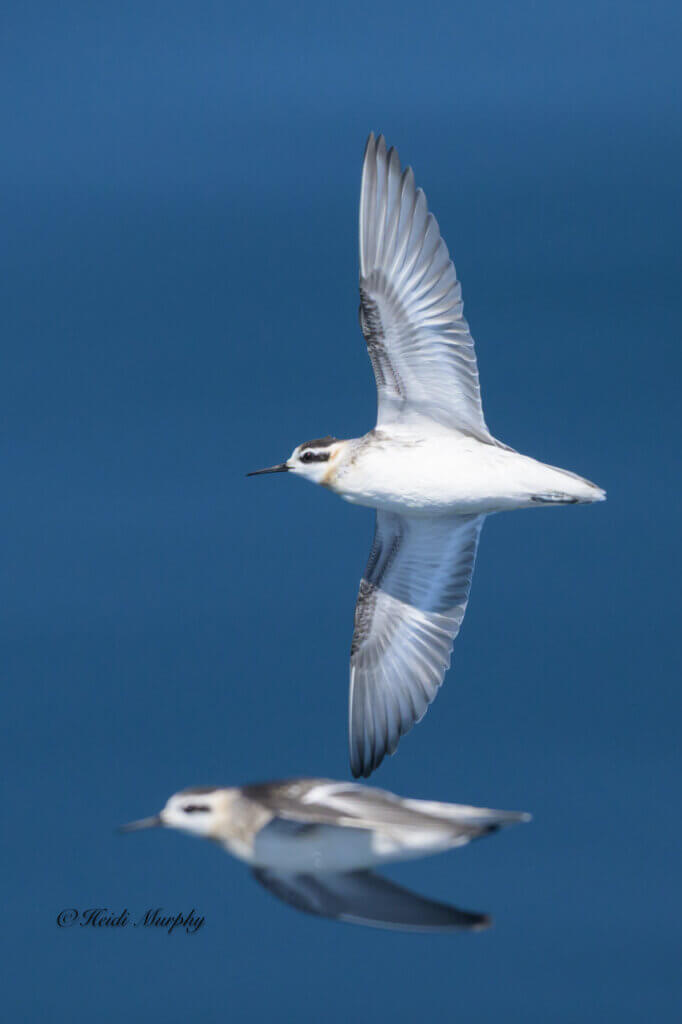
Once we reached the Nantucket Shoals, upwellings and 56° to 64°F SST (Sea Surface Temperature) water produced a significant fog bank. This area was not particularly birdy, although some shoals specialties for this trip were seen (phalaropes, Parasitic Jaeger, Manx Shearwater). Our first rarity was a South Polar Skua that crossed the boat and gave decent looks before winging it off to the east.
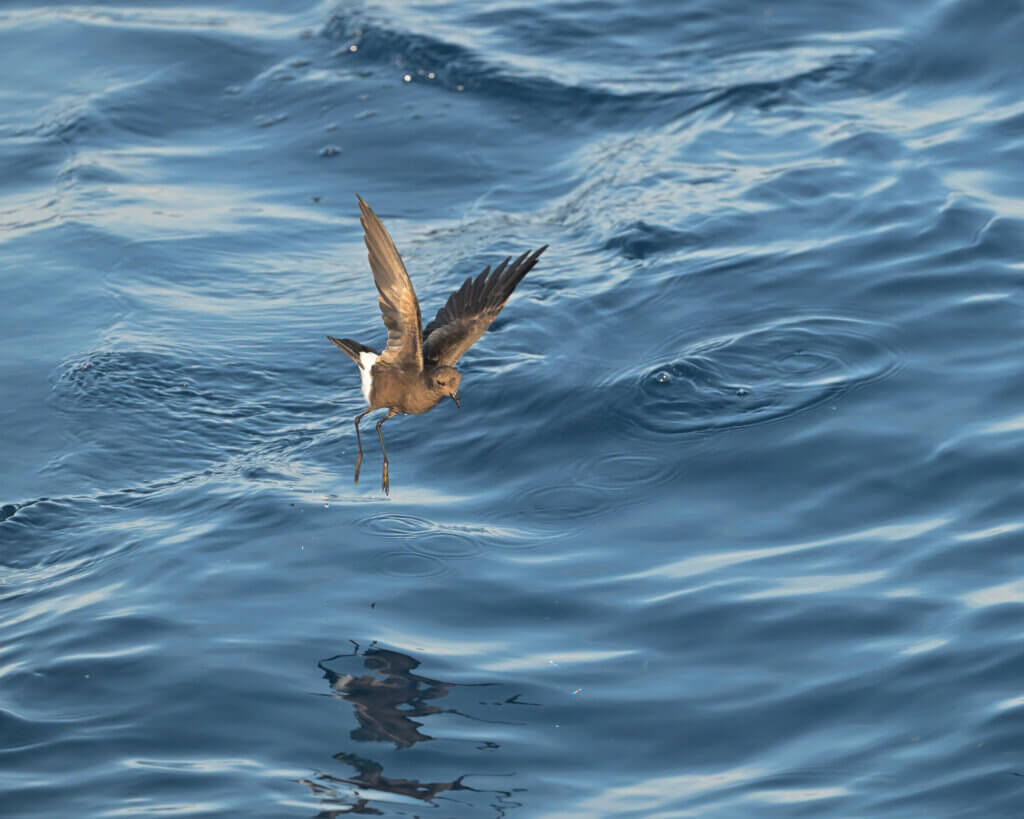
Not very far past the Nantucket Shoals we had a fairly sudden jump in water temperature (up to 71° to 76°F), some scattered Sargassum weed, and it was clear that Gulf Stream waters were mixing with cooler Continental Shelf waters. While the 40 mi stretch between the shoals and the shelf is often relatively birdless, it was more interesting on this trip as we passed between temperature bands that jumped 7-12° F as we moved south then dropped then jumped again. While the birds were mostly Great Shearwaters, Wilson’s Storm-Petrels, and phalaropes, we did see a distant Pomarine Jaeger and our first Sargasso Shearwater, with the latter substantially north of the usual zone for them.
Arriving at the Edge
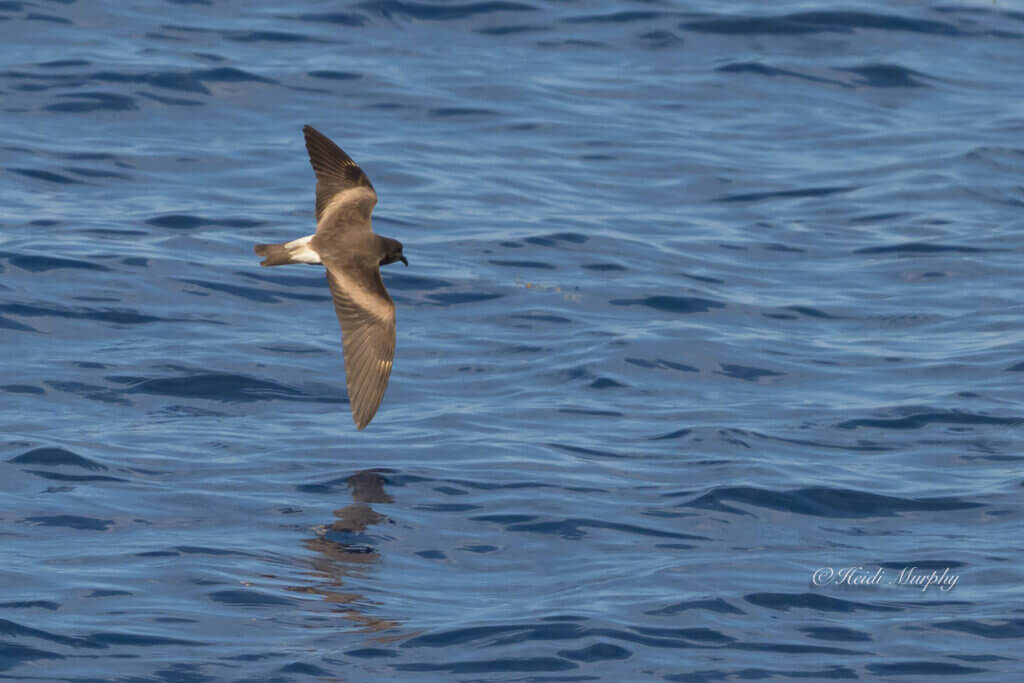
It remained birdy up to the tip of Hydrographer Canyon, at which point we slowed down and cruised slowly as we entered the canyon in 79° to 81°F SST, finding scattered birds, some flocks of shearwaters. We had a juvenile Long-tailed Jaeger but the highlight of the trip for most came with a cry of “WHITE-TAILED TROPICBIRD” from the back of the boat, a top shelf rarity for Massachusetts and maybe only the second found on a BBC trip. The Tropicbird occurred concurrently with our first of many Band-rumped Storm-Petrels.
From there we angled ESE offshore and into deeper water (up to 3400 ft deep) and focused on finding White-faced Storm-Petrel and deepwater specialties like Band-rumped Storm-Petrel, the rare Black-capped Petrel and the equally rare Scopoli’s Shearwater. Within a few hours (and after three chumming attempts) we had found both species and also had great experiences with another deepwater specialty (Sperm Whale!). At that point we decided to turn back westward and head towards warmer waters reported to our west.
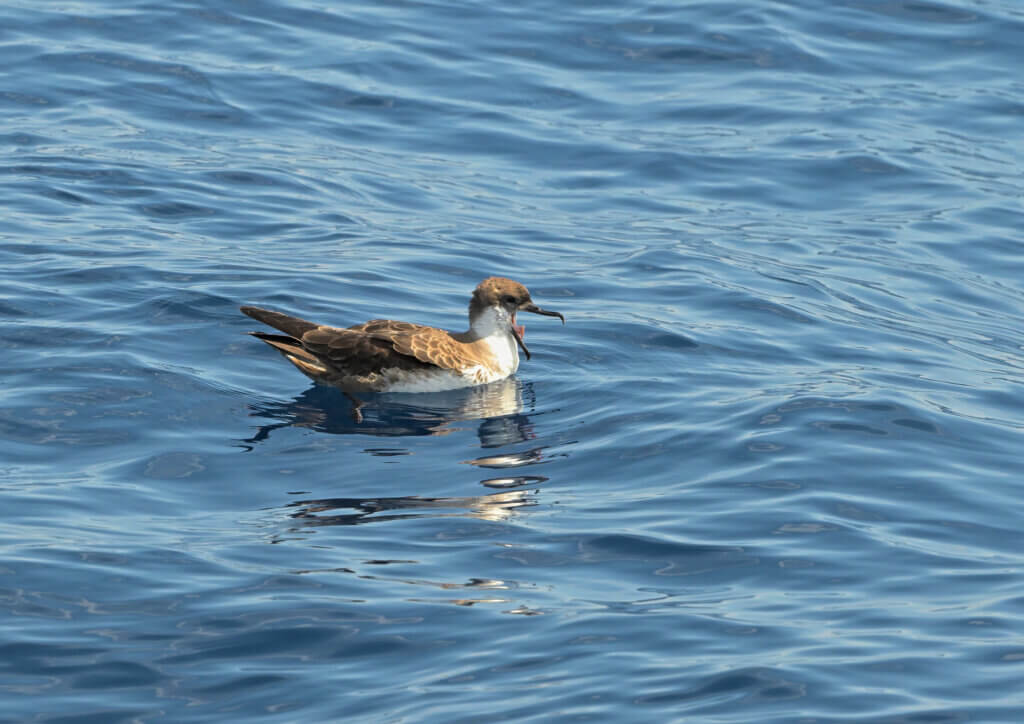
We motored slowly in deep water back, enjoying very birdy conditions with Great, Cory’s, and Sargasso Shearwaters along with good numbers of Wilson’s plus a few more Band-rumped and Leach’s Storm-Petrels. We returned to the shelf edge to set anchor in several hundred feet of water. After dinner, an intrepid group of iNatters donned long-handled nets to dip net Sargassum and investigate the sea life. The overnight checklists document some of the cool creatures that were found.
Overnight fishing by the crew did not produce much, but at dawn as we started to pull up the anchor there was a Band-rump in our slick and a White-faced Storm-Petrel off our port side. We decided to cruise slowly through the deep water and pick carefully through the birds were found. There was a bit more wind and chop, and it was quite birdy giving us plenty to look at. As we steamed eastward we noticed a couple more Band-rumpeds and eventually spotted some pilot whales that occurred concurrently with another South Polar Skua.
The One That Got Away – Maybe
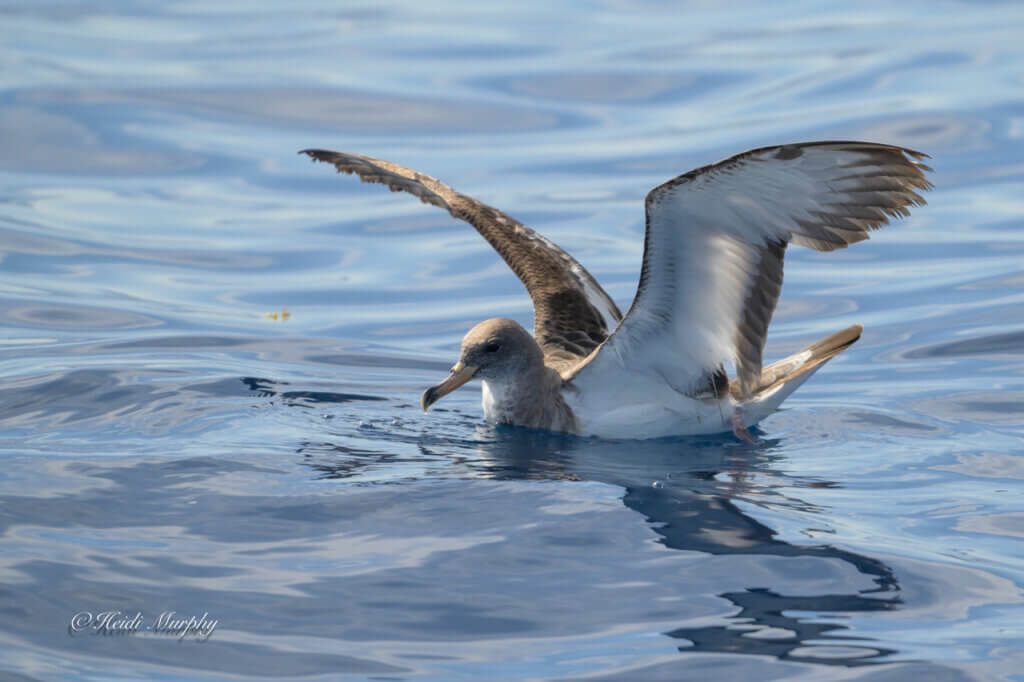
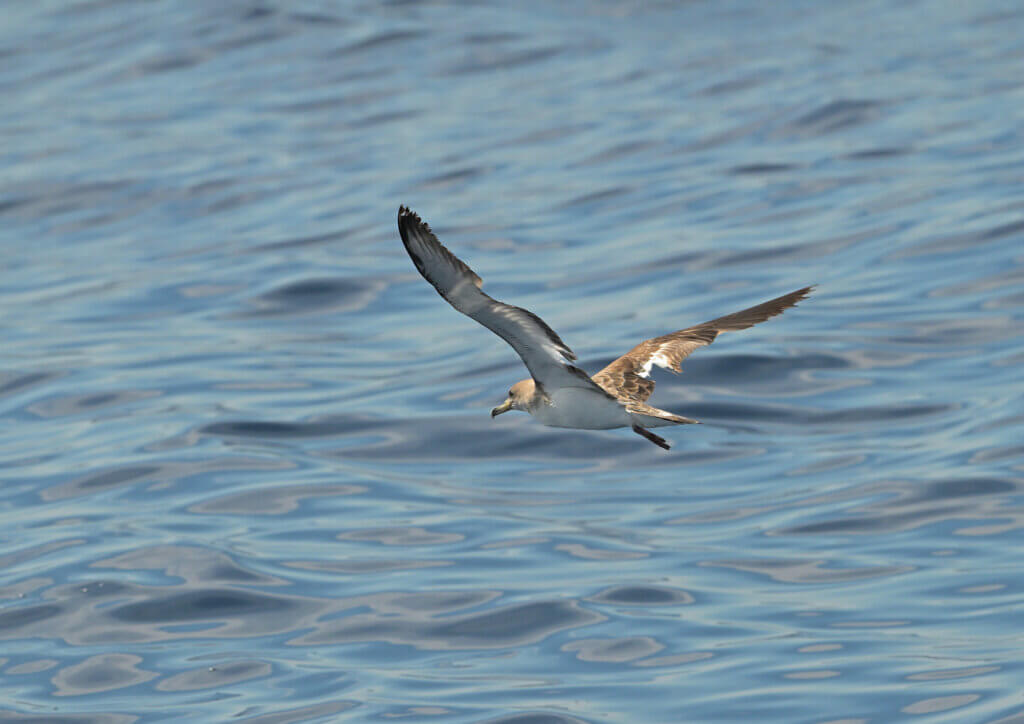
The bird that got away, maybe, was a Calonectris Shearwater that Iliff photographed just before the concurrent excitement of pilot whales and South Polar Skua. It was photographed as we steamed through a small group of 8-10 Cory’s and 5-8 Great Shearwaters on the water (after not seeing many Cory’s) and unfortunately the bird banked off into the sun and it took a little bit of time to assess the photos and realize they pertained to a potential Cape Verde Shearwater.
The images are in odd light but show an intriguingly dark, slender bird with hints of a darker cap, slender bill, and bill color that is either faintly pinkish or grayish with a pinkish case due to the backlighting; the bill does not have any yellow tones in the images, which is what is expected on both Cory’s and Scopoli’s. The underwing matches Cory’s better than Scopoli’s, with no white whatsoever showing on the underside of the primaries (although some Italian Scopoli’s may show this pattern).
At the moment the photos are being shared with other experts for assessment. The bird may or may not be confirmable as the state’s second sighting and North America’s fourth. After the skua and pilot whales we tried to chum and relocate this bird for the next ~2 hours, but were unsuccessful. In the process we did chum in a wonderful Black-capped Petrel (of the white-faced form, as all have been up to this point), one of the first Pterodroma we have successfully chummed in on these trips, although it did not stay long.
The Return Trip
Once we finished our last chumming effort we moved back north and were able to spot a very distant speck of a bird off the prow of a huge container vessel. Knowing that only a couple bird species might show that prolonged soaring behavior off the front of. vessel, we suspected Brown Booby and were eventually able to confirm that with the wonders of modern photography, which even allowed us to age it as an adult (given the bright white belly). This is maybe only the second Brown Booby on a BBC Pelagic trip.
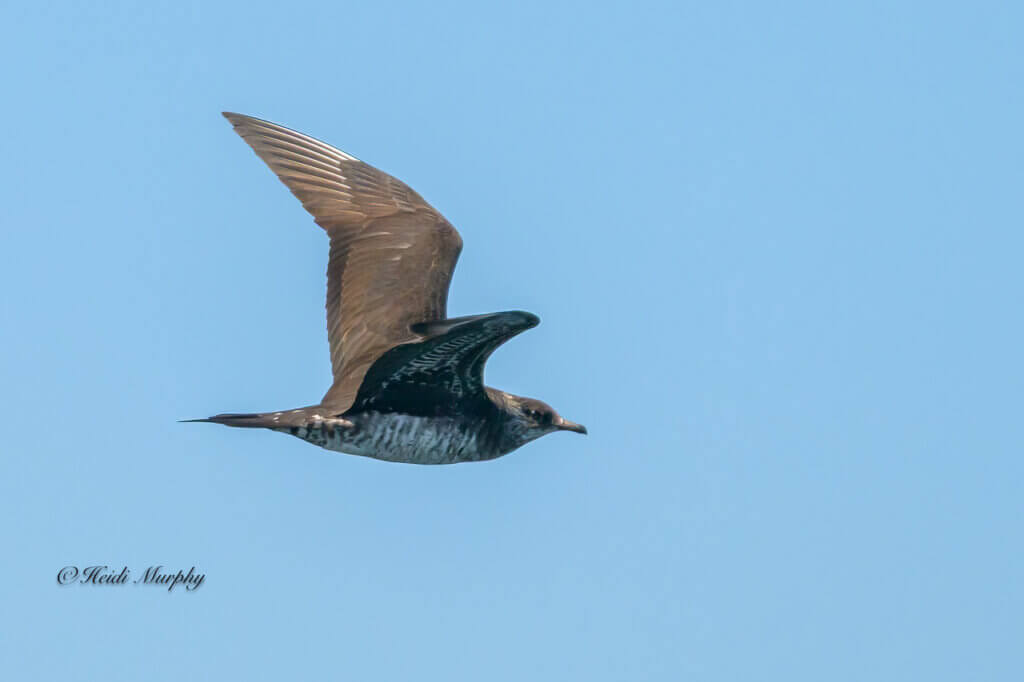
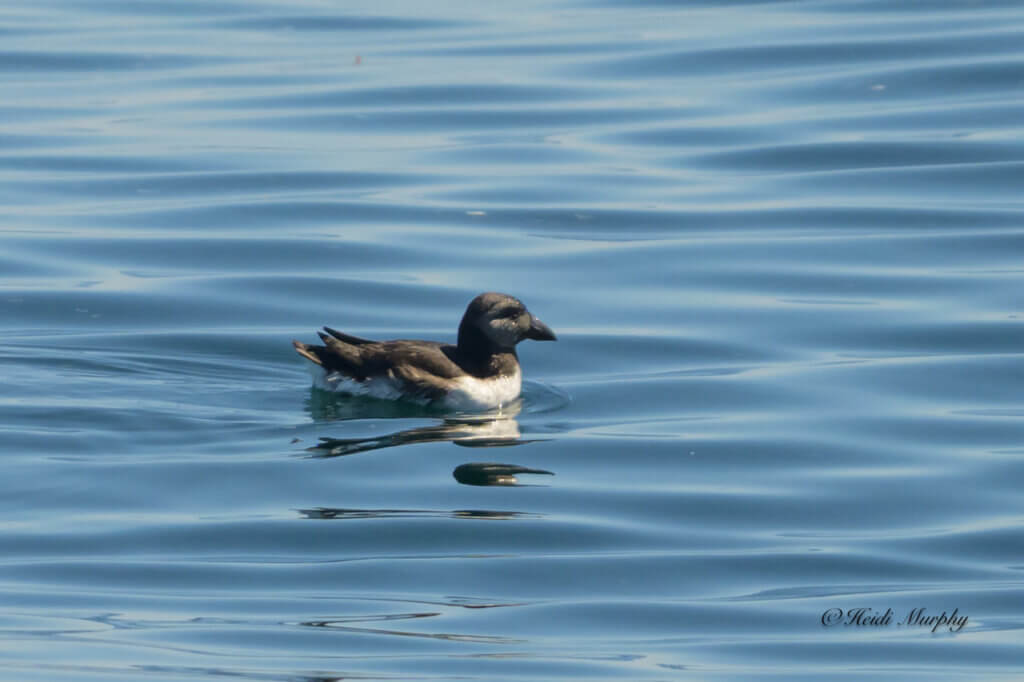
As we moved back over Hydrographer the waters got calmer and eventually were truly smooth, allowing for great spotting conditions. We encountered yet another White-faced Storm-Petrel, and then another, and then another, giving us a total of six for the trip. Two juvenile Long-tailed Jaegers, one pale and one chocolate-brown, flew right at us and down the vessel. The waters remained birdy as we passed through bands of warm and cooler and warmer water again, with Sargassum scattered up to the edge of the Nantucket Shoals again and a few Sargasso Shearwaters well north of their normal zone, as on the previous day. Back on the Shoals we found shearwaters sitting in flocks, managed good view of a Manx Shearwater and multiple phalarope flocks. Elias Markee-Ratner, who had done a superb job spotting from the back of the boat during the entire trip, spotted our final surprise with a juvenile Atlantic Puffin (maybe unprecedented for a BBC trip in August) in a portion of the shoals that was peppered with phalaropes and some scattered surface-swimming sharks. That final highlight put an exclamation point on what was an amazing and extremely successful trip.
As always, we had multiple non-bird highlights as well. These are detailed in the individual lists and summarized below.
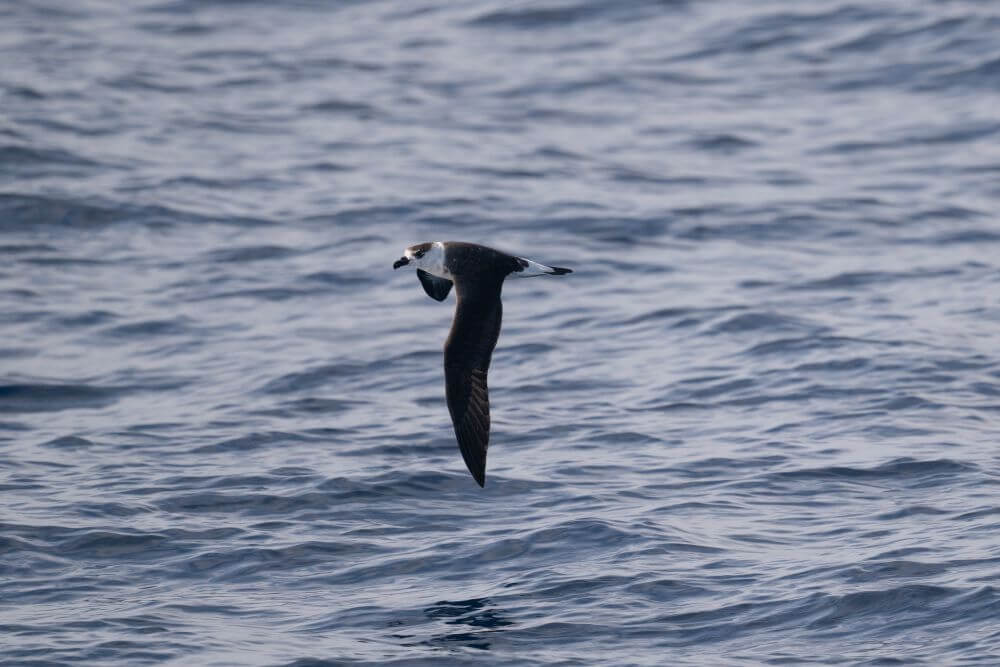
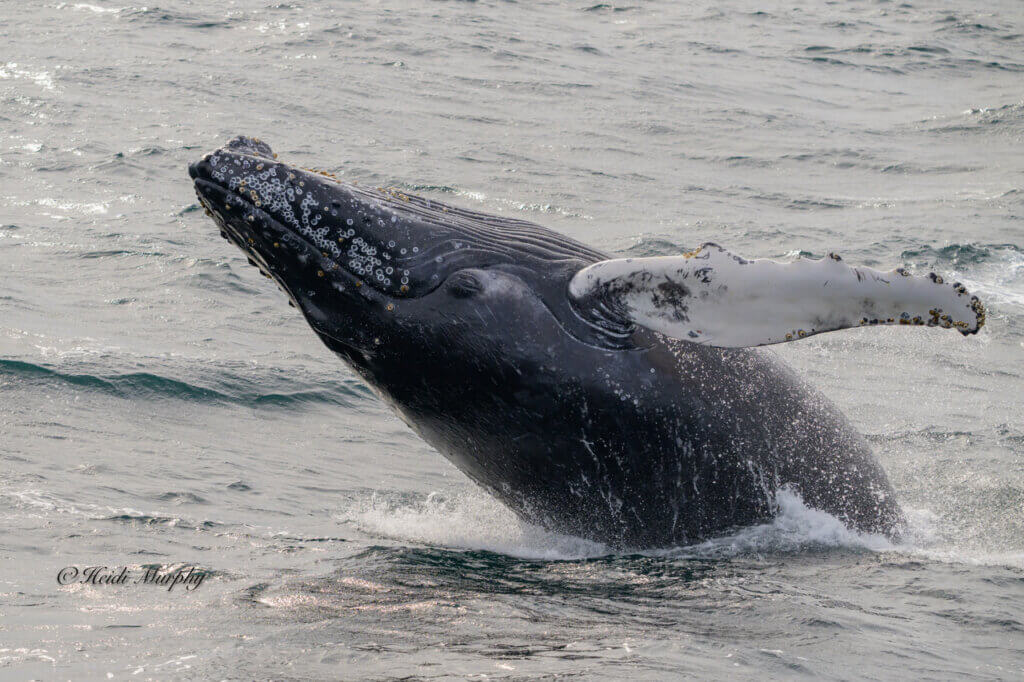
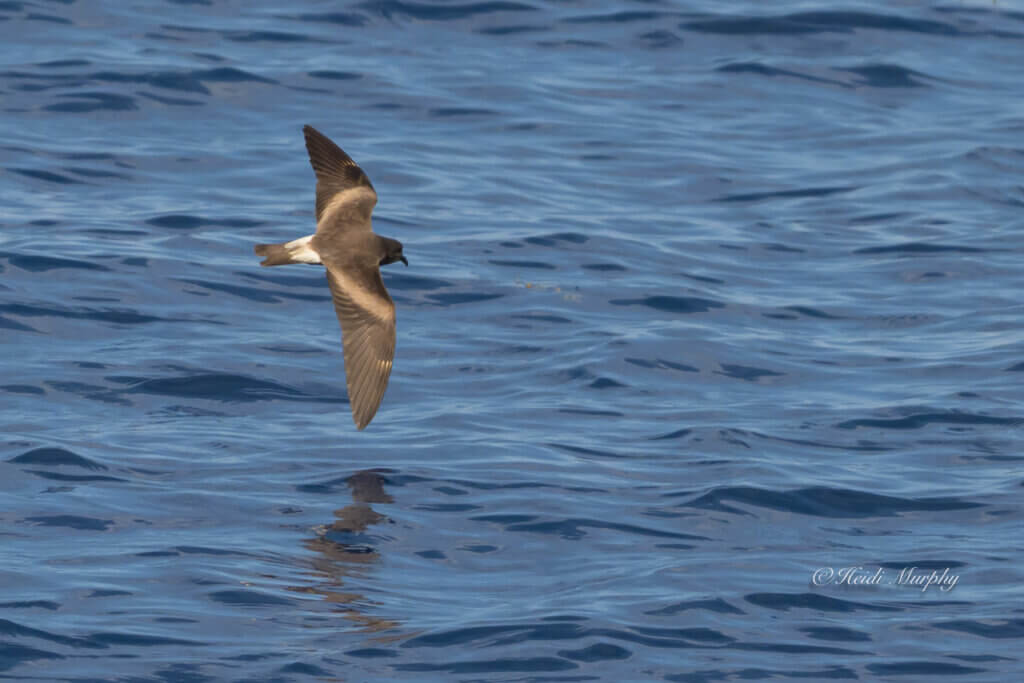
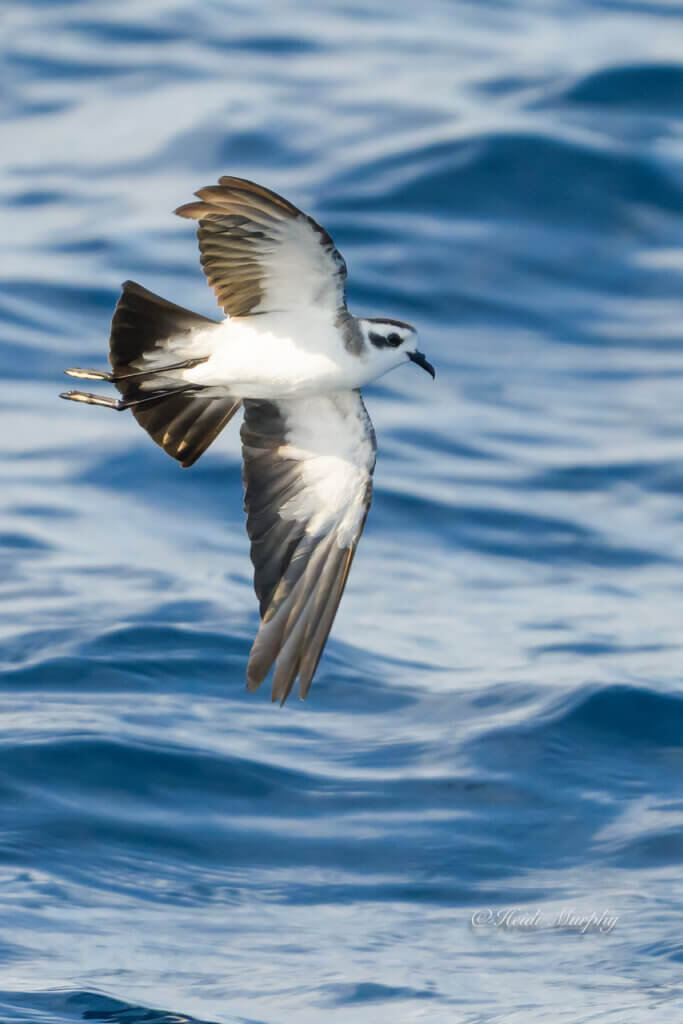
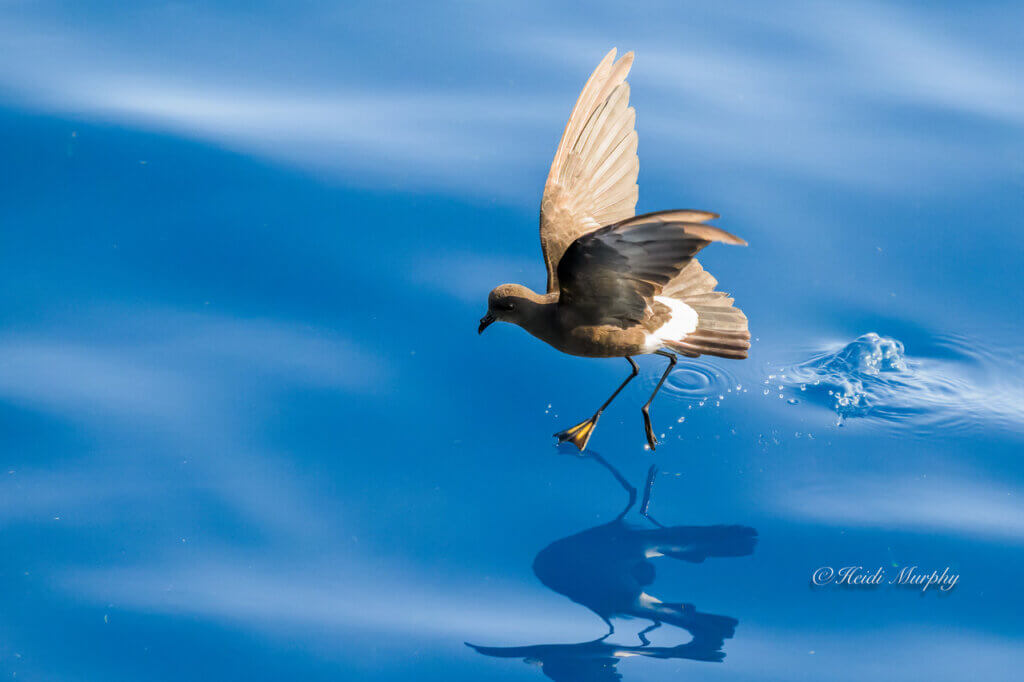
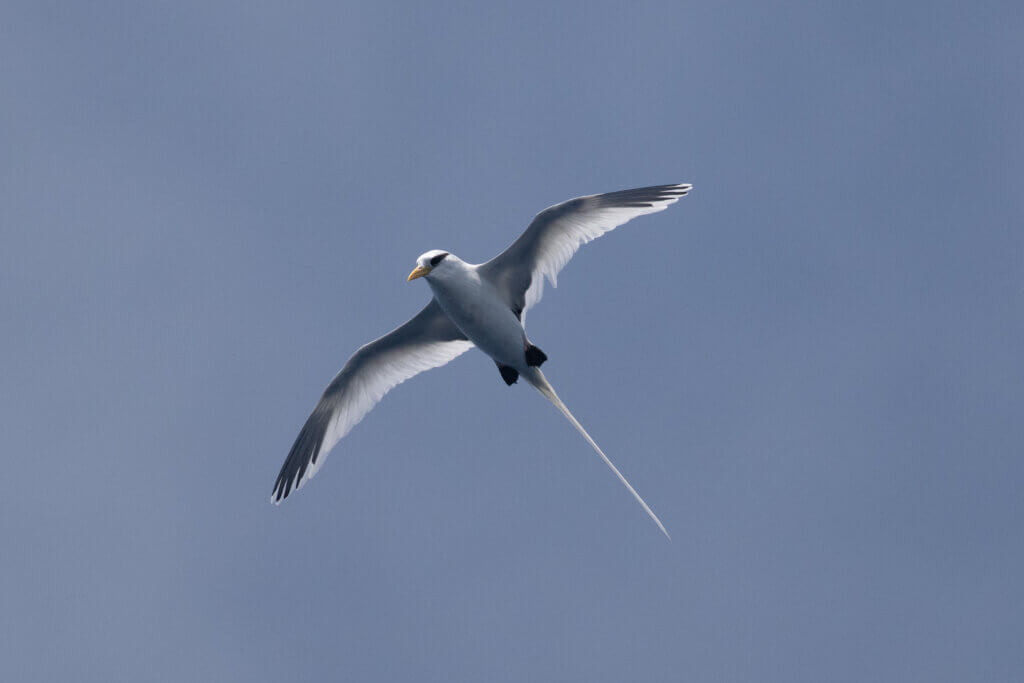
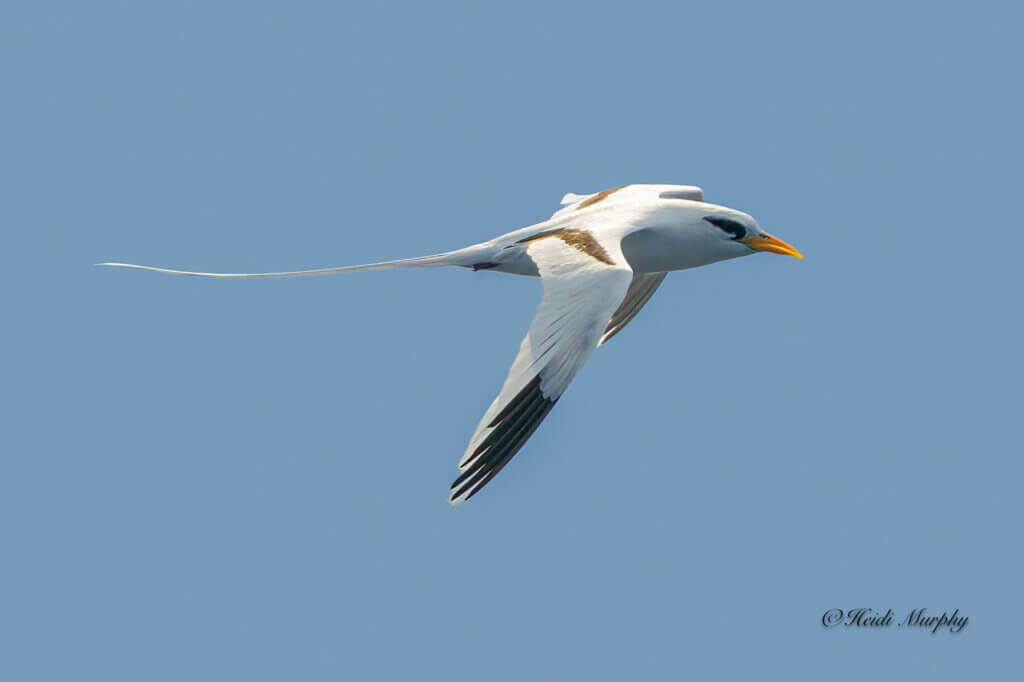
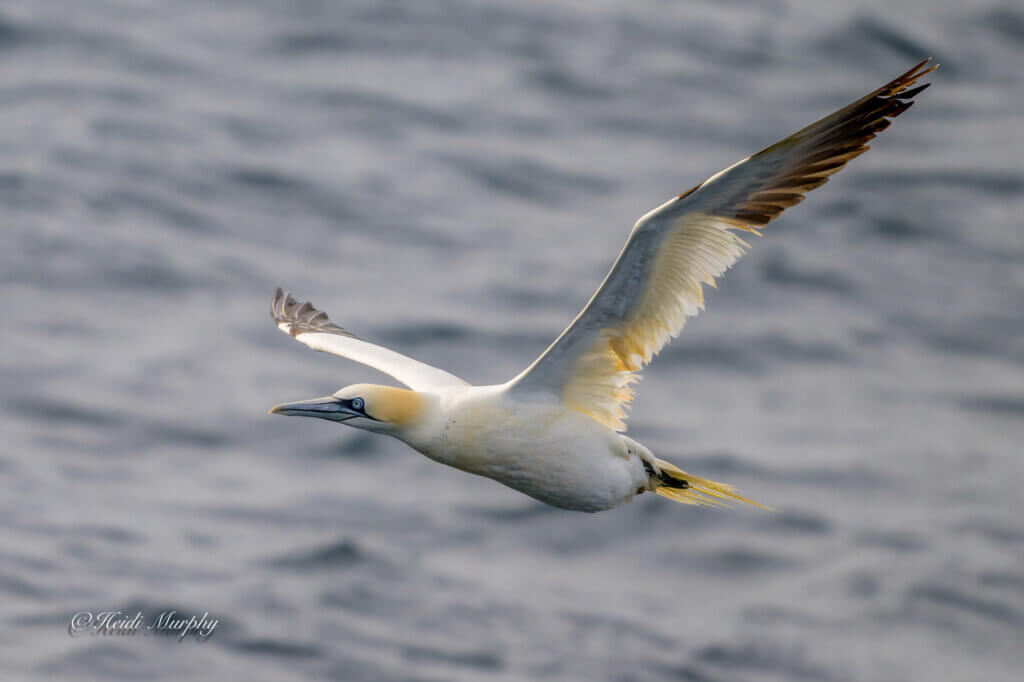
BIRDS:
15 – Canada Goose
7 – Mallard
50 – Common Eider
41 – Rock Pigeon
7 – Mourning Dove
2 – Chimney Swift
5 – Black-bellied Plover
1 – Semipalmated Plover
1 – Hudsonian Whimbrel
1 -Red Phalarope
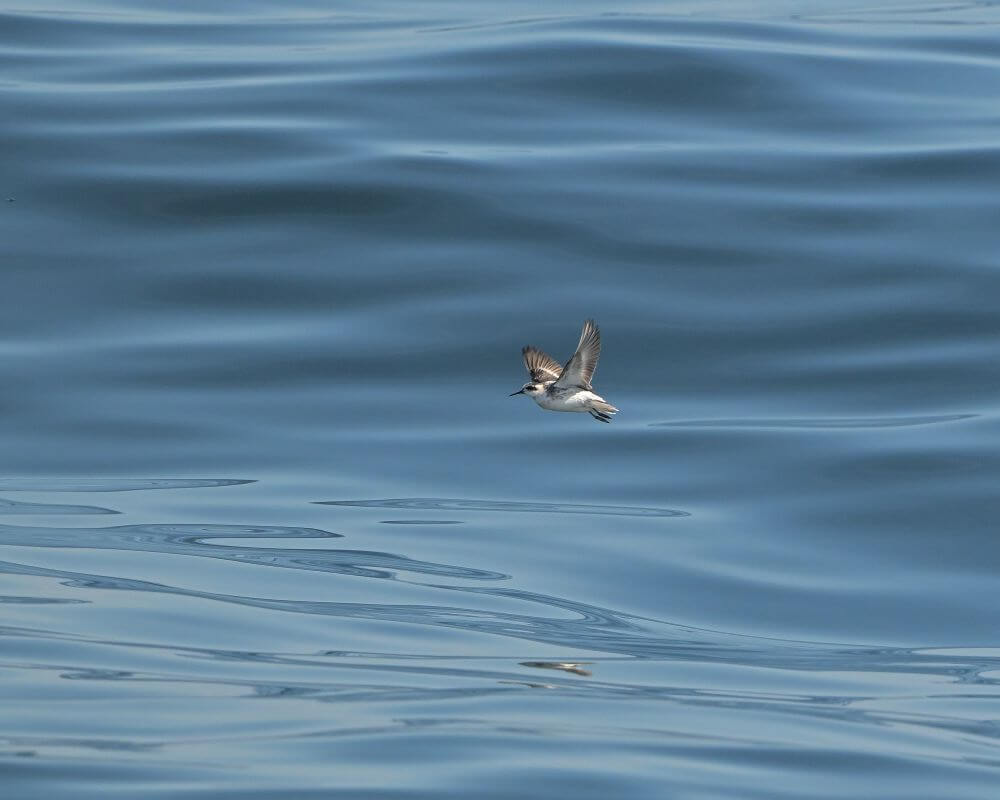
162 – Red-necked Phalarope
1 – Greater Yellowlegs
8 – Sanderling
2 -Least Sandpiper
3 – Long-tailed Jaeger
3 -Parasitic Jaeger
1 – Pomarine Jaeger
3 – South Polar Skua
1 – Atlantic Puffin
2 – Bonaparte’s Gull
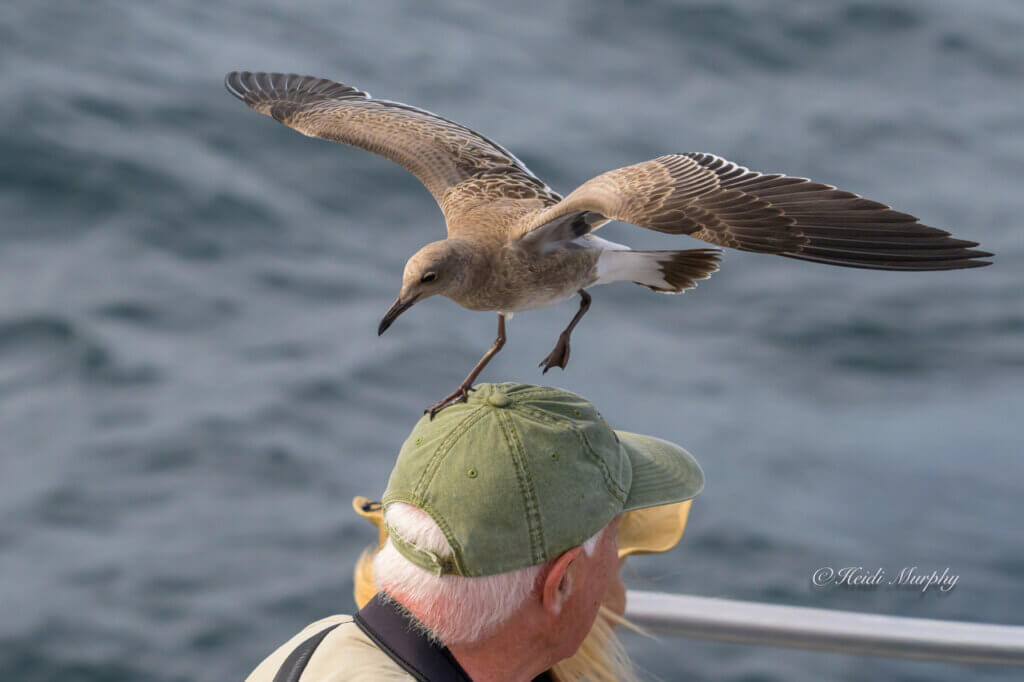
51 – Laughing Gull
1 – Ring-billed Gull
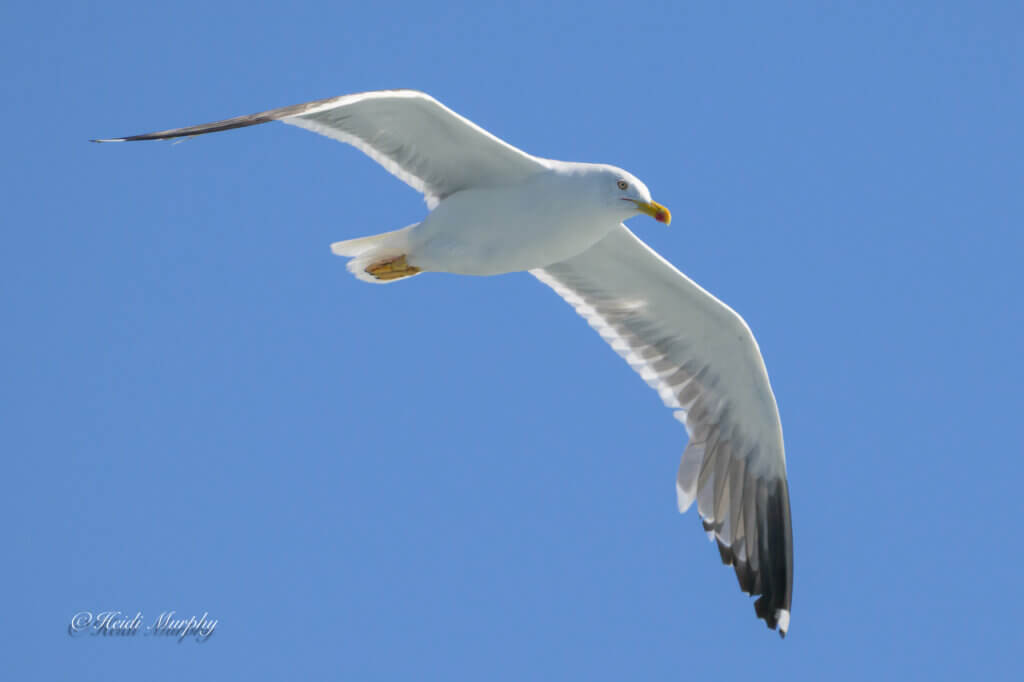
99 – American Herring Gull
101 – Great Black-backed Gull
8 -Lesser Black-backed Gull
1 – Least Tern
20 – Black Tern
146 – Common Tern
6 – Roseate Tern
1 – White-tailed Tropicbird
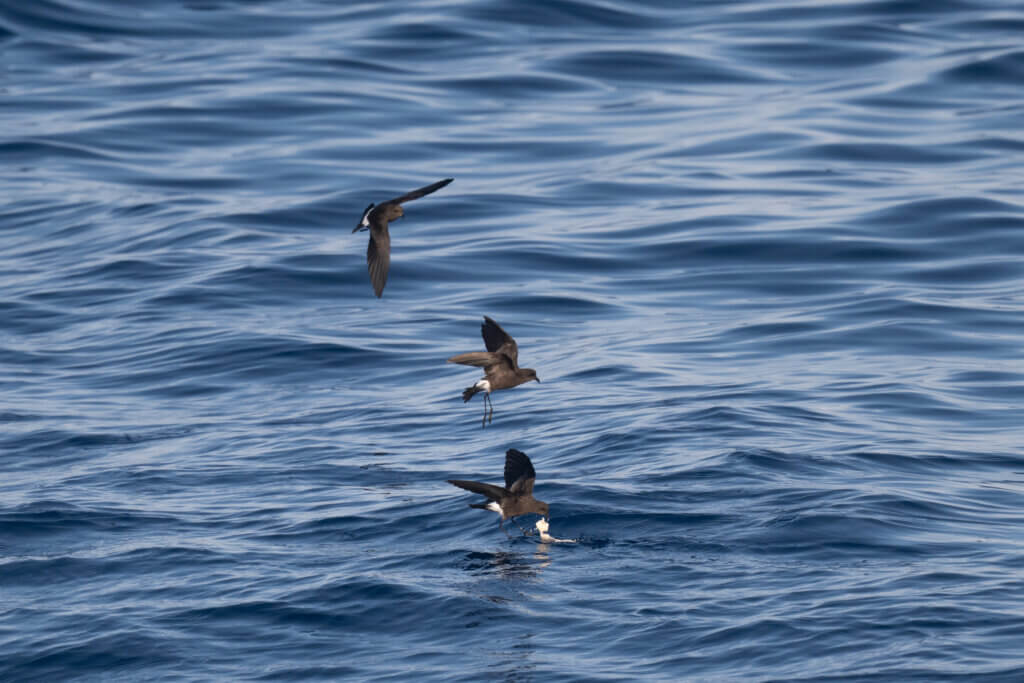
498 – Wilson’s Storm-Petrel
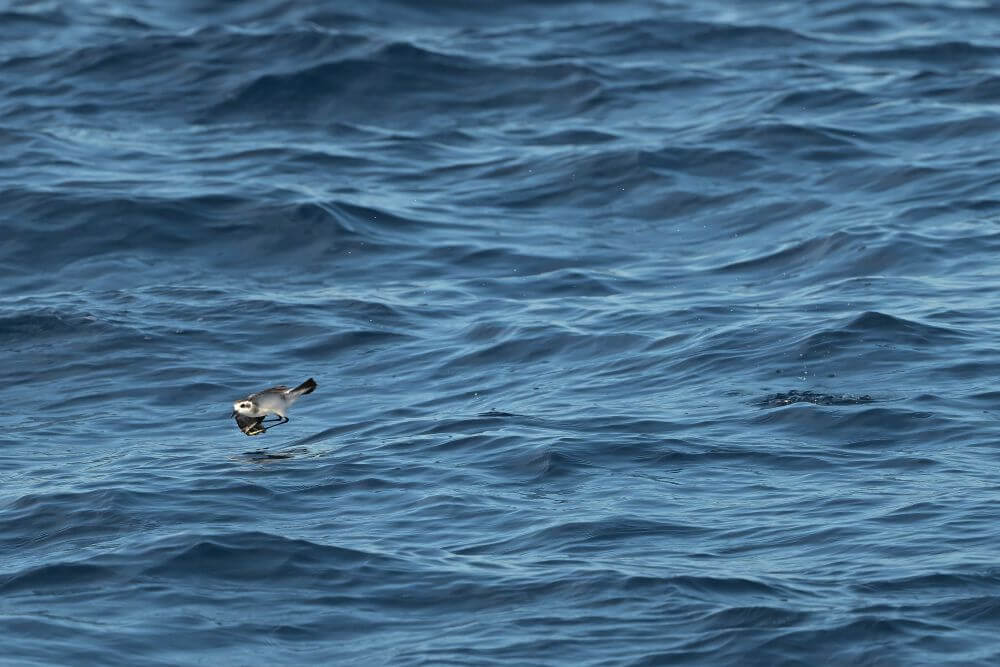
6 – White-faced Storm-Petrel
6 – Leach’s Storm-Petrel
16 – Band-rumped Storm-Petrel
5 – Black-capped Petrel
281 – Cory’s Shearwater
1 – Scopoli’s Shearwater
654 – Great Shearwater
2 – Sooty Shearwater
6 – Manx Shearwater
142 – Sargasso Shearwater
1 – Northern Gannet
1 – Brown Booby
163 – Double-crested Cormorant
1 – Black-crowned Night Heron
3 – Osprey
4 – American Crow
13 – Barn Swallow
1 – Carolina Wren
32 – European Starling
2 – American Robin
12 – House Sparrow
290 – Common Grackle
OTHER FAUNA (counts are estimates by Iliff, but can be refined once lists are complete):
MAMMALS:
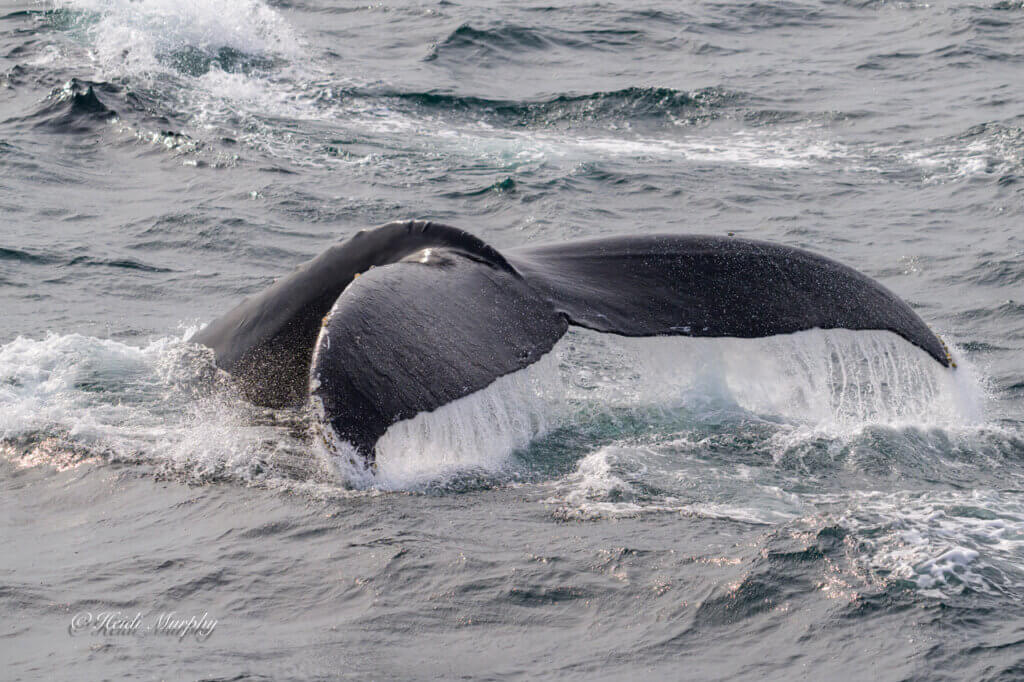
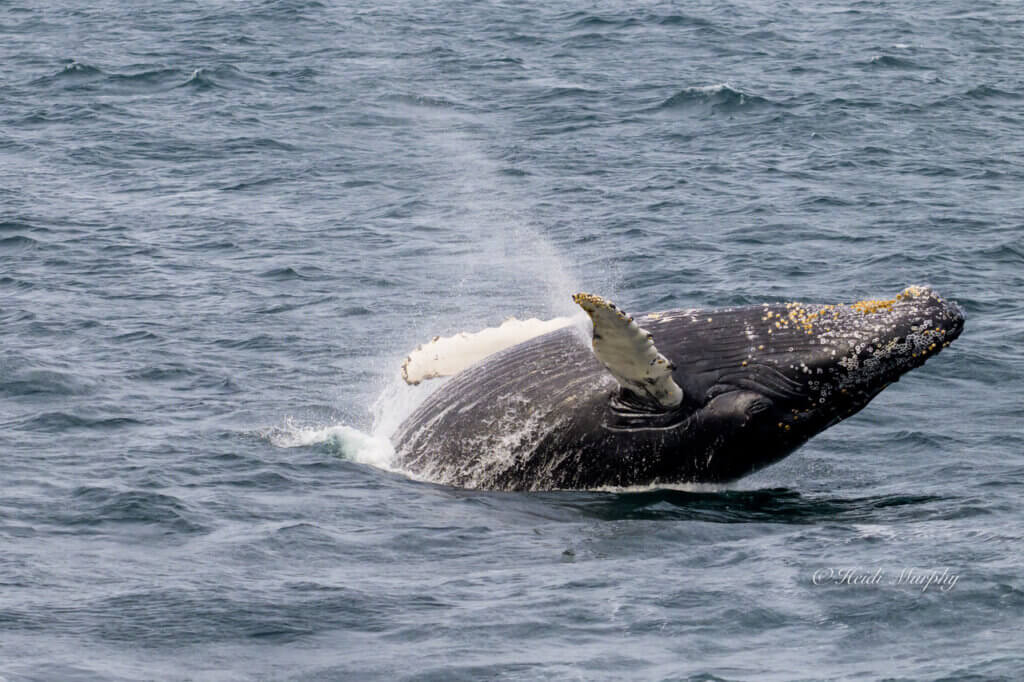
Fin Whale – 4+, scattered on the shelf
Sperm Whale – 4+, scattered in deep water off the shelf
Common Dolphin – 153+, several groups
(Offshore) Bottlenosed Dolphin – 16+, 2-3 groups off the shelf
Risso’s Dolphin – 58+, several groups at or beyond the shelf
Long-finned/Short-finned Pilot Whale – ~5, in one group (Short-finned is likeliest, but ID to species is extremely challenging)
Gray Seal – 1, in harbor as we returned to the boat slip
SHARKS and RAYS:
Basking Shark – 2-3 seen breaching as we neared Hydrographer Canyon on 24 Aug
Porbeagle Shark – 2-3 seen on return trip 25 Aug over Nantucket Shoals (ID to be confirmed)
Blue Shark – 1-2 seen on return trip 25 Aug over Nantucket Shoals
Tiger Shark – 1 large individual seen 24 Aug at anchorage just as darkness set in and dip netting began
FISH:
Half-beak – reported by someone at overnight anchorage
Sailfish – 1 juvenile seen by dip-netting crew at overnight anchorage
Mahi-mahi – 1 juvenile by dip-netting crew at overnight anchorage
Flying fish – multiples seen by day, always scattered and usually smaller types. Some were banded orange and black and recalled Halloween Pennant (a distinctive dragonfly). While dip-netting, the crew identified Sargassum Midget and at least 3 others species.
Filefish – (possibly Unicorn Filefish), photos to be identified
Additional fish which came up with sargassum, photographed for later identification.
Mola mola (Ocean Sunfish) – At least one seen by someone on the trip out
BUGS:
Common Green Darner – 2, offshore on return trip
some moths (ID?)
Monarch – 1, reported by someone
OTHER STUFF:
Sargassum Swimming Crab – 3, dip netted overnight
Portuguese Man-o-war – 1, seen floating at surface, unusually scarce for this trip
Flying squid – seen by dip-netting crew at overnight anchorage
Tunicate – weird one dip-netted at overnight anchorage

10/23 Fall Meeting with Speaker Scott Weidensaul
10/23 Fall Meeting and Lecture - All Welcome Please join us on October 23 for our in person Fall Meeting. The evening begins with a social hour at 6:30. The program starts at 7:30 with [...]

10/20 Webinar: Birds Up Close: An Engineer Explores Their Hidden Wonders
10/20 Webinar: Birds Up Close: An Engineer Explores Their Hidden Wonders The book Birds Up Close: An Engineer Explores Their Hidden Wonders reveals the marvel of how birds work—from the tips of their beaks to [...]
11/14 Webinar: Birding in Italy
As a natural north-south bridge between Europe and Africa, Italy is a vitally important region for more than 550 bird species, both migrants and breeders. More than 20% of the “Boot” is under environmental protection
Roberts on Raptors – Golden Eagles Coming
Think Migrating Golden Eagles: The weather forecast for this Saturday (October 17) suggests birders should brush up on their eagle identification.
Bring Back Bobolinks!
Bring Back Bobolinks! This year the BBC is introducing new Endangered Species Program. Each year we plan to focus on a single bird species facing serious threats in Massachusetts and elsewhere. With this effort we [...]
BBC Record of Bachman’s Warbler Sighting
BBC Record of Bachman's Warbler Sighting Club Statistician David Scott recently added a new record to the club's life list stemming from a 1961 week long club trip to Bulls Island, SC. We learned about [...]
10/23 Fall Meeting with Speaker Scott Weidensaul
10/23 Fall Meeting and Lecture - All Welcome Please join us on October 23 for our in person Fall Meeting. The evening begins with a social hour at 6:30. The program starts at 7:30 with [...]
10/20 Webinar: Birds Up Close: An Engineer Explores Their Hidden Wonders
10/20 Webinar: Birds Up Close: An Engineer Explores Their Hidden Wonders The book Birds Up Close: An Engineer Explores Their Hidden Wonders reveals the marvel of how birds work—from the tips of their beaks to [...]
11/14 Webinar: Birding in Italy
As a natural north-south bridge between Europe and Africa, Italy is a vitally important region for more than 550 bird species, both migrants and breeders. More than 20% of the “Boot” is under environmental protection
Roberts on Raptors – Golden Eagles Coming
Think Migrating Golden Eagles: The weather forecast for this Saturday (October 17) suggests birders should brush up on their eagle identification.
Bring Back Bobolinks!
Bring Back Bobolinks! This year the BBC is introducing new Endangered Species Program. Each year we plan to focus on a single bird species facing serious threats in Massachusetts and elsewhere. With this effort we [...]
BBC Record of Bachman’s Warbler Sighting
BBC Record of Bachman's Warbler Sighting Club Statistician David Scott recently added a new record to the club's life list stemming from a 1961 week long club trip to Bulls Island, SC. We learned about [...]
10/23 Fall Meeting with Speaker Scott Weidensaul
10/23 Fall Meeting and Lecture - All Welcome Please join us on October 23 for our in person Fall Meeting. The evening begins with a social hour at 6:30. The program starts at 7:30 with [...]
10/20 Webinar: Birds Up Close: An Engineer Explores Their Hidden Wonders
10/20 Webinar: Birds Up Close: An Engineer Explores Their Hidden Wonders The book Birds Up Close: An Engineer Explores Their Hidden Wonders reveals the marvel of how birds work—from the tips of their beaks to [...]
11/14 Webinar: Birding in Italy
As a natural north-south bridge between Europe and Africa, Italy is a vitally important region for more than 550 bird species, both migrants and breeders. More than 20% of the “Boot” is under environmental protection
Roberts on Raptors – Golden Eagles Coming
Think Migrating Golden Eagles: The weather forecast for this Saturday (October 17) suggests birders should brush up on their eagle identification.
Bring Back Bobolinks!
Bring Back Bobolinks! This year the BBC is introducing new Endangered Species Program. Each year we plan to focus on a single bird species facing serious threats in Massachusetts and elsewhere. With this effort we [...]
BBC Record of Bachman’s Warbler Sighting
BBC Record of Bachman's Warbler Sighting Club Statistician David Scott recently added a new record to the club's life list stemming from a 1961 week long club trip to Bulls Island, SC. We learned about [...]
News Categories
Upcoming Field Trips
Field Trips / Events
-
-
Webinar: Birds Up Close: An Engineer Explores Their Hidden Wonders
The book Birds Up Close: An Engineer Explores Their Hidden Wonders reveals the marvel of how birds work—from the tips of their beaks to the sheen of their tail feathers. Consider feathers: They define birds’ wings, enabling flight. They insulate against cold. They repel water. They even control sound. And how feathers work is just [...]
-
Fall Meeting with Scott Weidensaul: The Return of the Oystercatcher – Saving Birds to Save the Planet
Harvard University Geological Lecture Hall 24 Oxford St., Cambridge, MA, United StatesPlease join us on October 23 for our in person Fall Meeting. The evening begins with a social hour at 6:30. The program starts at 7:30 with announcements, a short presentation by our 2026 Hog Island Scholarship winners, and a talk by author Scott Weidensaul – “The Return of the Oystercatcher – Saving Birds to [...]
-
Nahanton Park, Newton and possible other nearby locations
Newton - Nahanton Park 507 Winchester St, Newton, MA, United StatesWe will search for sparrows and other fall migrants at Nahanton Park and a possible other location to be determined nearer the date of the trip.
-
Cumberland Farms Fields River St. Entrance
Halifax - Cumberland Farms - River St 10 River St, Halifax, MA, United StatesWe will walk about 1.5 miles on gravel paths in search of late fall sparrows. This is usually a good spot for Lincoln’s and Clay-colored Sparrows. We never know what else might show up. I will arrive early to listen for Great Horned Owls.
-
Captain John’s Half-Day Pealgic
Plymouth - Captain John's Whale Watching Tour Company 10 Town Wharf, Plymouth, MA, United StatesThe BBC has chartered a private pelagic trip from Plymouth out to deep waters off Stellwagen Bank and beyond. This trip is cosponsored with the South Shore Bird Club and the Cape Cod Bird Club.