Did you know that white ash, a bird‐friendly tree, has diamond patterns in its bark? Or, that 100‐200 organisms live inside leaves? More than 20 birders showed up Sunday morning for the Brookline Bird Club’s Tree Identiication walk led by Harvard University botanist Walter Kittredge, and learned this much and more. Toting binoculars and carrying a list of trees found in Belmont‐Watertown’s Beaver Brook Reservation, participants studied compound and simple, opposite and alternate leaves, bark textures, tree structures and soil preferences of specific trees. 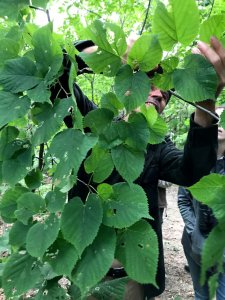
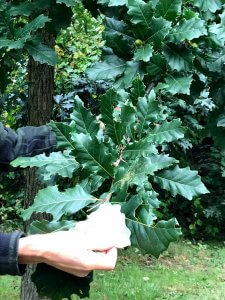
Walter described and passed around leaves from various species of oaks and maples, cherry, beech, birch and ash trees, so we could note differences and similarities among leaf shapes and content. Non‐native species such as glossy buckthorn, porcelain berry and oriental bittersweet unfortunately thrive at Beaver Brook, and we identified many examples of these highly invasive vines ‐ “the worst!” Throughout the walk, we considered reasons why certain trees support birds and wildlife better than others: in short, it’s about the insects and other creatures that live on the leaves and bark of some (native) trees and not others, so a chewed‐up, hole‐ridden leaf is generally a great sign of a bird‐friendly tree! Frequent references were made to Doug Tallamy’s Book, Bringing Nature Home, which makes the case for planting native oaks, 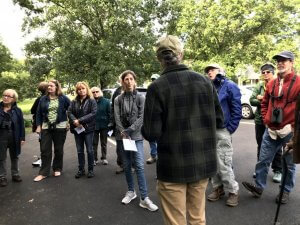 birches, maples and other native trees that support birds in many ways. At the end of walk, we arrived at and studied a young, impressive swamp white oak while watching a dozen American Robins, 2 Blackpoll Warblers, a Pine Warbler and a Red‐eyed Vireo consuming bittersweet berries and insects lurking beneath their dense foliage. Birders were not disappointed: we saw some late fall warblers and learned how and why they stopped at Beaver Brook to refuel on their ways elsewhere.
Note: the Brookline Bird Club is planning future conservation‐minded walks. Please check our website and massbird for announcements: https://brooklinebirdclub.org/
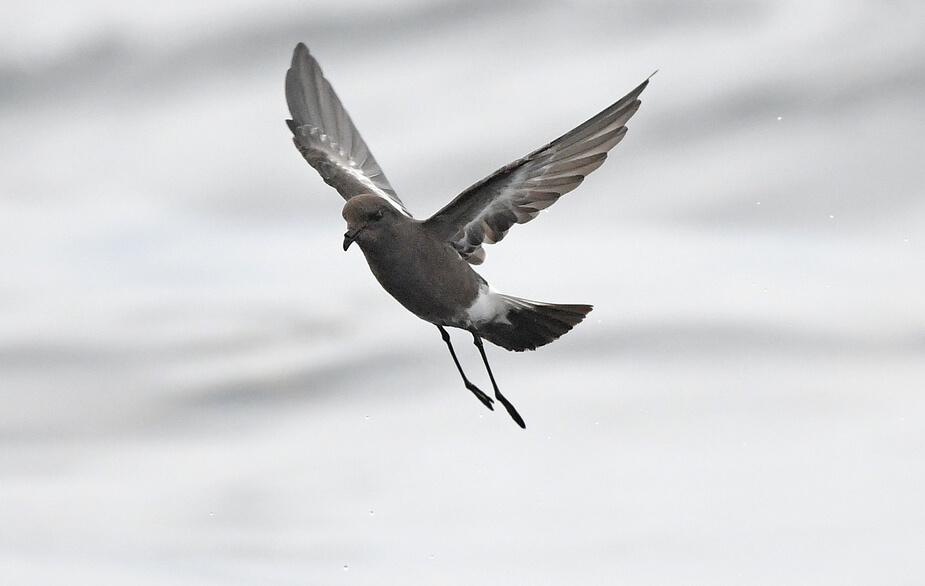
11/19 Pelagic Webinar: Pinch me! …. Did We Just Discover a New Species?!
On November 19 at 7PM please join us to hear from Alvaro Jaramillo, about the discovery of new species of seabirds.
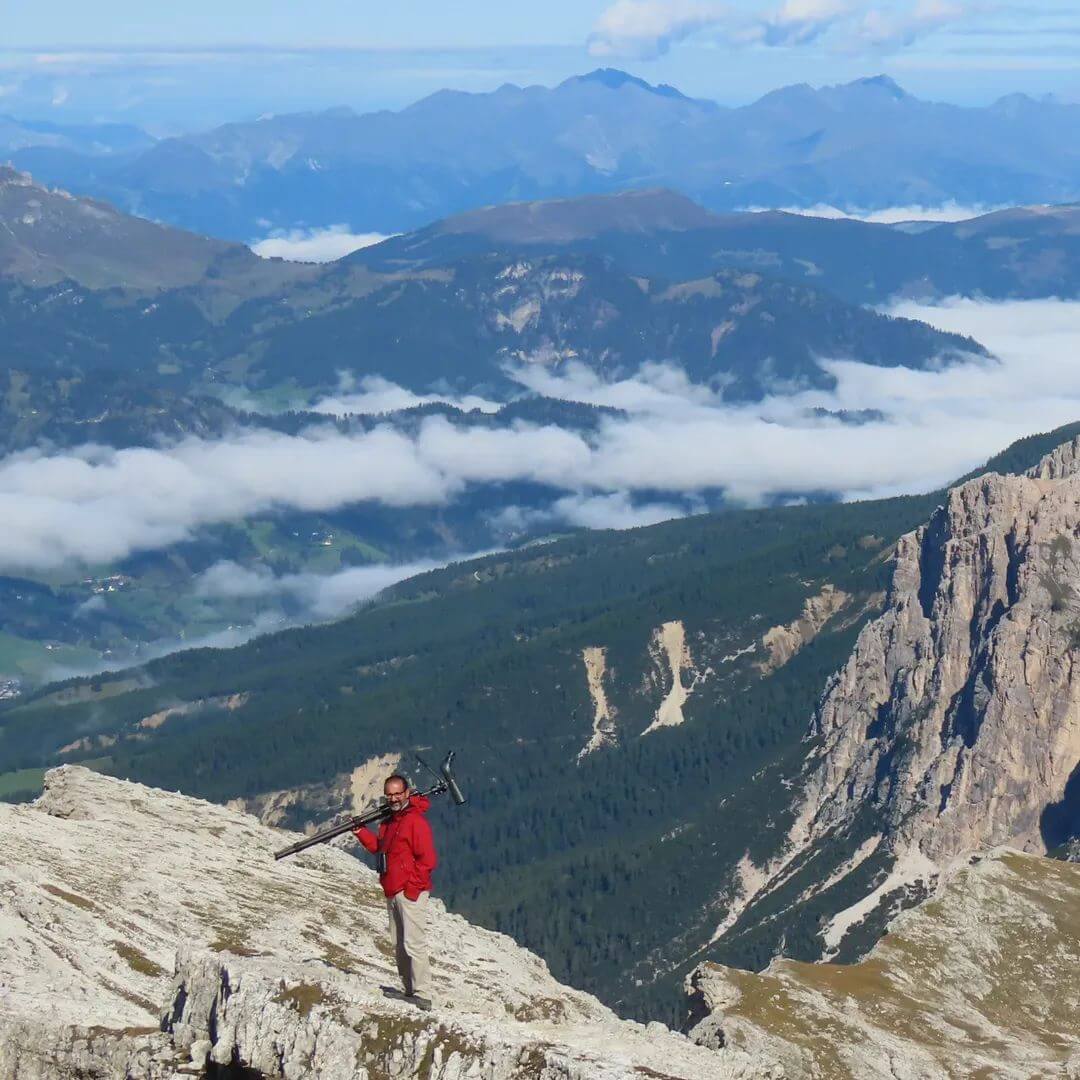
11/14 Webinar: Birding in Italy
As a natural north-south bridge between Europe and Africa, Italy is a vitally important region for more than 550 bird species, both migrants and breeders. More than 20% of the “Boot” is under environmental protection
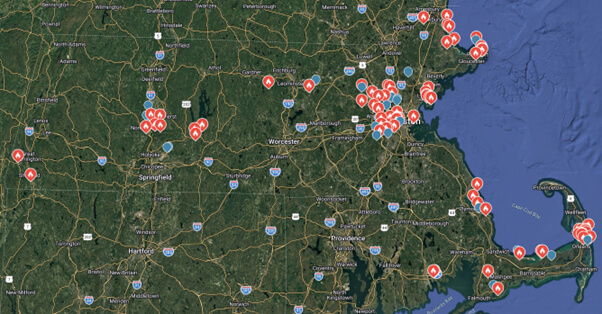
October 2026 BBC Big Day Report
October 2026 BBC Big Day Report On Saturday, October 10 over 50 BBC members submitted 133 checklists for Massachusetts as part of our BBC Big Day event (with a few more from NH, VT and [...]
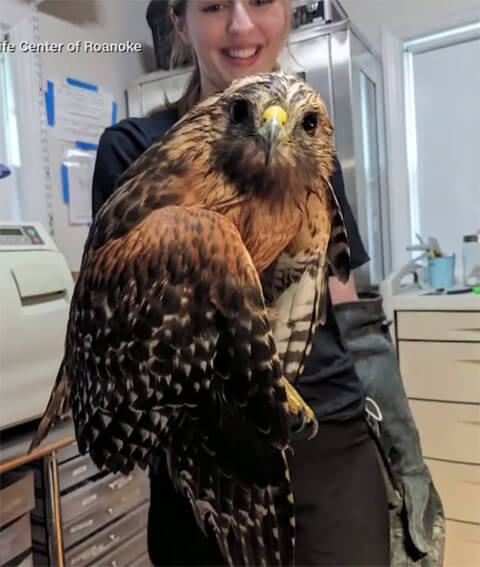
Roberts on Raptors – An Unusual Red-shouldered Hawk
Earlier this week an adult Red-shouldered Hawk was recovered in a driveway just a mile from the center of Roanoke, Virginia, unable to fly, according to CNN.
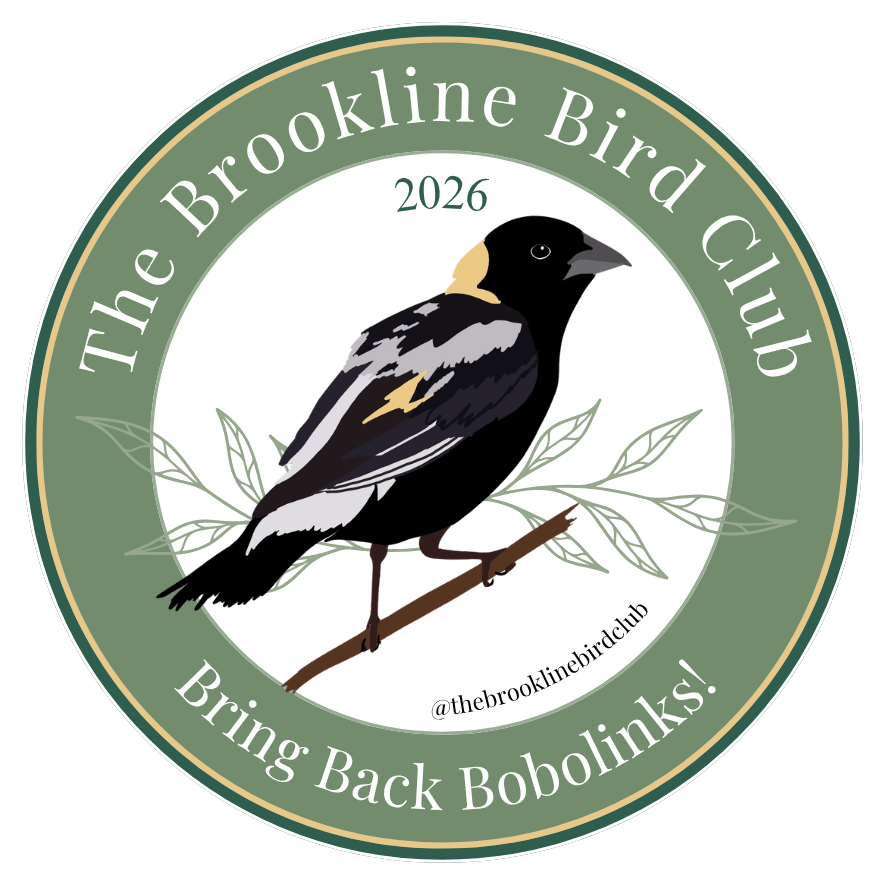
Bring Back Bobolinks!
Bring Back Bobolinks! 2026 has been the inaugural year for our Endangered Species Program. Each year we plan to focus on a single bird species facing serious threats in Massachusetts and elsewhere. With this effort [...]
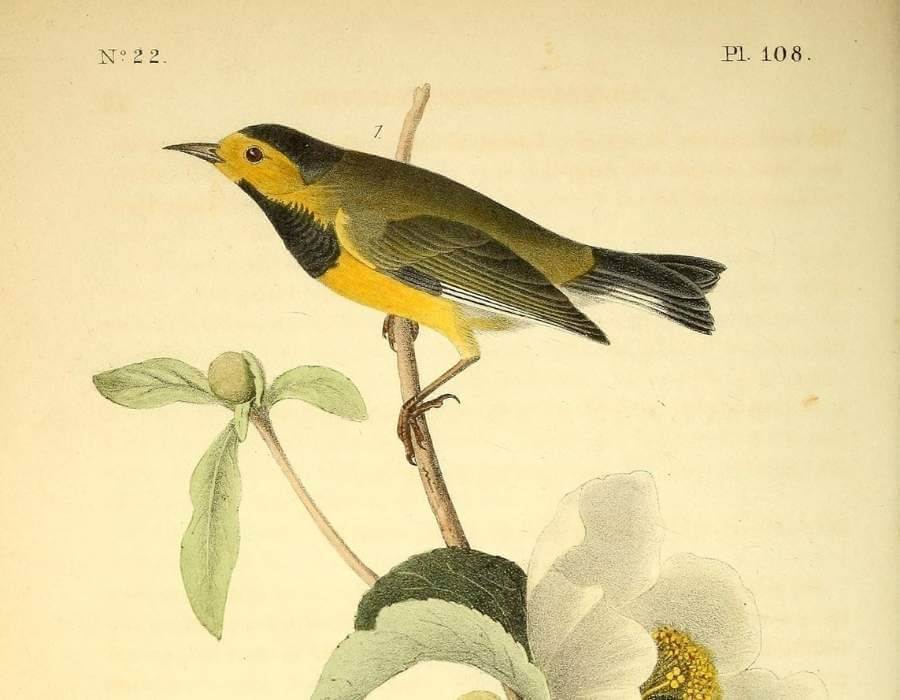
BBC Record of Bachman’s Warbler Sighting
BBC Record of Bachman's Warbler Sighting Club Statistician David Scott recently added a new record to the club's life list stemming from a 1961 week long club trip to Bulls Island, SC. We learned about [...]
11/19 Pelagic Webinar: Pinch me! …. Did We Just Discover a New Species?!
On November 19 at 7PM please join us to hear from Alvaro Jaramillo, about the discovery of new species of seabirds.
11/14 Webinar: Birding in Italy
As a natural north-south bridge between Europe and Africa, Italy is a vitally important region for more than 550 bird species, both migrants and breeders. More than 20% of the “Boot” is under environmental protection
October 2026 BBC Big Day Report
October 2026 BBC Big Day Report On Saturday, October 10 over 50 BBC members submitted 133 checklists for Massachusetts as part of our BBC Big Day event (with a few more from NH, VT and [...]
Roberts on Raptors – An Unusual Red-shouldered Hawk
Earlier this week an adult Red-shouldered Hawk was recovered in a driveway just a mile from the center of Roanoke, Virginia, unable to fly, according to CNN.
Bring Back Bobolinks!
Bring Back Bobolinks! 2026 has been the inaugural year for our Endangered Species Program. Each year we plan to focus on a single bird species facing serious threats in Massachusetts and elsewhere. With this effort [...]
BBC Record of Bachman’s Warbler Sighting
BBC Record of Bachman's Warbler Sighting Club Statistician David Scott recently added a new record to the club's life list stemming from a 1961 week long club trip to Bulls Island, SC. We learned about [...]
News Categories
Upcoming Field Trips
Field Trips / Events
-
-
Millennium Park
Boston - Millennium Park Canoe Launch 300 Gardner Street, Boston, MA, United StatesJoin us to observe resident birds and winter migrants in a unique urban habitat that is a favorite for many bird species, including uncommon and rare birds. Birders of all levels will enjoy this walk. The trails are (generally) flat. A water bottle, water proof clothing including a hat, gloves, and trail shoes are recommended. [...]
-
Delaney WMA in Stow
Stow - Delaney WMA Boat Launch 353 Harvard Road, Stow, MA, United StatesDelaney WMA in Stow is an Important Bird Area with a variety of habitats, including a shallow lake, a slow-running stream and a marsh, all bordered by mixed conifer/deciduous forest. We’ll go for a slow-paced 2-to-3 mile walk along trails with moderate terrain changes to see how many species we can find.
-
Bear Creek Sanctuary (on behalf of Soheil Zendeh and WINWaste)
Saugus - Bear Creek Sanctuary (WINWaste) 100 Salem Turnpike, Saugus, MA, United StatesBear Creek is an upland sanctuary built on the WINWaste (formerly Wheelabrator) landfill at the northeast corner of Rumney Marsh in Saugus and Revere. Access information is below. Wear waterproof walking shoes and be prepared to hike 3 – 4 miles. The property is mostly very open, so be prepared for sun, wind and weather. [...]
-
Parker River NWR
Parker River NWR - Lot #1 Refuge Rd., Newbury, MA, MA, United StatesWe will explore various hot-spots on the refuge for fall migrants. Anything is possible during fall migration! Note that an entrance fee or pass is required to enter Parker River NWR. There are decent bathrooms at lot 1 where we start. Beginners welcome! Late arrivers can phone John at 781 859 9450 to find out [...]
-
Franklin Park – Scarboro Pond (Early Birders Series) Rescheduled from 11/7
Boston - Franklin Park Tennis Courts (Meeting Spot) MA, United StatesJoin fellow birders in their 20s-30s as we visit Franklin Park! Located in Roxbury, Boston’s largest open space is home to a plethora of natural features, including miles of trails, playing fields, a pond, and plenty of birds! Here we will look for all sorts of songbirds, including late fall migrants and early winterers. Whether [...]