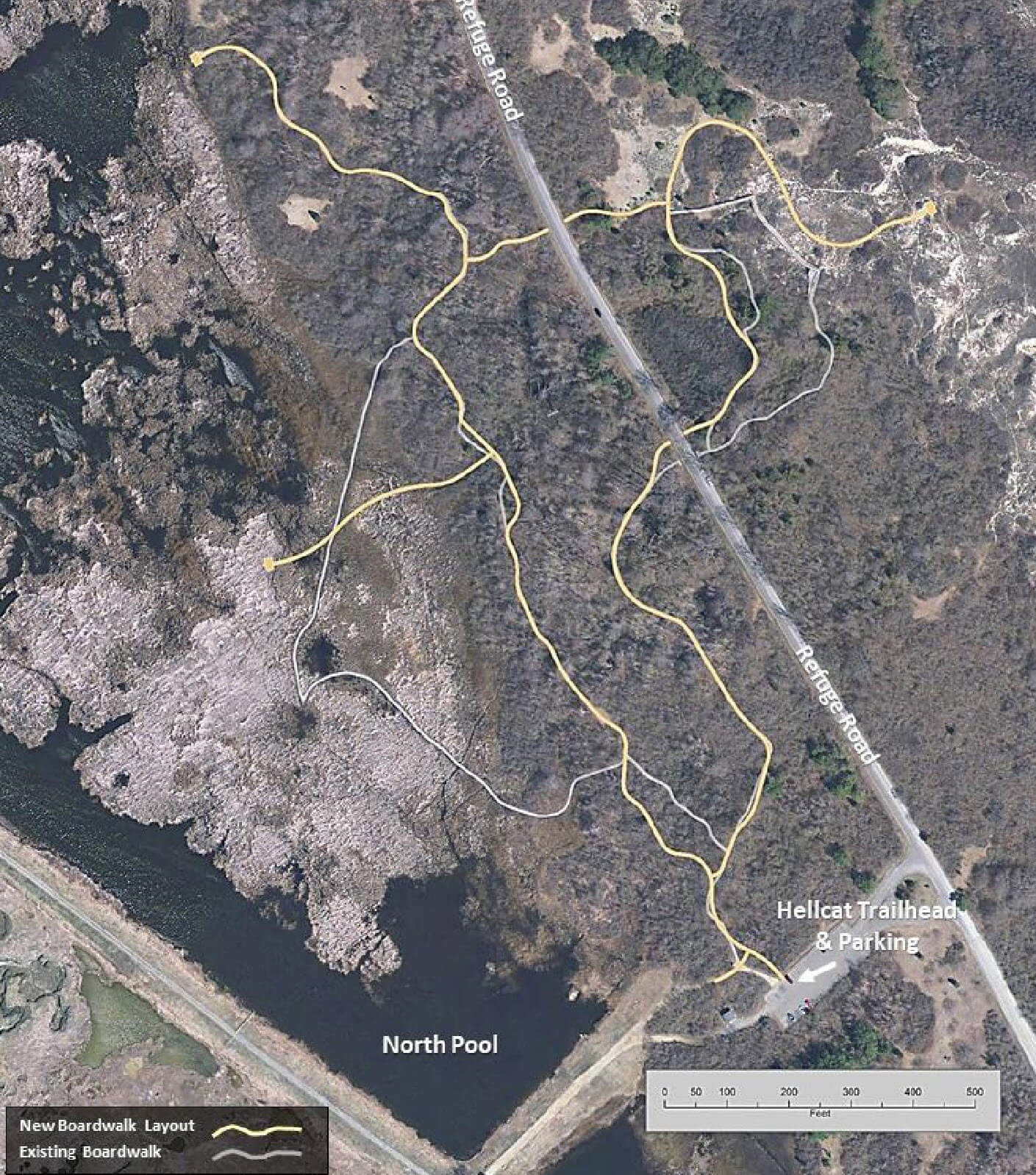
Closure of Hellcat Trail @ Parker River NWR

The Hellcat Trail at Parker River National Wildlife Refuge is closed to all public access effective Monday, December 23, 2019 in order to facilitate replacement of the entire boardwalk system that supports the trail. The existing trail, both the marsh and dune loops, will be closed for the duration of the project, which is expected to take up to a year.

During the Hellcat Trail boardwalk closure, visitors may walk a variety of other boardwalks and trails on the refuge – including a new trail to the tip of Stage Island. Additionally, there are six miles of ocean beach to enjoy through the fall, winter, and early spring months.
Closure of Hellcat Trail @ Parker River NWR2019-12-31T12:23:01-05:00

Winter Birding on Cape Ann

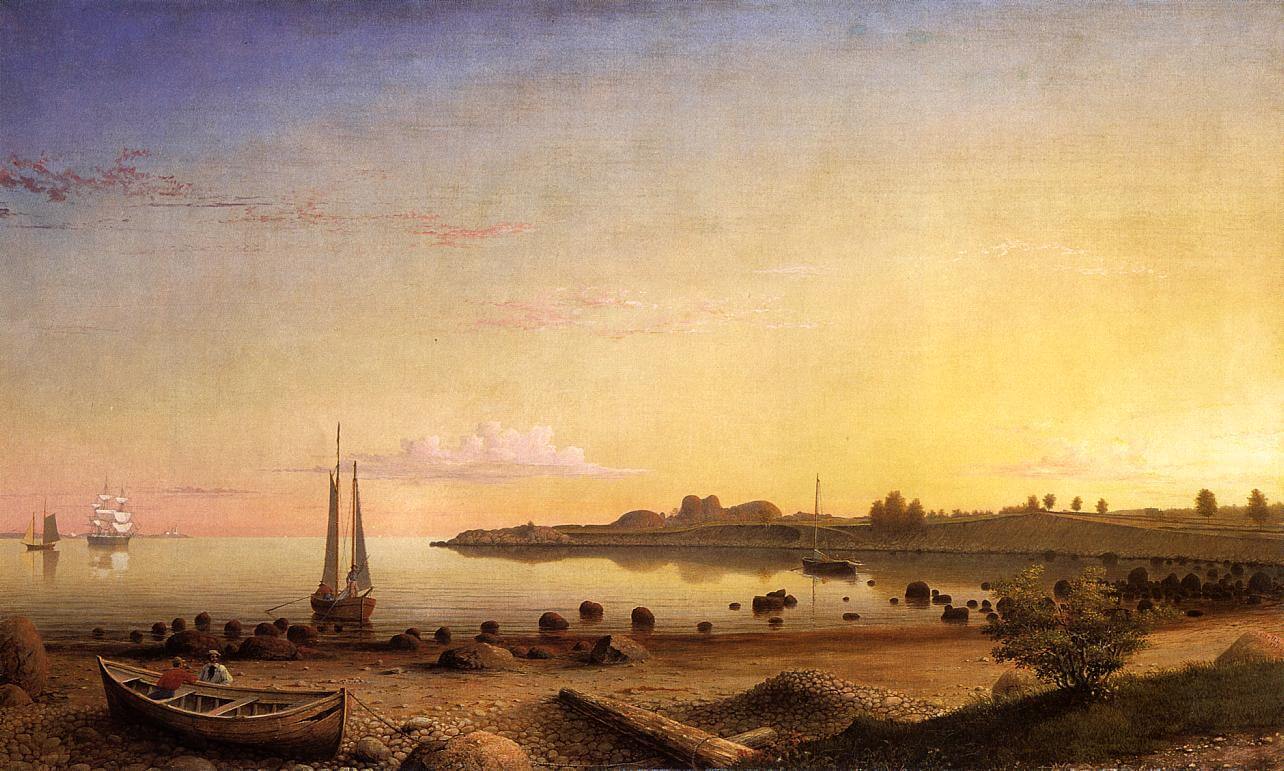
seen above: Stage Fort Park by Fitz Henry Lane

Dovekie at Gloucester Harbor by Phil Brown

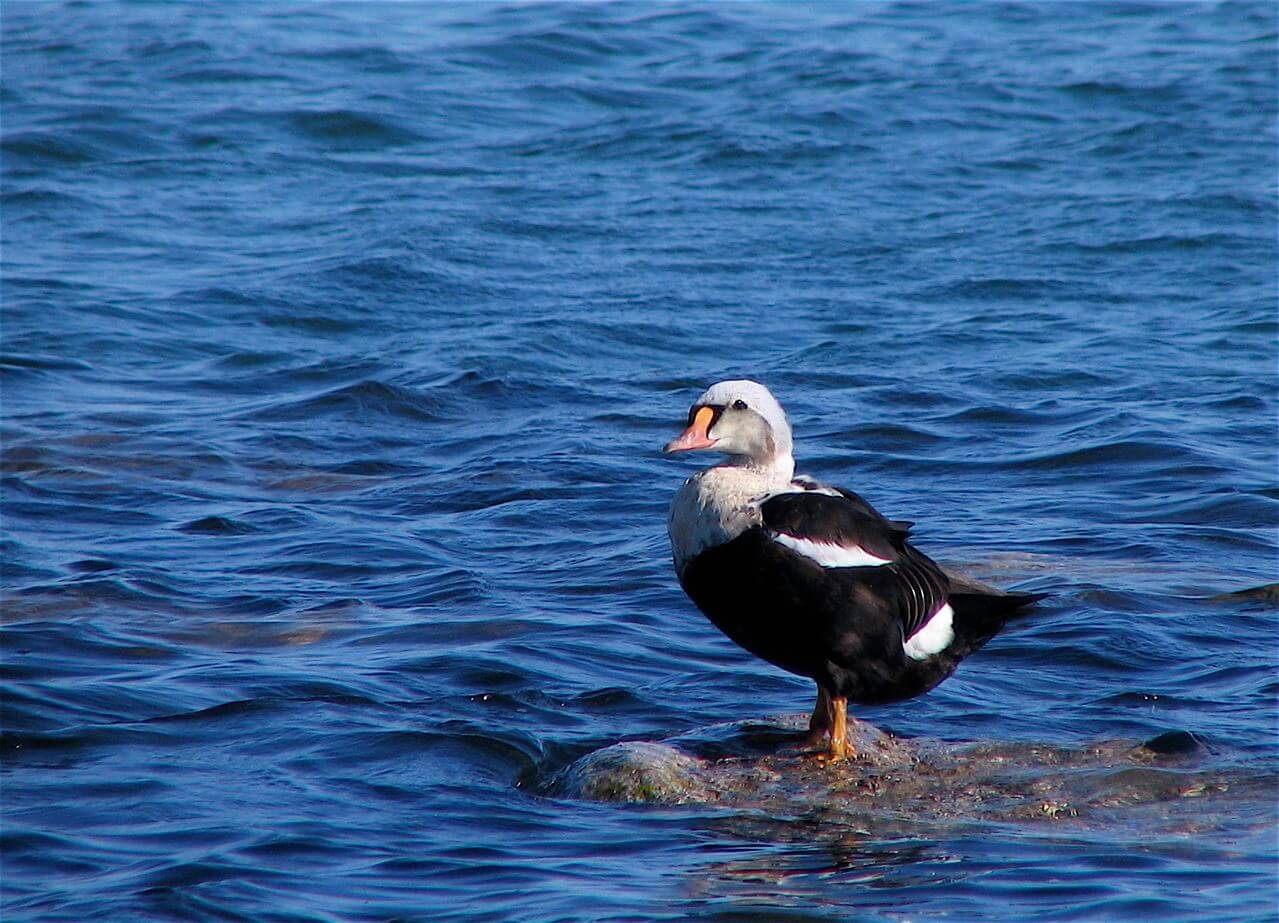
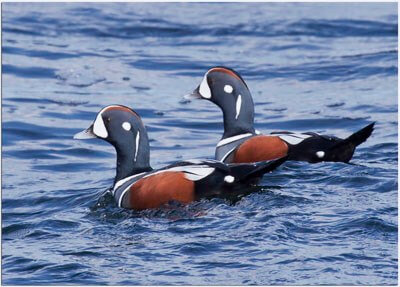
About once a week, from November into March, the BBC offers field trips to Gloucester and/or Rockport on Cape Ann, one of the Northeast’s prime destinations for winter birding. The main attractions are seabirds: waterfowl, alcids, and gulls. On a given day, we usually find 15 to 20 species of ducks and geese, with a possibility of a stunning King Eider and the virtual certainty of Harlequin Duck, a risk-prone, fantastical beauty fond of rough water and one of only three torrent-feeding ducks in the world. Six alcids are possible, from the probable Razorbill and Black Guillemot to the very scarce Atlantic Puffin. You’ll also have a fair chance to see an Iceland Gull (at the southern end of its winter range) and possibly the imposing Glaucous Gull, while various other scarce to rare gulls have been found on BBC trips, including Black-headed Gull, Slaty-backed Gull, and Ivory Gull. It takes great luck to find the rarer gulls, but we keep scoping, hoping, and searching.

One standard BBC route begins at the famed bronze statue of the Man at the Wheel, dedicated in 1923 as a memorial to those who have “gone down to the sea in ships.” Here you’re looking out at Gloucester’s outer harbor—a scene often painted by local artists like Homer Winslow and Fitzhenry Lane–with Ten Pound Island in the foreground and Dog Bar Breakwater further out. It’s a good spot for the more common local ducks like Red-breasted Merganser, Bufflehead, Common Goldeneye, and, near Stage Fort Park, one or both scaup species.

King Eider by Carol Decker

Jodrey State Fish Pier, in Gloucester’s inner harbor, is gull headquarters. From the end of the pier, BBC groups carefully scan the whole area—water, pilings, warehouse rooftops—for Iceland and Glaucous Gulls (or a rarer gull), ducks, grebes, Common Loons, and uncommon alcids like Dovekie and Thick-billed Murre. We also scope the City Hall tower, where two Peregrine Falcons spend their winters. Across the water on Rocky Neck Avenue, we sometimes scope the inner harbor from a different angle or, by crossing the street, scan Ten Pound Island and the outer harbor from a fresh vantage point.

Purple Sandpiper at Bass Rocks by Christopher Ciccone

Niles Beach, at the entrance to Eastern Point, is a good place to look for Horned and Red-necked Grebes, all three scoters, Long-tailed Ducks, and distant Black Guillemots. The tip of Eastern Point—the lighthouse, Coast Guard station, and breakwater–offers another chance for the same birds, along with gulls, Gadwall, and Purple Sandpipers, which often feed at the rocky tip of the seawall. From the lighthouse you can see the distant Boston skyline. We also check Niles Pond, even when frozen over. The Slaty-backed found here in January 2008, along with Lesser Black-backs, were all identifiable in part because they were standing on ice, with leg color easily visible. Open water may draw ducks like Ring-necked, Ruddy, the occasional Redhead or Canvasback, or a wintering Great Blue Heron.

Bass Rocks, or the Back Shore of Gloucester, a long stretch of rocks with an open view of the Atlantic and the twin lights on Thacher Island, is another fine area for guillemots, scoters, goldeneyes, grebes, Common and Red-throated Loons, Great Cormorants drying out on offshore rocks, Purple Sandpipers on the rocky shore, and especially King Eider, sometimes found directly out from the Elks Club parking lot. Note: if you’re scoping for a black-backed King Eider, you’re more likely to confuse it with a Greater Black-backed gull than the locally abundant Common Eider. In recent years we’ve sometimes found King Eider around the north end of Good Harbor Beach, just up the coast. We often check the beach parking lot for Horned Larks, Snow Buntings, the occasional Lapland Longspur, and sparrows in the thickets.

Harlequin Ducks at Andrews Point by Phil Brown

Cape Ann’s most distinctive geological feature, a granite outcrop jutting into the Atlantic, is sometimes called the Rockport Headlands, a collective term for Halibut Point, Andrews Point, and Cathedral Ledge. This is usually the last stop on the BBC loop, though we may come early on mornings when offshore winds drive seabirds close to shore. It’s a prime spot for tremendous views of Harlequins, and the best place on the Cape to scope for alcids like Razorbills and murres along with plunging Northern Gannets, distant Black-legged Kittiwakes, loons—Pacific with great luck–grebes, various ducks, and Purple Sandpipers. On trips to the 70 acres of Halibut Point State Park, BBC groups check heathland and woodlots for irruptive or vagrant landbirds like Bohemian Waxwings or Townsend Solitaires.

On all-day winter trips, BBC groups might also visit the Rockport coves, like Folly and Loblolly, or the stretch from Plum Cove to Hodgkins Cove in Gloucester, the best place in recent years to try for Barrow’s Goldeneye. In other seasons BBC trips might explore Eastern Point for spring migrants and or visit Coolidge Point in Manchester for the evening spectacle of egrets, herons, and ibises returning to their roosts on Kettle Island.

Cape Ann is a place of great natural beauty. Here ocean meets rock, shaping coves, inlets, promontories, and crenulations, along with ledges and rocky islands and a wealth of birds that breed and feed in these places. The Cape also has a fascinating cultural history. At Cathedral Ledge you’ll stand where Ralph Waldo Emerson once stood, by the veranda of the Emerson Inn, and look out toward the Dry Salvages, the treacherous rocks described by T. S. Eliot in The Four Quarters. Emerson and Eliot spent their summers here, but missed out on the pleasures of Cape Ann winter birding: the birds, the crisp air, the plucky camaraderie of BBC groups braving cold or wind to find seabirds. Foul weather, local birders say, often brings great fowl. Bundle up.

Winter Birding on Cape Ann2024-02-14T18:56:05-05:00

Remembering Bill Drummond

We lost legendary and much-loved trip leader, Bill Drummond, 76, on October 30, 2019.

Bill Drummond was a cornerstone and driving force behind the success of the Brookline Bird Club for many years.  He served as Editor of Bulletin/Field Trip Coordinator (when the positions were coupled) from 1975 to 1985, moving from officer to board member position starting in 1976. Bill was elected club President in 1987, serving until 1989. He stepped down from the Board in 2003. In one Bulletin, as the Editor & Field Trip Coordinator, Bill wrote that he was so very enthusiastic about all the trips offered by club that he wished he could attend all of them!

Bill was able to combine his love of birds and birding with his love of teaching. He learned to identify birds as he was growing up in Ohio. What made him happiest was sharing this knowledge with other people.  He was not only a birder of unmatched intensity, but a generous and thoughtful friend.
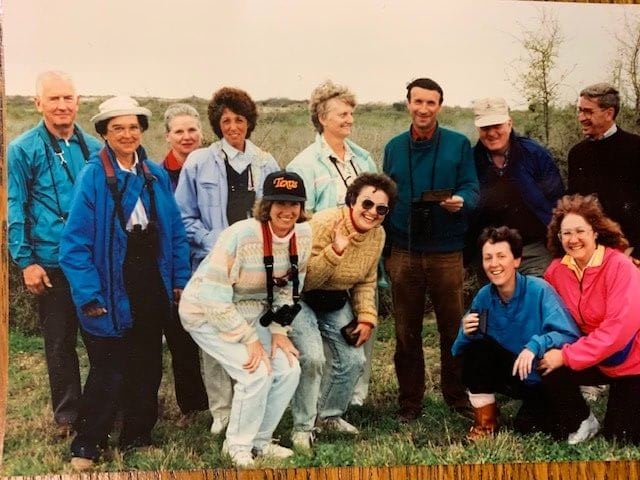
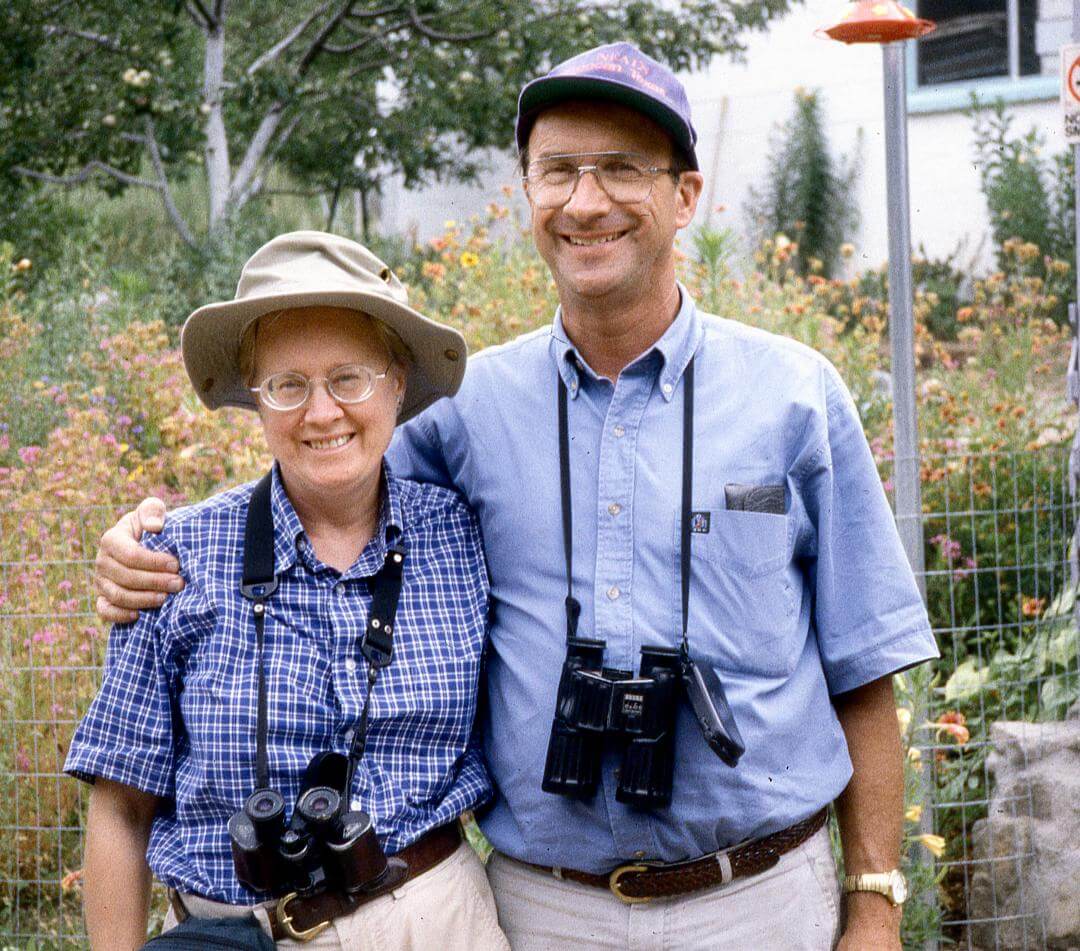
A passionate and dynamic birder, he applied his excellent planning and organizational skills to leading birding trips.  In addition to local trips, he led trips out-of-state trips, and out of country, to destinations such as Costa Rica and Ecuador.  He originated the Grouse Grand Slam trip in 1988. He led many impromptu trips seeking rarities. In the years before the Internet came to dominate daily life, he was a central source of birding information, which he generously shared with all.  His trips featured camaraderie in a group setting that one would not get if they planned travels on their own.  He promoted positive birding ethics, and taught, mentored and inspired generations of trip leaders by selfless example. He was noted for his even-handed dealing with trip participants and his efforts at making distant trips affordable and accessible. His no-nonsense military style betrayed a caring and reliable competence that was widely respected.

So many of us have echoed these thoughts clearly conveyed by David Hursh in 2014 for the Club’s recognition of Bill’s service:

The first BBC trip I ever went on was with Bill Drummond to Plum Island.  That was about 15 years ago.  Since that time, I have traveled across the country and seen hundreds of new birds, and 99% of those were thanks to Bill Drummond.  Bill has been influential in getting me, as well as many others, to experience all this great country has to offer.  From Plum Island to the Dry Tortugas, from southern California to Barrow, Alaska, Bill has dedicated his life to helping everyone see all there is to see.  Bill returned to the same places, year after year, decade after decade, not to build his own bird list, but to help each new generation of birders build theirs.

And:

Finally, I’d like to say a few personal words for all the years of friendship and guidance that Bill has given me.  Bill has taught me many things when it comes to leading bird trips.  He has taught me always to place the needs of others over those of the leader.  Bill is not concerned with building the biggest trip list…  He cares instead about how many birds on that list were seen well by everyone in the group…  Bill has also taught me to value the proper practices of group birding that he learned when he first started birding.  Staying together, moving slowly, keeping quiet …  anything to avoid disturbing the birds or impacting the environment.  And lastly, Bill has shown me the joy that comes from helping others discover the world of birds, a joy that he has shared with us for over 50 years.

Here’s a wonderful tribute to Bill from December 2014, assembled for a recognition of his service to the Brookline Bird Club and the birding community given at the BBC Fall Meeting, October 23, 2014, by President Glenn d’Entremont, written and compiled by Fay Vale, Chairperson of the Recognition Committee, with the help of Bill’s friends.

For more about Bill’s life, go to https://www.contefuneralhomes.com/obituary/william-drummond .

Our condolences go out to his wife Barbara Drummond, his family and friends.  Those of us who knew Bill Drummond will always remember his energy, humor, his sharing and his friendship.

Remembering Bill Drummond2024-02-14T18:56:09-05:00

Looking for new Membership Secretary!

The Brookline Bird Club is looking for a new Membership Secretary for April 2020 to replace our current secretary, Judy Hepburn, who is standing down at the end of her term. Judy has done a sterling job with the position, and will remain to help train the new secretary.

The Membership Secretary is a voluntary position and sits on the club’s board. Candidates for the role should be comfortable using online software to track membership and payments as well as using Excel or similar to manipulate data. You will receive training in how to use our admin system. The roles and responsibilities of the position include:

  1. Maintaining an up-to-date database of current members.
  2. Processing requests and collecting funds from new and renewing members
  3. Responding to requests for information about the club and its activities.
  4. Coordinating email campaigns to club members.
  5. Attending board meetings and presenting updates on membership stats and activities.
  6. Attending club meetings to meet and interact with members.

Please contact me if you are interested in learning more about the position.

Good birding,
–Neil

Neil Hayward
President

Looking for new Membership Secretary!2024-02-14T18:56:09-05:00

BBC Movie Night: Bird of Prey

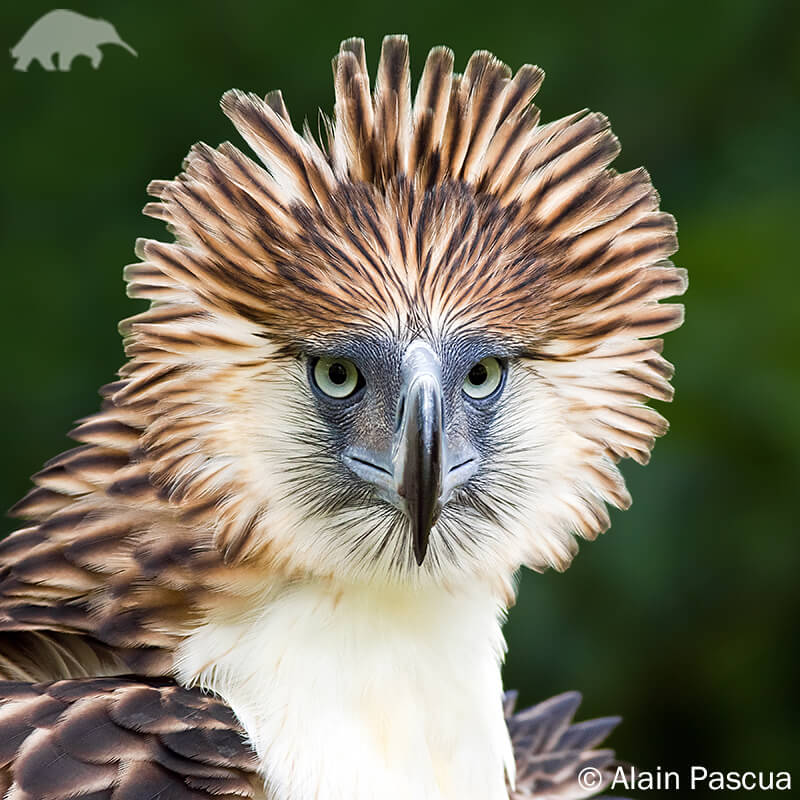
More than 30 eager viewers attended the BBC showing of Neil Rettig’s stunning “Bird of Prey” film on Tuesday, November 12th, at the Woburn Public Library. Fortified by a variety of refreshments and the library’s state-of-the-art audiovisual technology, viewers who braved windy, freezing temperatures watched as the Great Philippine Eagle was located, tracked, bore, tended to, and ultimately fledged a healthy chick within what remains of the once thriving forests of the Philippine Islands archipelago. Together with a multidisciplinary, multi-national team that included Tree Rigger/Forest Guide Perfecto Balicao, and others, this huge eagle, once named “Monkey-eating Eagle, had been renamed Great Philippine Eagle by former president Ferdinand Marcos, who simultaneously promoted the bird’s name association with and supported widespread deforestation of his country. The film depicts despair and hope, as organizations like the Philippine Eagle Foundation work literally around the clock on essential tasks that include ensuring and monitoring safe nesting sites, tracking released chicks, and engaging school children and communities in education and advocacy for their national bird.

Stay tuned for future BBC-sponsored events that include movie evening, game night, and birds and breakfast/lunch.

BBC Movie Night: Bird of Prey2020-10-29T17:46:09-04:00

2020 Young Birder Scholarships Announcement

The BBC is pleased to announce that we will again offer two Young Birder Scholarships to nurture interest in bird study and conservation among young birders. The 2020 scholarships will cover the full cost ($1395) of the Coastal Maine Bird Studies for Teens program at National Audubon’s Hog Island camp on June 16-21, 2020. The cost includes housing, boat travel, and all meals. Scholarship recipients will be responsible for transportation costs to and from the camp.
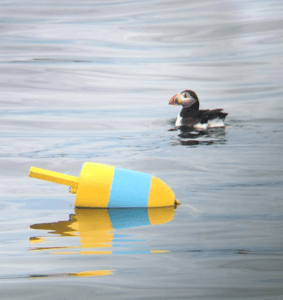
All completed applications and references must be received by the BBC by February 15, 2020 so don’t delay.

Full details on the BBC’s 2020 Young Birder Scholarships

2020 Young Birder Scholarships Announcement2024-02-14T18:56:13-05:00

Flight Calls: Exploring Massachusetts through Birds

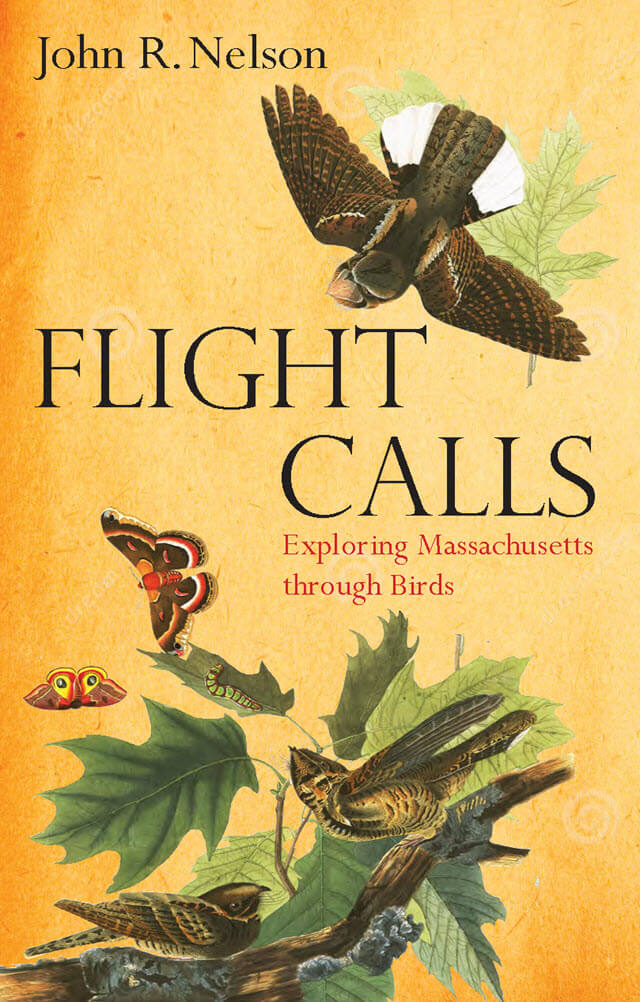
A history of the Brookline Bird Club and stories of BBC field trips are among the explorations in John Nelson’s Flight Calls: Exploring Massachusetts through Birds, just published by the University of Massachusetts Press. John blends personal field experiences, history, literature, recent scientific research, and humor as he takes readers in search of birds to Cape Ann, the Great Marsh, Mt. Auburn Cemetery, Cape Cod, Quabbin Reservoir, Mt. Wachusett, and other Massachusetts destinations. The final chapter focuses on bird conservation and the prospects for Massachusetts birds.
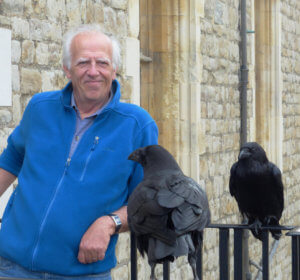
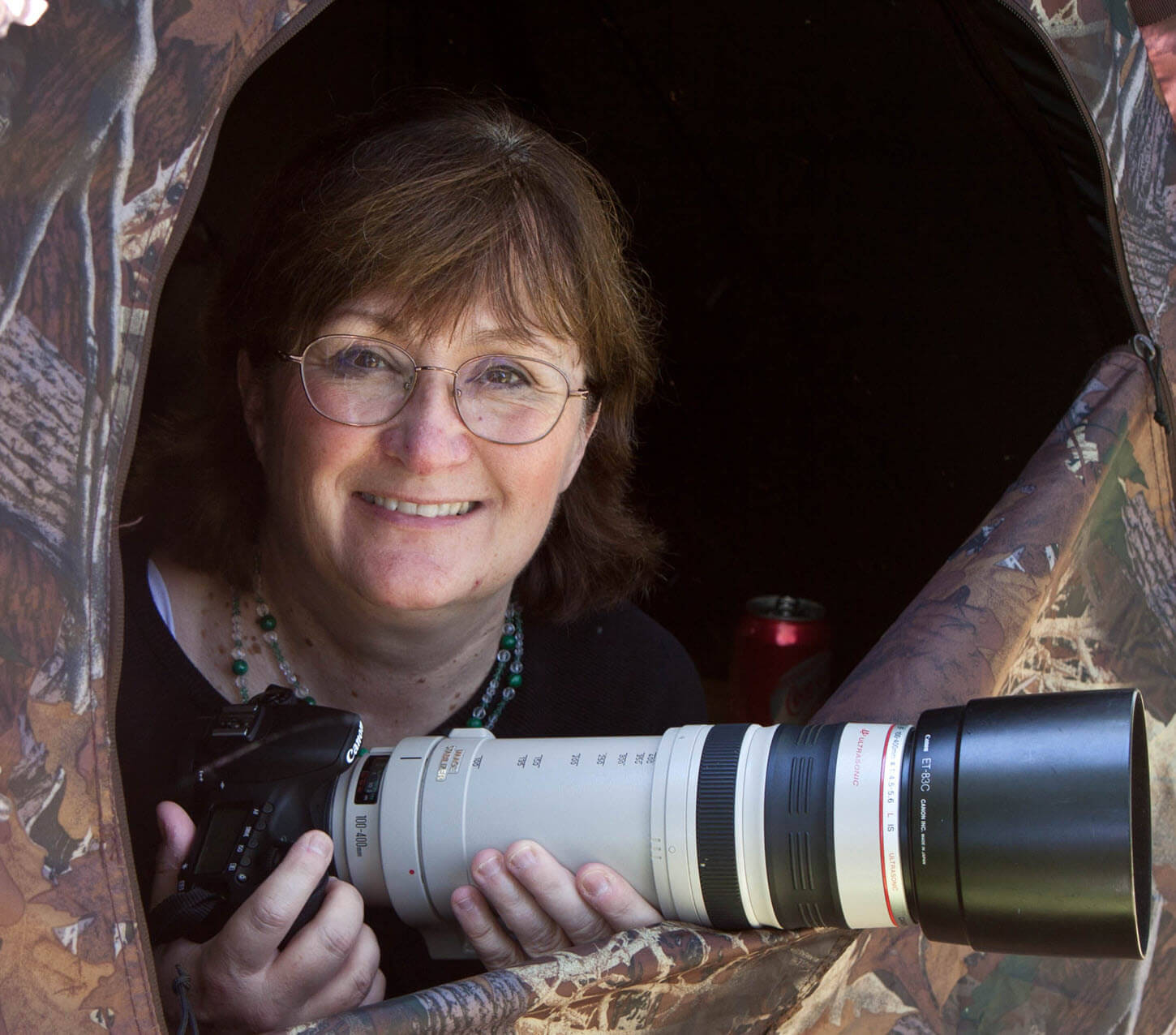
As a sample of Flight Calls, here are the opening paragraphs from Chapter 12, “For Birds and People: The Brookline Bird Club”:

In June 1913 thirty bird-lovers gathered at the Brookline Public Library to found the Brookline Bird Club in order to “study, observe, and protect native song birds and to encourage their propagation.” A front-page Brookline Chronicle story reported that the club was formed “to study the ‘little brothers of the air,’ arouse a sentiment for their preservation, arrange free lectures for the people, and plan other ways of education in bird life.” The BBC wrote a constitution and set annual dues at fifty cents, twenty-five cents for “juniors”–boys and girls under fourteen but “old enough to go alone on street cars.” A highlight of club field trips that fall was a Hooded Warbler in breeding plumage at the Boston Public Garden. A 1913 Boston Globe photo showed a BBC group at Chestnut Hill: men in suits and ties, women in plume-less hats and bulky ankle-length dresses, and one junior birder with a tam o’ shanter in the front row.

Its tradition of nature study made Massachusetts fertile habitat for one of the country’s first bird clubs. In 1818 the state had passed the nation’s first law protecting some songbirds (“non-game” birds) from shooting. Roger Tory Peterson considered Massachusetts the cradle of American ornithology, for in 1873 the Nuttall Ornithological Club had been founded in Cambridge, and from Nuttall emerged the American Ornithologists’ Union. The Massachusetts Audubon Society was established in 1896 to fight against the plume trade. The Brookline Chronicle, with a little hometown bias, boasted in 1916 that Brookline was “probably the center of bird interest in the United States.” The town had its own bird warden, outlawed the use of firearms or traps to kill or catch birds, and by 1915 it was supporting 150 bird-feeding stations. After winter storms American Crows would trail the grain-distributing sleigh from stop to stop.

One might envision the club’s progenitors as whiskered good old Yankee boys, but in fact the Founding Fathers were mostly Founding Mothers. The prime mover was a woman, Mary Moore Kaan, as was the first trip leader, Edith Andrews, and eight of the first eleven directors. Recreational birding opens a window into a period when American women, at least those with leisure time, were determined to get out into the world and become more active physically as well as intellectually and politically. They rode bicycles, went camping, danced more freely, and began to wear less restrictive clothing. Better, more affordable “opera glasses” brought more women into birding. Florence Merriam Bailey joined other Smith College girls on “bird rambles” and went on to write A-Birding on a Bronco and Birds through an Opera Glass. Field guide author Frank Chapman felt “astonishment, joy, and chagrin” when his bride Fannie mastered the art of bird-skinning on their Florida honeymoon. In 1902 teacher Nell Harrison wrote indignantly about women’s exclusion from scientific egg collecting: “Men can go freely into the fields and follow the birds everywhere, while fashion and conventionality debar women from the same privilege.” Professional ornithology remained a predominantly male domain, and some ornithological clubs barred women into the 1970s, but in 1901 Bailey, Mabel Osgood Wright, and Olive Thorne Miller became the first women elected to the American Ornithologists’ Union, and two decades later Grace Snow became the BBC’s ornithologist. . .

John Nelson is a longtime director of the BBC and chairs the club’s Conservation and Education Committee. In 2016 he organized the Association of Massachusetts Bird Clubs, and he also serves as a director of the New England journal Bird Observer and the Essex County Ornithological Club. A professor emeritus at North Shore Community College, John has published widely in both literary and birding magazines, most recently “Raven Knowledge” in the Autumn 2018 issue of The Gettysburg Review, and he was awarded a 2018 Pushcart Prize for his essay “Funny Bird Sex” in The Antioch Review.

Flight Calls: Exploring Massachusetts through Birds2024-02-14T18:56:14-05:00

Fall Meeting Saturday October 19

Laura’s Best Bird EVER: A Lifetime of Magical Encounters

Have you ever had such a perfect look at a bird, or watched it in such perfect circumstances, that you thought it had to be the best bird ever? Laura Erickson has found herself saying exactly that on many occasions, from special glimpses at Pileated Woodpeckers and a Five-striped Sparrow family to her one and only glimpse at one of the rarest birds on the planet, the Horned Guan. Some of the birds she’s seen in her travels to four continents made the grade, but so did some of the special individuals she’s seen in her own backyard. Sometimes looking for the best bird ever can open our minds and hearts to much, much more.

Saturday October 19, 2019

7:30 pm –8:30 pm (social hour with refreshments from 6:30 pm)

Geological Lecture Theater, Harvard University. 24 Oxford St, Cambridge.

FREE parking at the garage at 52 Oxford St.

About Laura:

LAURA ERICKSON, 2014 recipient of the American Birding Association’s prestigious Roger Tory Peterson Award, has been a scientist, teacher, writer, wildlife rehabilitator, professional blogger, public speaker, photographer, American Robin and Whooping Crane Expert for the popular Journey North educational website, and Science Editor at the Cornell Lab of Ornithology. She’s written eleven books about birds, including the ABA Field Guide to the Birds of Minnesota, National Geographic Pocket Guide to Birds of North America, the best-selling Into the Nest: Intimate Views of the Courting, Parenting, and Family Lives of Familiar Birds (co-authored by photographer Marie Read); the National Outdoor Book Award-winning Sharing the Wonder of Birds with Kids; 101 Ways to Help Birds; and The Bird Watching Answer Book for the Cornell Lab of Ornithology. She’s currently a columnist and contributing editor for BirdWatching magazine. Since 1986 she has been producing the long-running “For the Birds” radio program for many public radio stations; the program is podcast on iTunes. She lives in Duluth, Minnesota, with her husband, one indoor cat, and her little birding dog Pip.

More about Laura at: https://www.lauraerickson.com.

Fall Meeting Saturday October 192024-02-14T18:56:25-05:00

Brookline Bird Club “Extreme Pelagic” September 21-22, 2019

Thanks to Nick Bonomo for this trip report.

On the heels of a weather cancellation of our August overnight pelagic trip, we were a bit nervous that the September trip might suffer the same fate. Lucky for us, Hurricane Humberto accelerated into the open North Atlantic, so the Brookline Bird Club would reach the edge of the continental shelf in 2019 after all.

Forty-seven hopeful birders boarded the Helen H in Hyannis early on Saturday, September 21st, in the hands of legendary Captain Joe Huckemeyer and his trusty crew. Capt. Joe informed us that we would face minor residual swell from the hurricane at first, but that seas would progressively calm through the weekend.

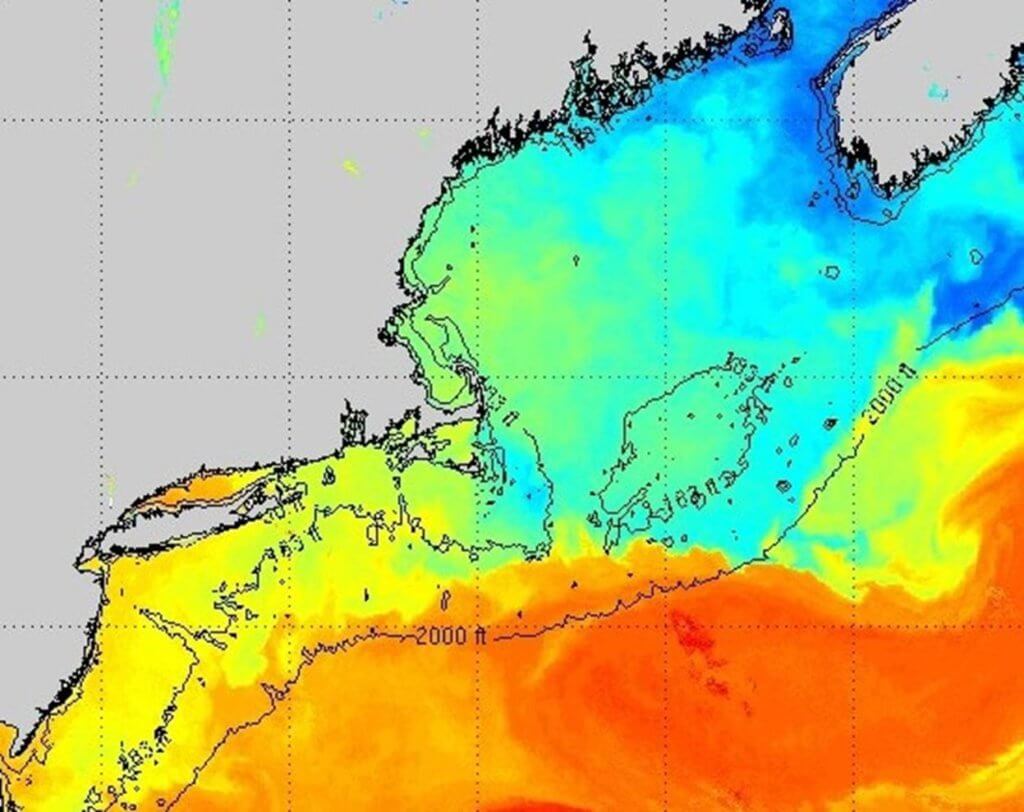
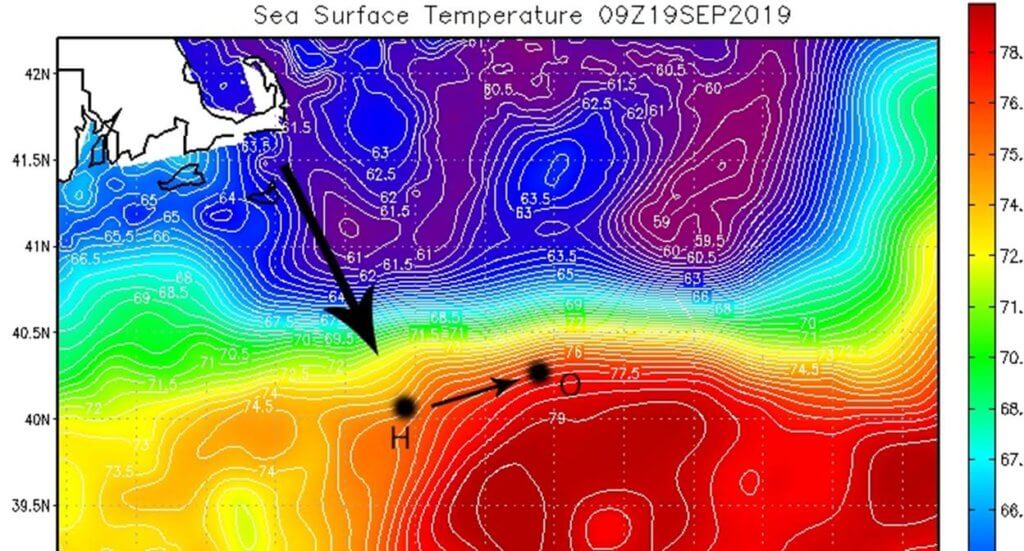
We had only successfully run a few of these late September trips before, so these waters remain exceedingly underexplored at this point in the season. We know that the shelf edge southeast of Nantucket produces great birds throughout the summer, so there’s no reason to think the first days of autumn should be any different. Hopes were boosted by the sea surface temperature maps, which showed a core of warm water edging right up to our proposed route. The combination of accessible warm water and sharp temperature breaks is often a recipe for success on these trips. Would we be in for a surprise or two? (Spoiler Alert: Yes.)

Sea surface temps off the northeast coast.

Sea surface temps with our proposed route. H=Hydrographer Canyon, O=Oceanographer Canyon

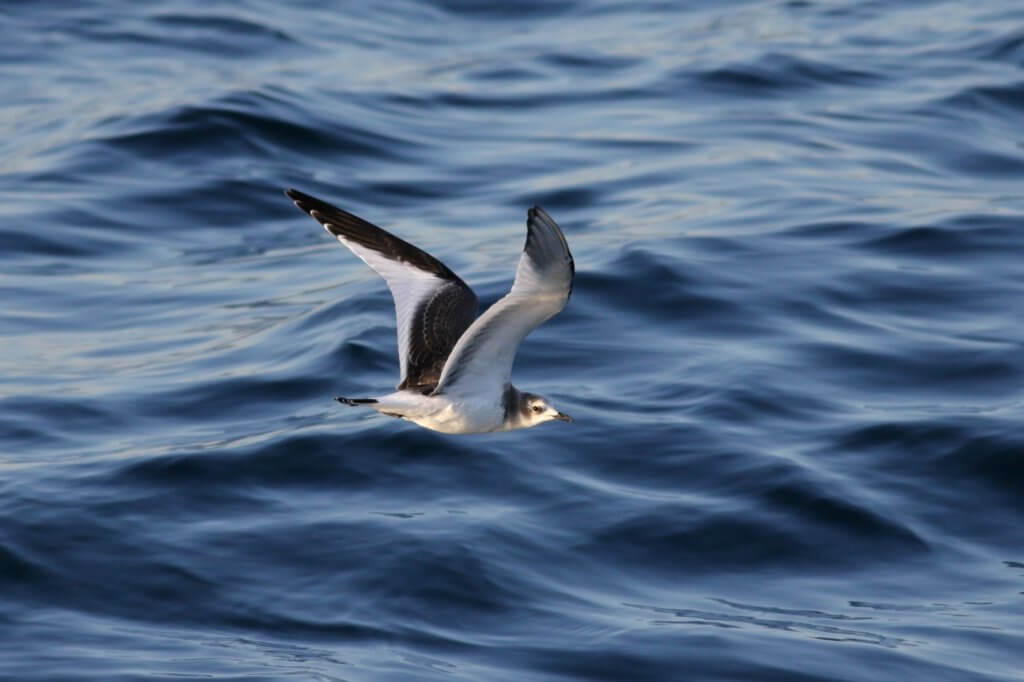
Barely out of Nantucket Sound, a juvenile SABINE’S GULL was spotted off the port side. We were able to stay with this bird for a bit, enjoying in-flight and on-water views of this striking larid. We were off to a hot start! Around the same time we passed our first tubenose, a light morph NORTHERN FULMAR that was sitting on the water. At this early date, this cold-water species is rather uncommon in these parts. Little did we know, this would only be the first of a spectacular showing of this species throughout the weekend.

Sabine’s Gull. Photo credit Nick Bonomo.

As we continued east of Nantucket, we passed by a steady trickle of gulls and terns. Among the Laughing, Herring and Great Black-backed Gulls were several LESSER BLACK-BACKED GULLS, a species that continues to take over the world. Distant views of BLACK TERNS were had among Common Terns. Our first NORTHERN GANNETS were seen. A flock of three WOOD DUCKS, appearing very much out of place, was heading north towards Cape Cod.

Someone spotted a large whale off the port side of the boat, and we were treated to brief but satisfying views of a HUMPBACK WHALE as it dove out of sight.

The Nantucket Shoals lie southeast of their eponymous island; this expansive patch of undulating sandy bottom is a nutrient-rich area known for constant upwelling of cold bottom water. We could feel the chill in the air as we passed through 60-degree surface temps. Along with this upwelling often comes a concentration of bait and birds. The Shoals were quieter today than we’re used to seeing, though one must be reminded that we did a single transect through a very large piece of water. Still, we had a smattering of GREAT and CORY’S SHEARWATERS, and yet more NORTHERN FULMARS.

While birding at sea, any experience with a land bird tends to be some combination of exciting and somber. There is the undeniable thrill of watching migration in action and being impressed by these individuals that continue to fight for survival while they attempt to reorient themselves. On the other hand, several of these birds may perish from exhaustion before they find land. Our first lost soul of the weekend belonged to a NORTHERN FLICKER. We weren’t terribly far from Nantucket at that point, so there was certainly hope for that one.

As we neared the south end of the Nantucket Shoals, our second woodpecker species appeared in the form of a YELLOW-BELLIED SAPSUCKER. You never know what’s going to appear overhead.

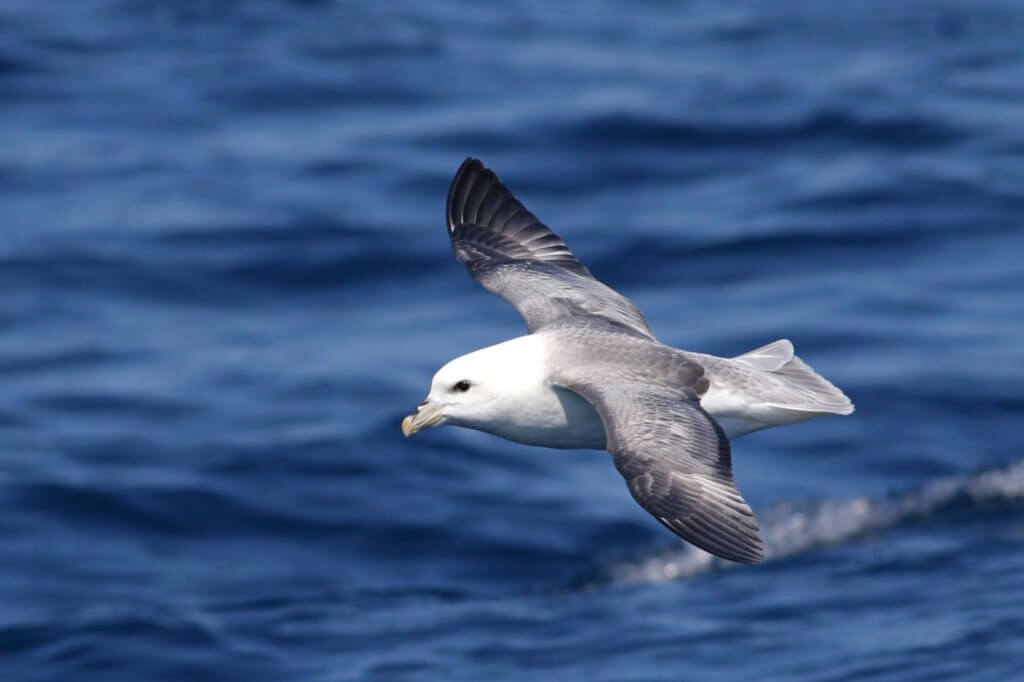
After we pass the productive Nantucket Shoals, we often find ourselves in a relatively birdless stretch until we reach the vicinity of the canyons, which is a distance of about 50 miles. This time, though, several miles before the shelf edge we found ourselves in a swarm of feeding NORTHERN FULMARS, GREAT SHEARWATERS, and WILSON’S STORM-PETRELS. The water here had spiked to 74 degrees. As our fishermen crew would find out, these birds were feeding over Yellowfin Tuna. The count of Fulmars in this flock reached a staggering 70+ individuals, one of which was a dark morph bird.

Northern Fulmar. Photo credit Nick Bonomo.

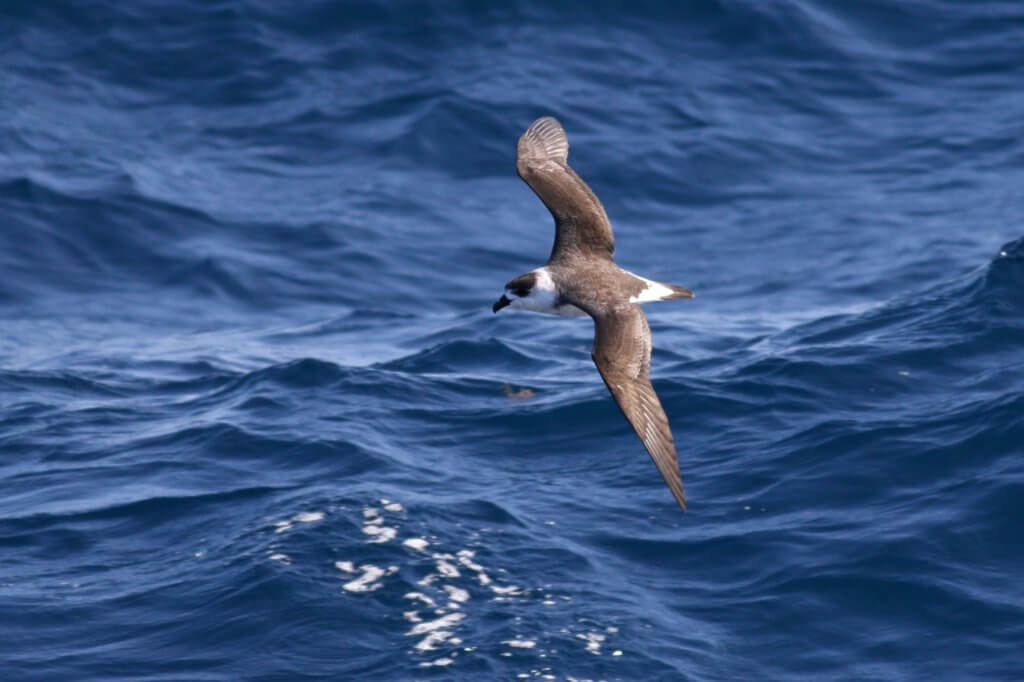
Eventually we had to tear ourselves away from these birds and continue our journey to the edge of the continental shelf, which we were nearing. OFFSHORE BOTTLENOSE DOLPHINS made an appearance near the boat. We arrived at the northern tip of Hydrographer Canyon at 1pm and proceeded to its mouth, where we turned eastward to follow the edge of the shelf. This stretch of “the edge,” which over the next 50 miles includes Dogbody, Welker, and Oceanographer Canyons, has treated us very well in the past. It didn’t take long for our first deep water specialty to pop up in the form of a BLACK-CAPPED PETREL, our first of five (!) sightings for the trip.

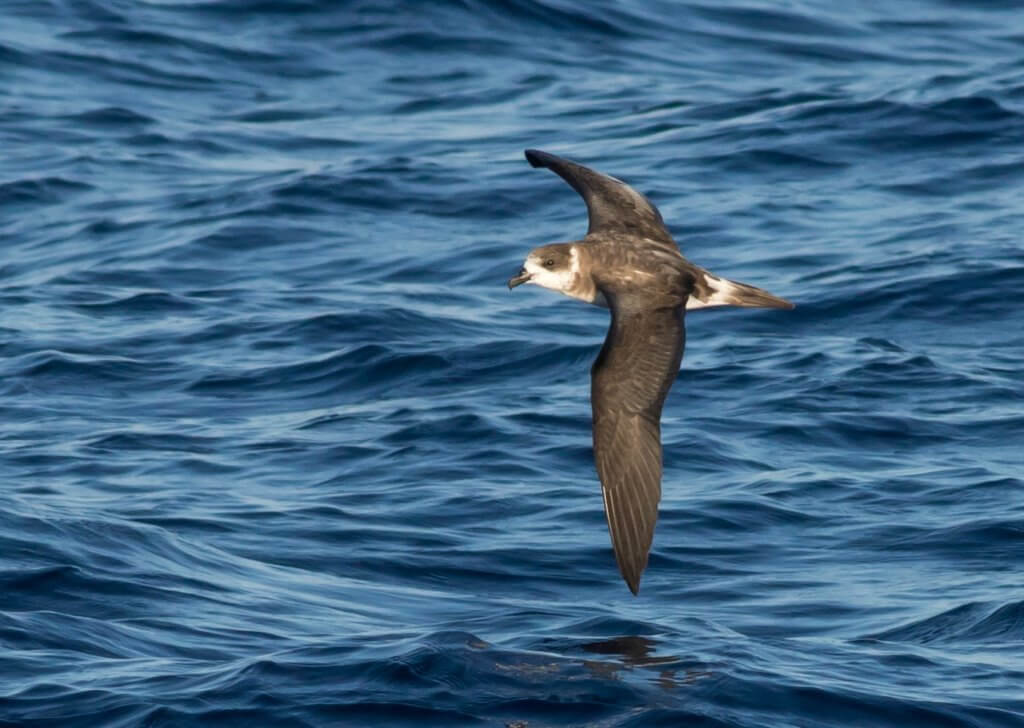
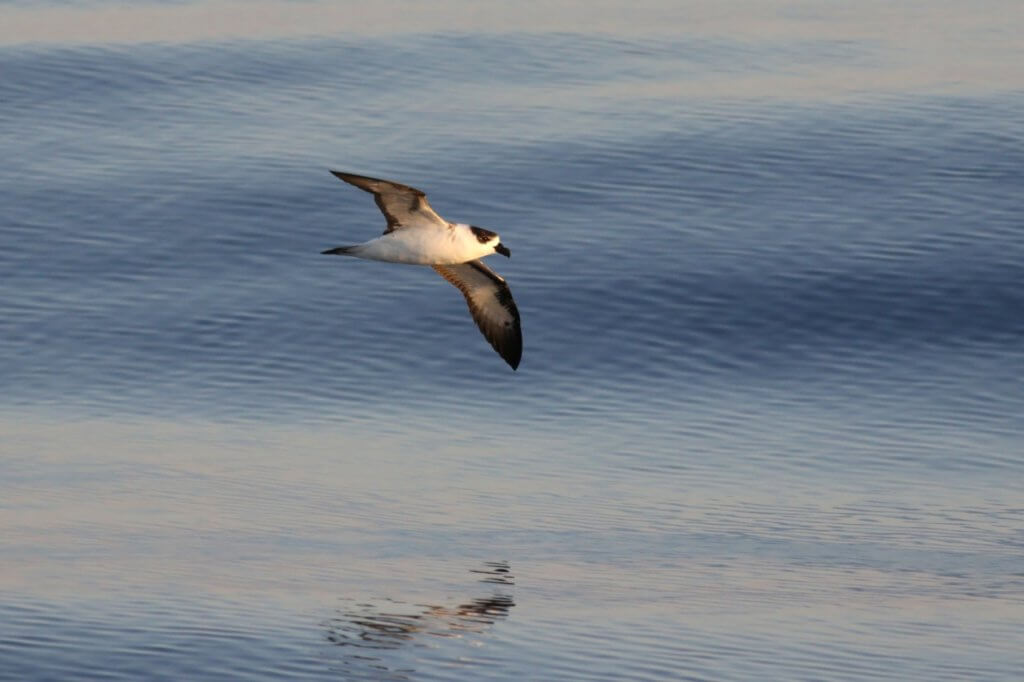
The Black-capped Petrel is a species that breeds in the Caribbean and spends much of its time feeding in the Gulf Stream; they are a common sight on pelagic trips out of Hatteras, NC. The more time we spend offshore southern New England, the more we seem to be encountering this species in the warmer, deeper waters off “the edge.” Close scrutiny off North Carolina has shown that there may be two forms of Black-capped Petrel, often described as “white-faced” and “dark-faced.” The two types differ slightly in plumage and molt timing, though there are intermediate-appearing birds. Interestingly, it seems that the overwhelming majority of Black-capped Petrels seen this far north fit into the “white-faced” category, which may indicate a very real difference in range. In fact, there are no eBird records of “dark-faced” birds north of North Carolina. In keeping with the track record, our first Black-cap of the trip was one of the “white-faced” birds.

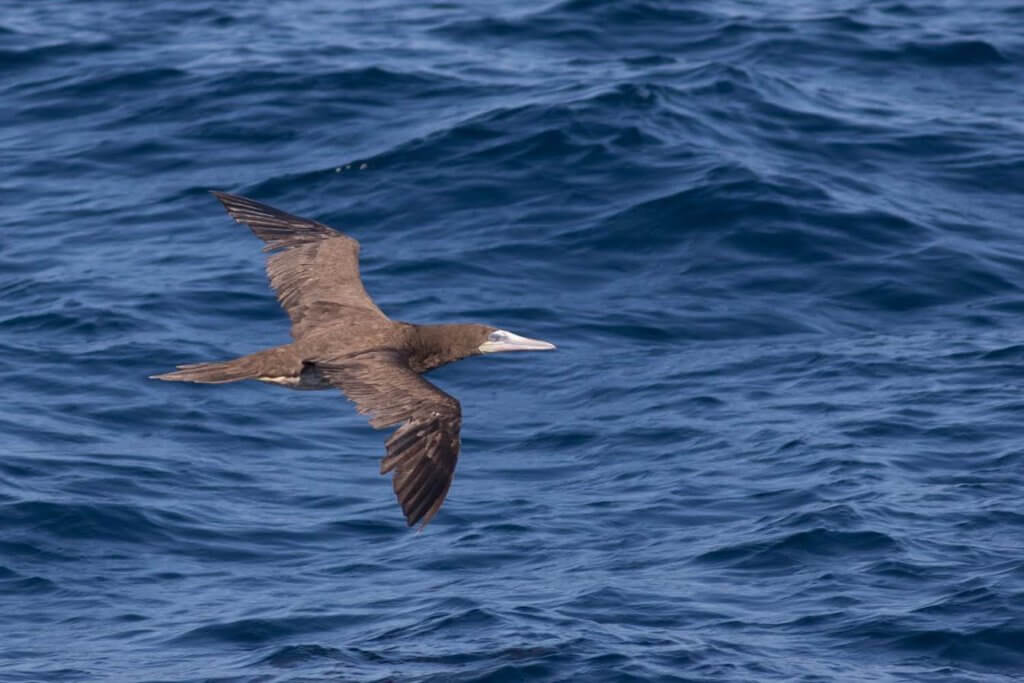
Our first jaeger of the trip, an adult light morph POMARINE complete with “spoons,” was well-seen. The parade of new species continued when a subadult BROWN BOOBY sneaked in below the horizon and popped up rather close to the boat! This is a new species for these BBC pelagic trips, though Capt. Joe has seen a few while out fishing in recent years. The story of the northward explosion of Brown Boobies continues to write itself and is showing no signs of slowing down.

Brown Booby. Photo credit Tom Johnson.

A bit lost in all the excitement were the first couple LEACH’S STORM-PETRELS of the trip. While we are sometimes treated to boat-side views of this species, more often than not they tend to steer clear of vessels. This would be the theme for this weekend, though we did have prolonged views of a handful of Leach’s off the bow while we were underway.

The same Brown Booby made a few more appearances through the afternoon as we continued eastward, occasionally chasing flying fish! It certainly felt as if it was sizing us up for a landing, but that never quite happened.

Our second BLACK-CAPPED PETREL, this one intermediate in plumage type, made a much closer pass than the first one did, thrilling the group. Any encounter with a gadfly petrel is a special one – just can’t get enough of ‘em!

Black-capped Petrel. Photo credit Nick Bonomo.

As we passed Welker Canyon, heading in the direction of Oceanographer, bird volume started to pick up a bit. We saw yet another BLACK-CAPPED PETREL (white-faced). This bird would lead us to an active feeding flock of tubenoses that was working over schools of skipjack tuna. Our trickle of birds had turned into a beehive.

A few minutes before 5pm the mood on the boat abruptly turned from leisurely to tense when a dainty gadfly petrel was spotted entering the fray. “GET ON THIS PETREL – THE SMALLER ONE!!”

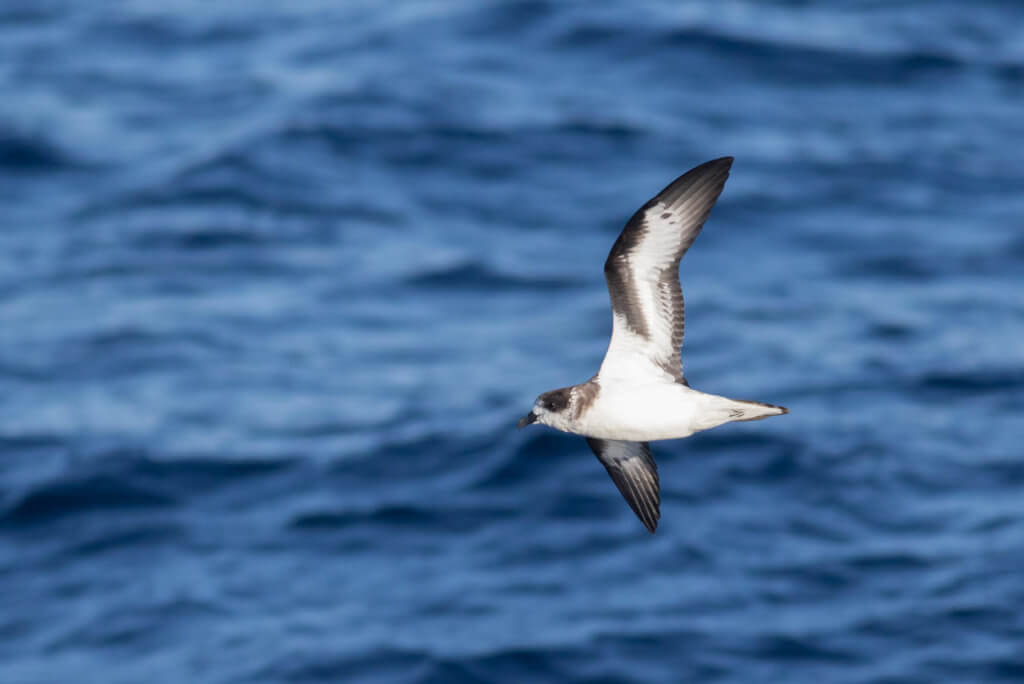
That smaller petrel revealed itself to be a BERMUDA PETREL. The Cahow. The Lazarus species. The east coast pelagic Grail Bird.

There was lots of yelling and cursing and pointing and shutter-clicking all at once. Those first few moments were filled with heavy doses of pure joy and anxiety. I can tell you from a leader’s perspective that it was more of the latter. This is a bird that everybody needed to see. And Pterodromas are quite well known for their fleeting passes! Luckily for everyone on board, we would have no such trouble. This bird performed better than anyone could have hoped. It’s hard to believe, but we stayed with this Cahow for 40 enthralling minutes! Long enough for co-leader Tom Johnson to tell the entire history of the species’ disappearance, rediscovery, and ongoing recovery efforts…all while we were watching this bird do its thing right in front of us. Unreal.

Bermuda Petrel. Photo credit Tom Johnson.

While the focus was entirely on the Bermuda Petrel for the duration of its stay, one couldn’t help but notice the incredible seabird composition of this flock. At one point also present with the Cahow were Black-capped Petrel, Brown Booby, and Northern Fulmar, in addition to more common species. Three of those are Massachusetts review species!

Bermuda Petrel. Photo credit Nick Bonomo.

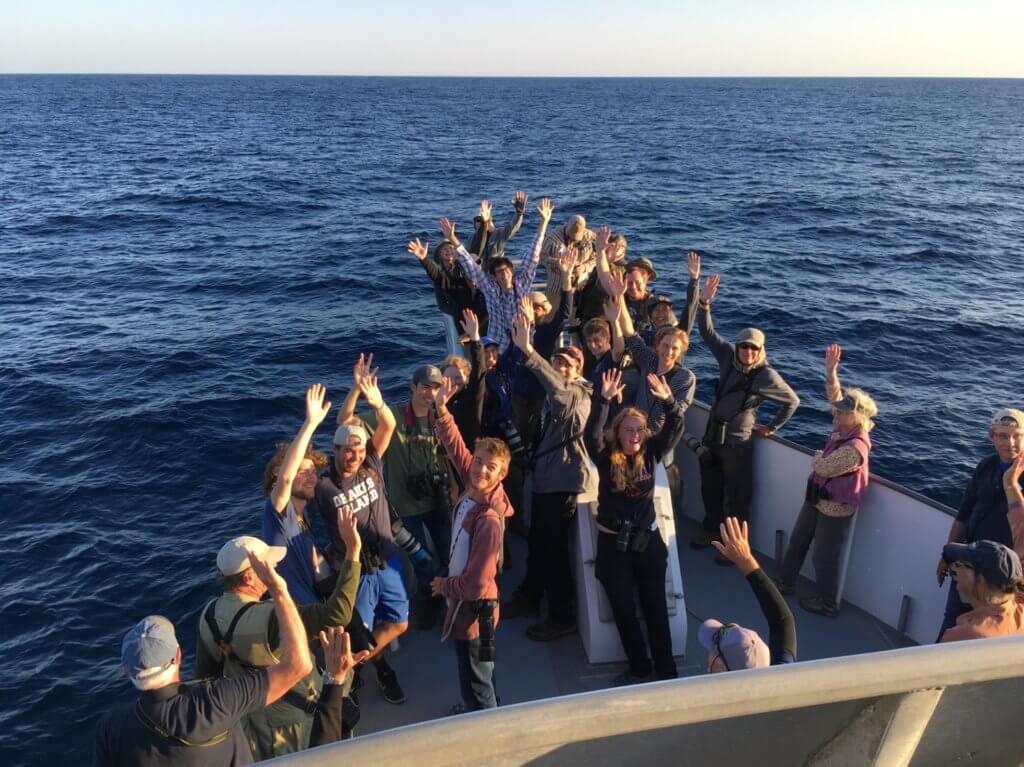
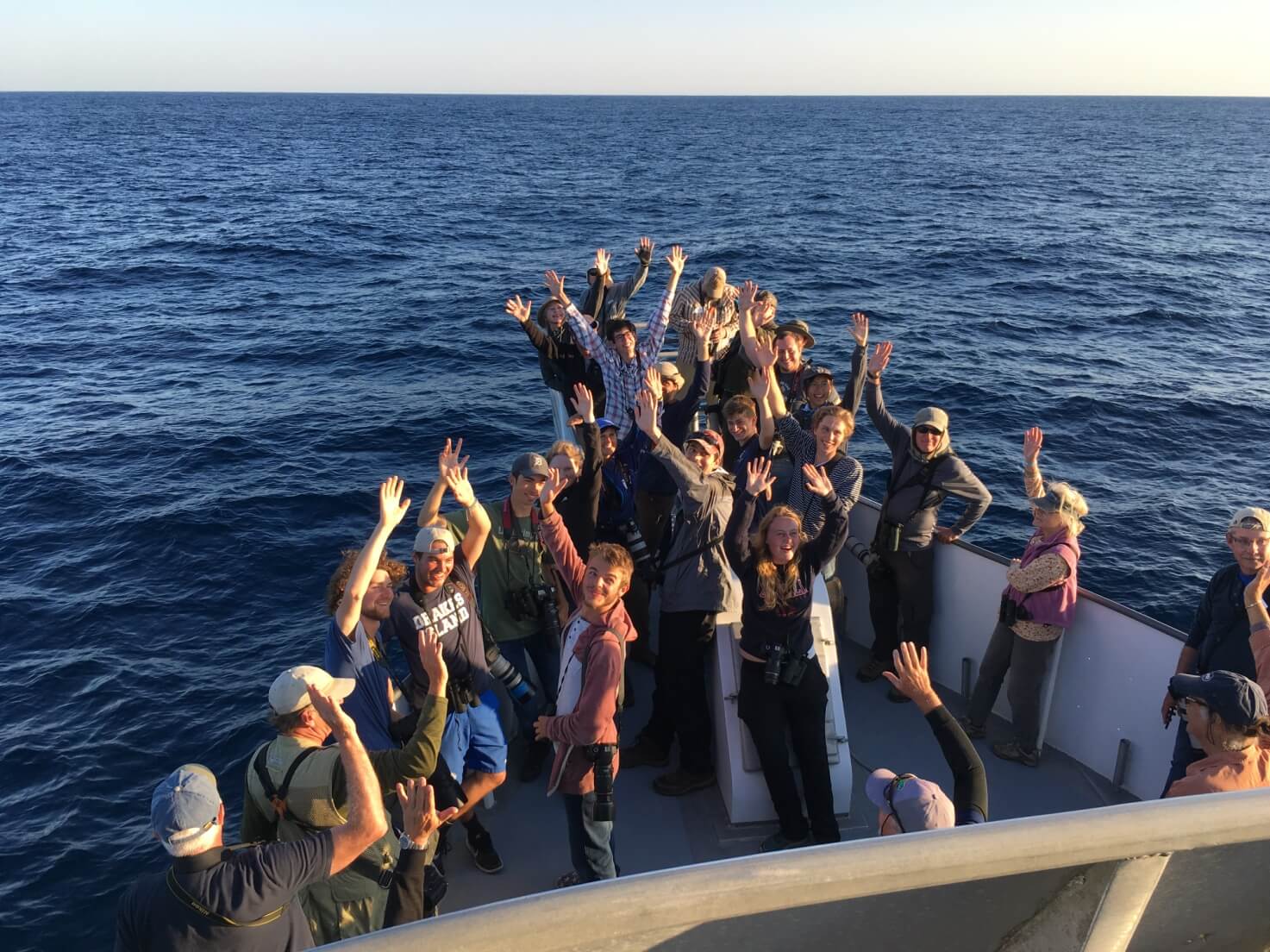
A very happy bow full of birders. Hey, who just saw an awesome life bird?

The entire boat was on such a high for the rest of the evening that we might as well have been floating over the water. It nearly felt like that, too, as the seas had subsided further. One more BLACK-CAPPED PETREL (intermediate facial pattern) concluded our birding for the day. Perfectly clear skies allowed for the elusive “Green Flash” to be seen on the horizon at sunset – yet another lifer for many on board.


On Sunday we awoke to glassy seas and Wilson’s Storm-Petrels fluttering through our chum slick. As we were pulling away from the slick, our fifth BLACK-CAPPED PETREL (intermediate) made a brief appearance. A juvenile RING-BILLED GULL, unusual this far offshore, also hung out for a bit.

Black-capped Petrel. Photo credit Nick Bonomo.

We proceeded to work southwest into deeper, warmer water that surpassed 77 degrees at the surface. With hardly any wind to propel them, we were finding most birds sitting on the water. Perhaps our biggest target of the day was White-faced Storm-Petrel, a species that can be found in these waters somewhat reliably from July to September. We were nearing the end of their known window of occurrence, as their numbers likely peak in August and drop off sharply sometime during September. Still, we were hopeful. Diligent checks of every flock of sitting storm-petrels yielded only more Wilson’s and the occasional flighty Leach’s.

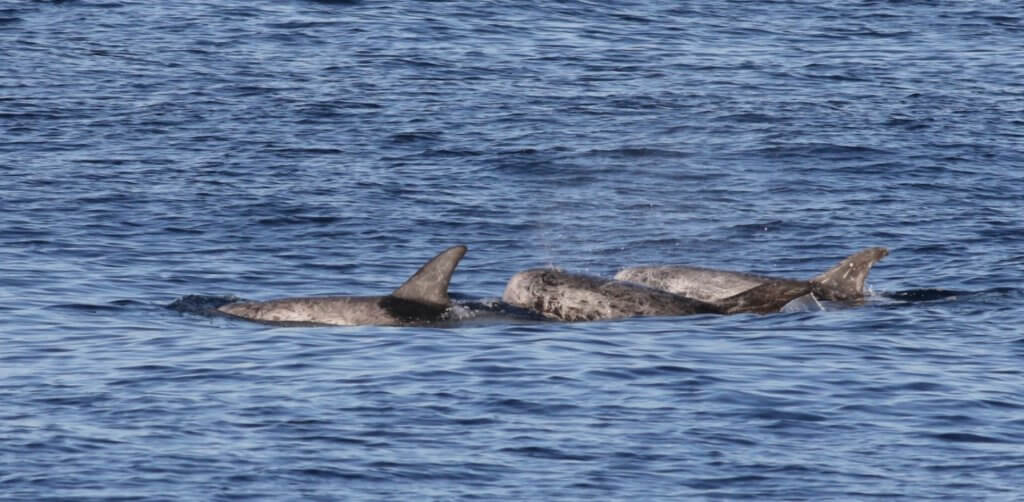
Calm seas made mammal viewing easy, and they stole the show this morning. Several pods of PILOT WHALES estimated at 70+ total individuals seemed to traveling in the same direction as us, followed by smaller numbers of the unmistakable RISSO’S DOLPHINS, showing off their scarred gray bodies, beakless melon-shaped heads, and tall dorsal fins. The beautiful morning light at our backs really seemed to accentuate the contrast between their white scars and gray ground color. We have had great luck finding this distinctive species over the years, specifically in these warm offshore waters.

Risso’s Dolphins. Photo credit Nick Bonomo.

With the notable exception of one group of twelve AUDUBON’S SHEARWATERS, bird numbers seemed slimmer the further we pushed from the shelf edge. We decided to angle back northwest towards Welker Canyon. The dolphin show continued with yet more RISSO’S and OFFSHORE BOTTLENOSE for our viewing and photographing pleasure.

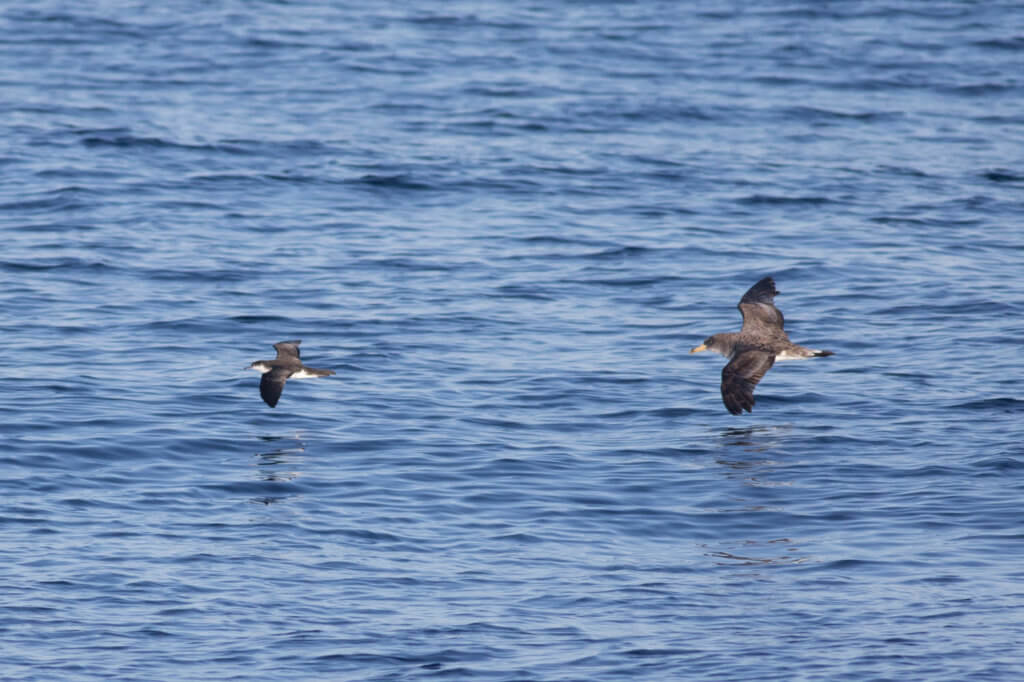
Audubon’s (left) and Cory’s Shearwaters. Photo credit Tom Johnson.

The shelf edge between Welker and Hydrographer Canyons was quiet, as was Hydrographer itself as we turned northward. A high-flying slim jaeger was spotted distantly in harsh light, which we left as Parasitic/Long-tailed in the field. Examination of photos revealed it to be a LONG-TAILED JAEGER, actually the more expected of the two smaller jaegers this far offshore. Ah, the wonders of technology.

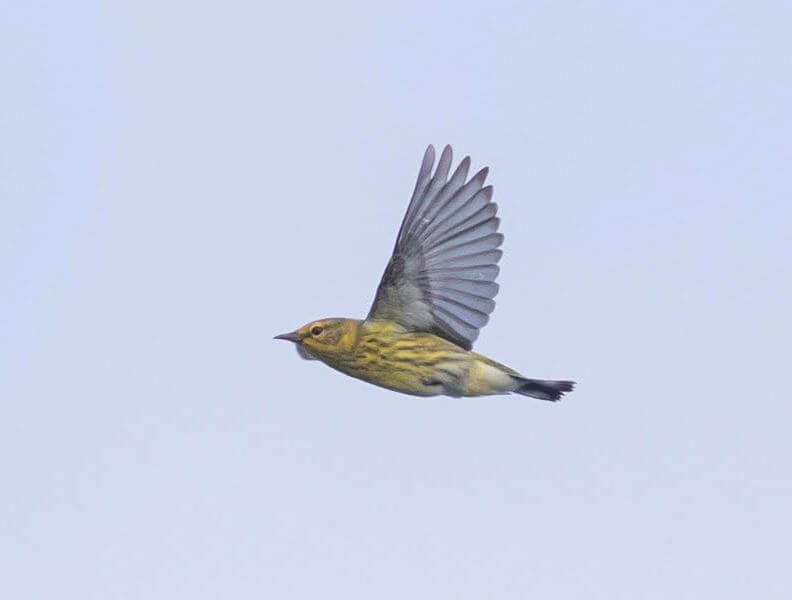
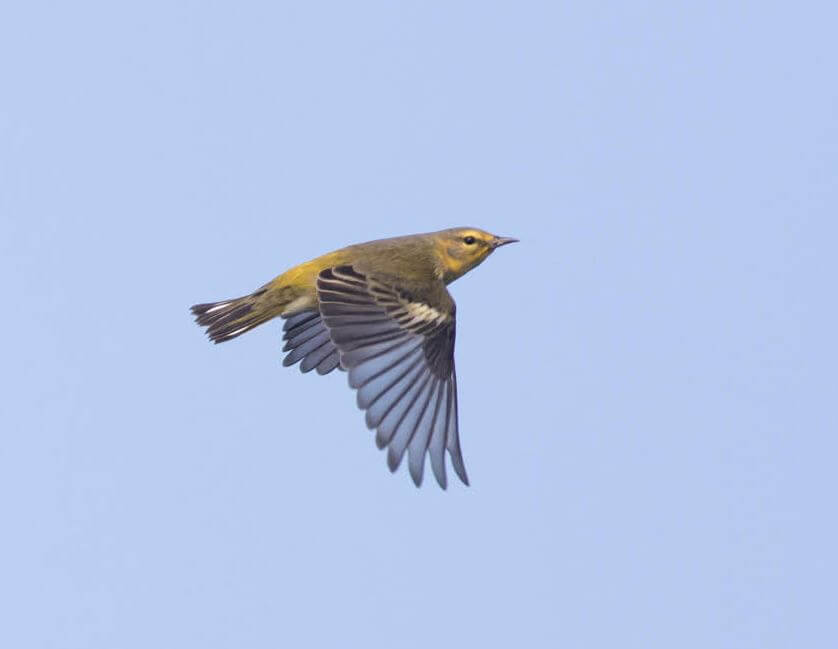
Black-and-white and Cape May Warblers approached the boat, the Cape May particularly cooperative in that it made several passes and was quite vocal. An odd skeleton-like object was spotted floating on the water’s surface, and our curiosity demanded we check it out. We were a bit surprised to find an OCEAN SUNFISH (MOLA MOLA) very much alive but with one fin badly injured. Here’s hoping it is somehow able to survive that.

Cape May Warbler. Photo credit Tom Johnson.

Cape May Warbler. Photo credit Tom Johnson.

We were about the leave our target waters at “the edge,” but we felt like we might still have a surprise or two left. As we retraced our steps towards home, away from the canyons and onto the continental shelf, we stumbled across a large concentration of birds only ½ mile from where we had seen those huge Fulmar numbers on Saturday. And just like the day before, the flock consisted of Wilson’s Storm-Petrels, Great Shearwaters, and Northern Fulmars. This time, several POMARINE JAEGERS were getting in on the action.

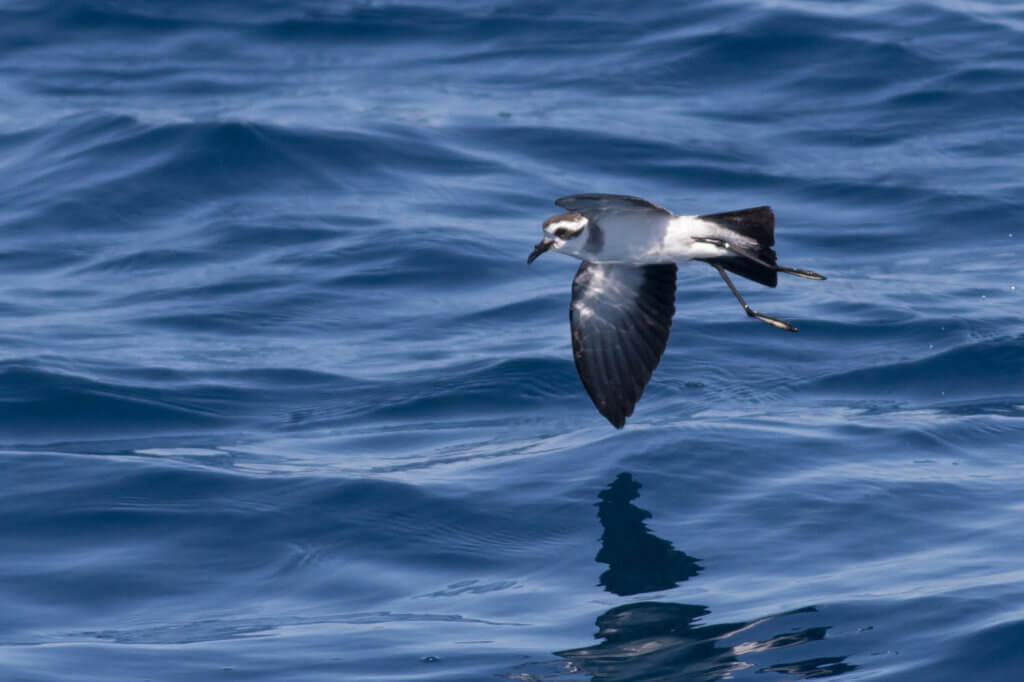
We were nearly ready to leave the scene when the call of “WHITE-FACED STORM PETREL!!” bellowed out. Everyone raced towards the front of the boat. There it was, kangaroo-hopping between the Wilson’s. Capt. Joe has mastered the art of following individuals of this species, so it was no surprise that he deftly put the bird off the port bow for all to see. This was our last reasonable chance at finding this sought-after specialty of these waters, which made the moment feel that much sweeter. Yet more yells and high fives and rounds of applause aboard the Helen H!

White-faced Storm-Petrel. Photo credit Tom Johnson.

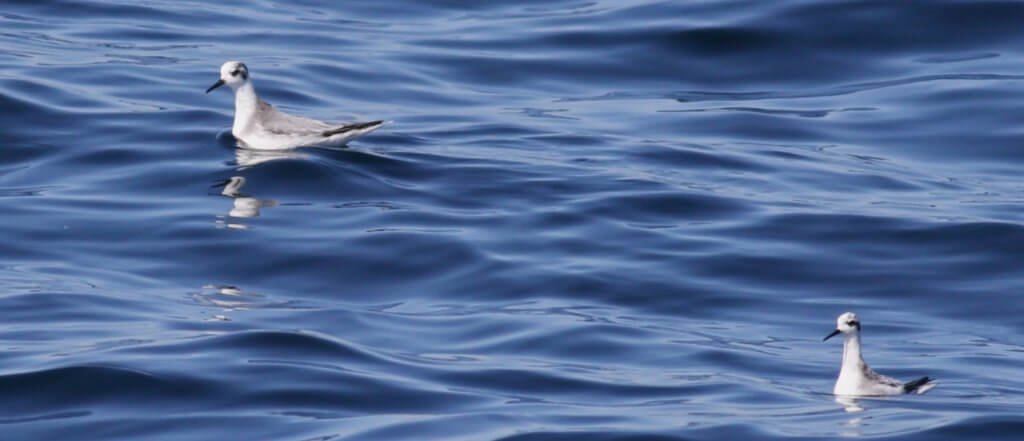
Now truly headed for home, we still had to cross those productive waters of the Nantucket Shoals. Our first legit flock of phalaropes, a few dozen birds, contained a single RED among RED-NECKED, much to the delight of several on board who were able to tick yet another life bird! We followed this flock around for a few minutes and were able to study the differences between the two both on the water and in flight – the Red Phalarope being larger, paler, having a thicker bill and a broader white wing stripe.

Red (left) and Red-necked Phalaropes. Photo credit Nick Bonomo.

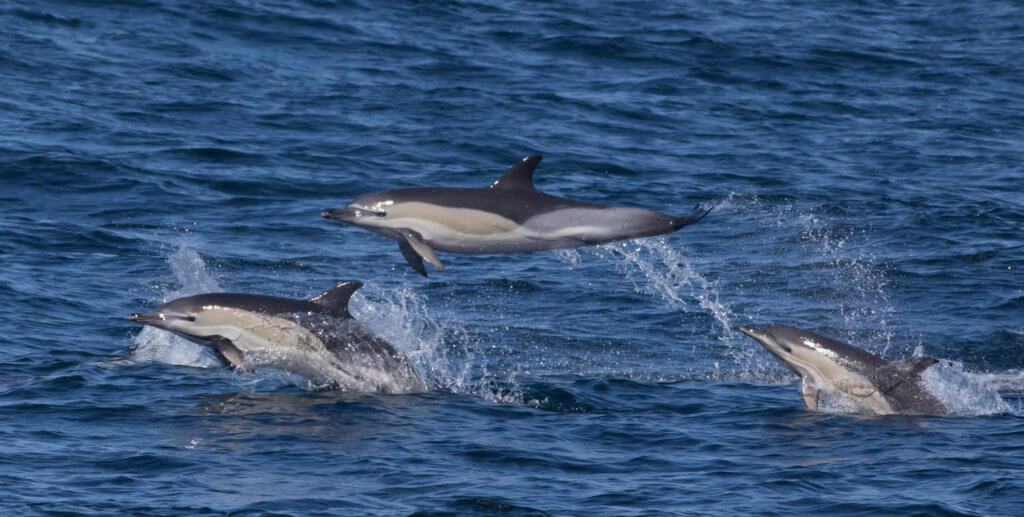
The Shoals continued to produce with a few SOOTY SHEARWATERS, a new bird for the weekend. A pod of the always-playful SHORT-BEAKED COMMON DOLPHINS entertained us for a bit.

Short-beaked Common Dolphins. Photo credit Tom Johnson.

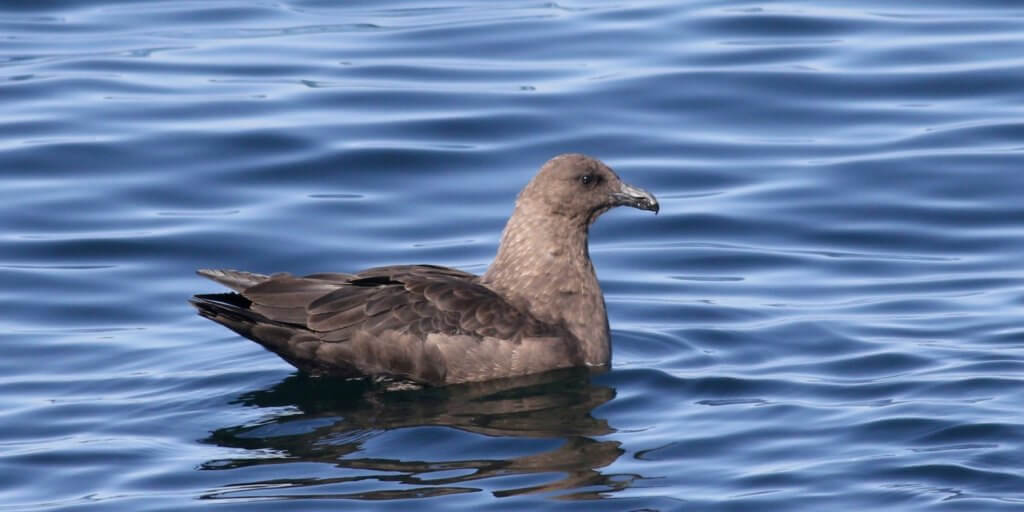
As we were trying to get better looks at the shearwaters, we noticed a hefty dark bird resting on the water…SKUA! Both North Atlantic skuas are possible in these waters at this time of year, so we would be taking an extra close and very open-minded look. This brute of a bird turned out to be a SOUTH POLAR SKUA, which allowed rather close approach as it sat calmly on the water. Eventually it tired of us and flew off, but not before everyone on board enjoyed awesome views. What a way to end the journey.

South Polar Skua. Photo credit Nick Bonomo.

We pulled into Hyannis that evening a rather elated group (understatement!!). Huge thanks are owed to Capt. Joe Huckemeyer and his crew led by Matt, to Naeem Yusuff and Bobbie Hodson for taking on the monumental task of organizing this event, and to every one of our participants for making this trip possible. Congrats to everyone on a BBC “Extreme” Pelagic that none of us will forget!

Cumulative Trip List

(Excluding Hyannis Harbor & environs. Hourly checklists submitted to eBird. Cumulative estimates below.):

  • 3 Wood Duck
  • 1 Common Eider
  • 1 Black-bellied Plover
  • 11 Sanderling
  • 36 Red-necked Phalarope
  • 1 Red Phalarope
  • 1 SOUTH POLAR SKUA
  • 15 Pomarine Jaeger
  • 1 Long-tailed Jaeger
  • 1 SABINE’S GULL
  • 10+ Laughing Gull
  • 1 Ring-billed Gull
  • 40+ Herring Gull
  • 15 Lesser Black-backed Gull
  • 20 Great Black-backed Gull
  • 17 Black Tern
  • 48 Common Tern
  • 10 Common Loon
  • 675+ Wilson’s Storm-Petrel
  • 1 WHITE-FACED STORM-PETREL
  • 10 Leach’s Storm-Petrel
  • 150+ Northern Fulmar
  • 1 BERMUDA PETREL
  • 5 Black-capped Petrel
  • 90+ Cory’s Shearwater
  • 350+ Great Shearwater
  • 3 Sooty Shearwater
  • 19 Audubon’s Shearwater
  • 1 BROWN BOOBY
  • 40 Northern Gannet
  • 1 Yellow-bellied Sapsucker
  • 1 Northern Flicker
  • 1 Barn Swallow
  • 1 White-throated Sparrow
  • 1 Black-and-white Warbler
  • 3 Cape May Warblers

Leaders: Luke Seitz (WINGS tour leader), Tom Johnson (FIELD GUIDES tour leader), Nick Bonomo (Connecticut Audubon Society EcoTravel tour leader), Naeem Yusuff, Bobbie Hodson

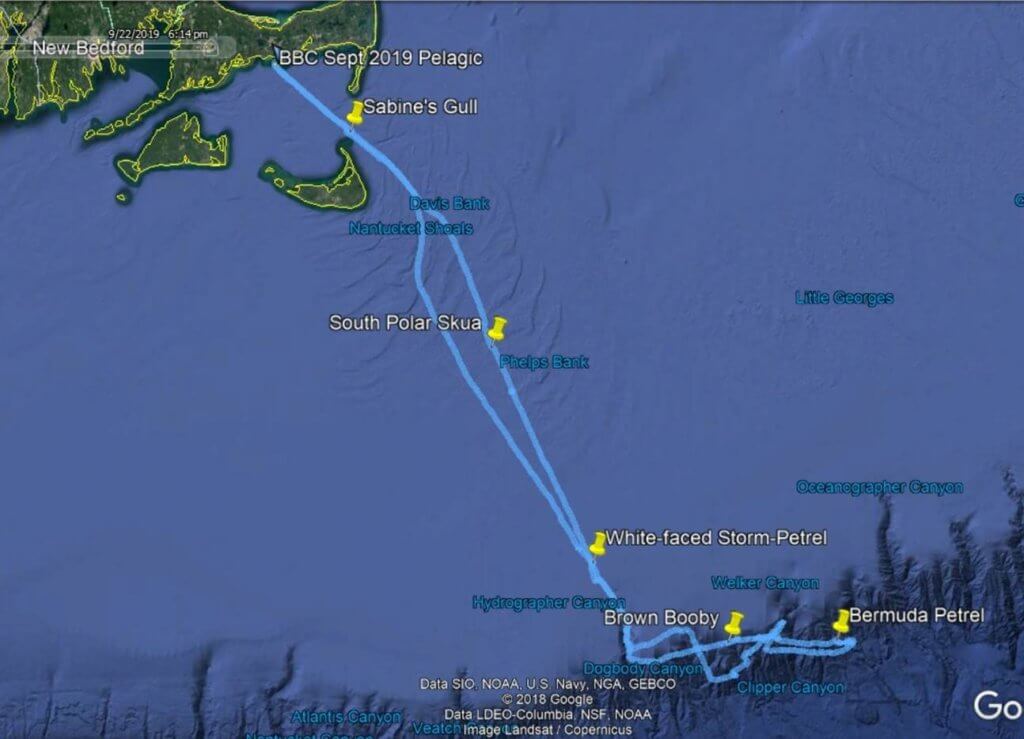
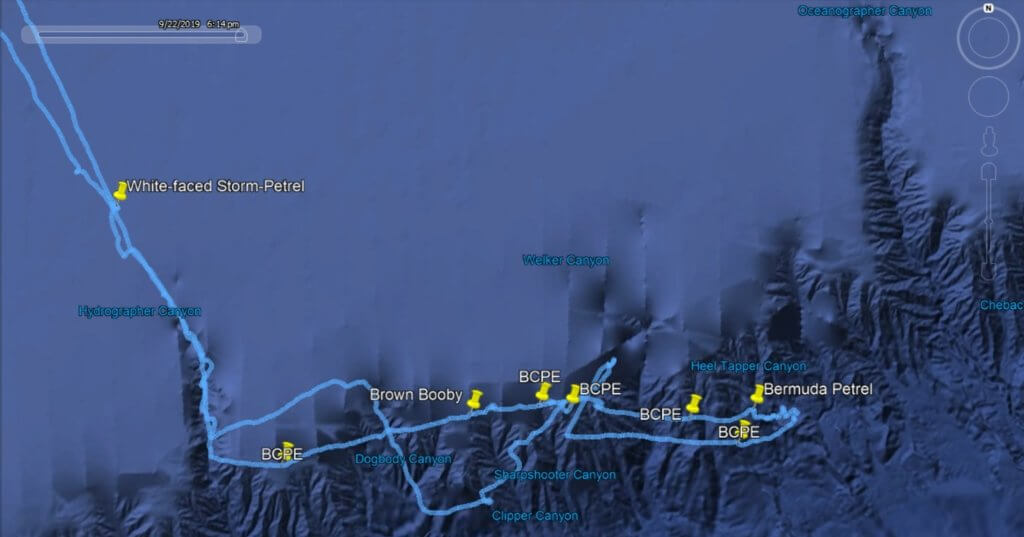
Below are two maps of our route as plotted by GPS: one full map and one zoomed to the shelf edge. Several highlights are marked by yellow pins. (Birds were marked where they were first sighted.)

Brookline Bird Club “Extreme Pelagic” September 21-22, 20192024-02-14T18:56:25-05:00

Remembering Ida Giriunas

Ida Giriunas, long-time birder and trip leader, passed away on August 20. She was 91.

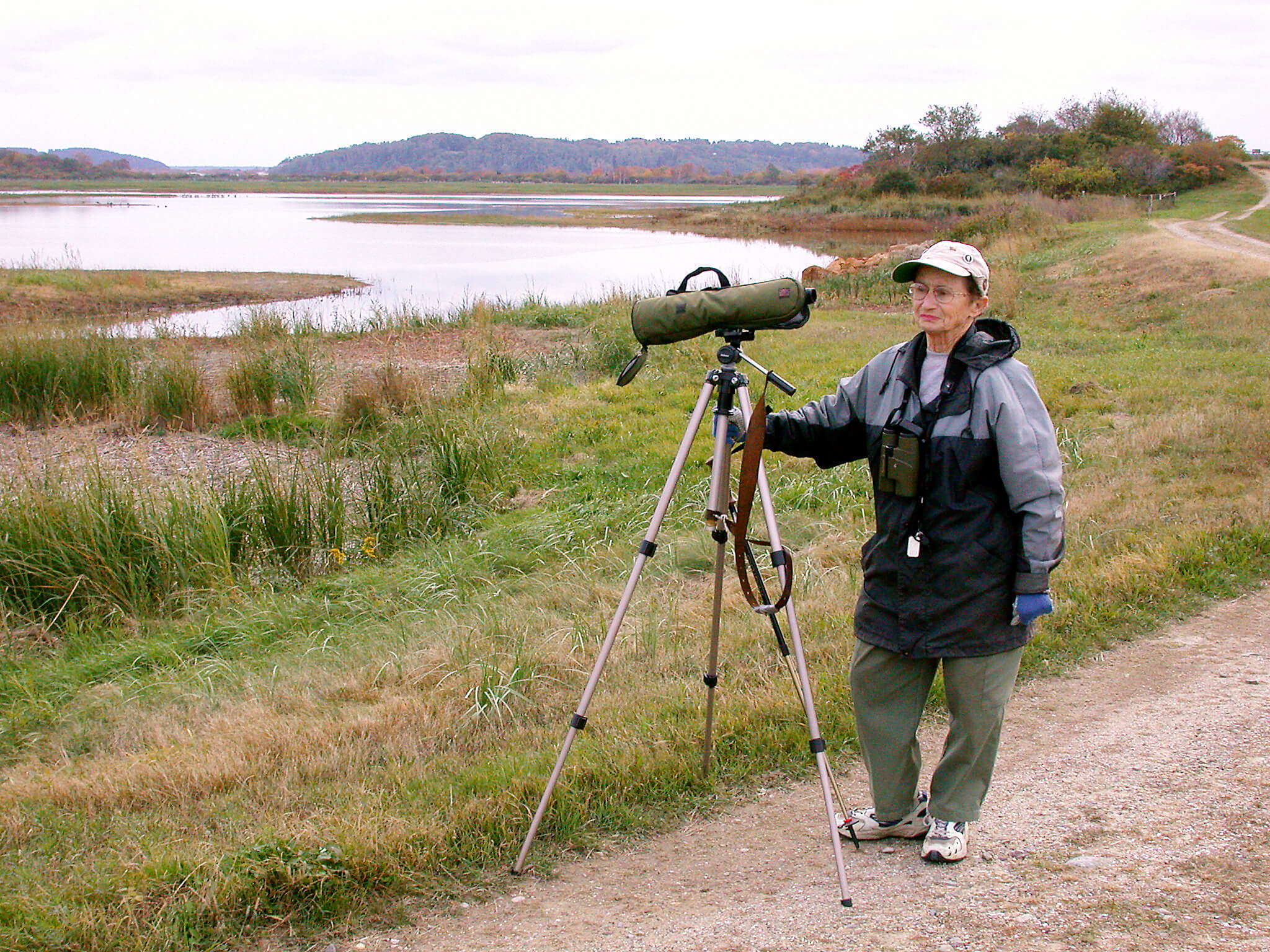
Ida was a force of nature, fierce and passionate about birding. She led and participated in many trips for the Brookline Bird Club, serving as a trip leader and past president and board member, spearheading the nationally known BBC pelagic birding program and making an annual trip to Machias, Maine for Atlantic Puffins and other Downeast specialties. Dedicated to birding, she was happy to share those experiences with those new to the birding world, the BBC and others. Those of us who knew her appreciated her directness, sense of humor and hearty laugh. Her years of service have been invaluable helping to make birding in New England the joy that it is.

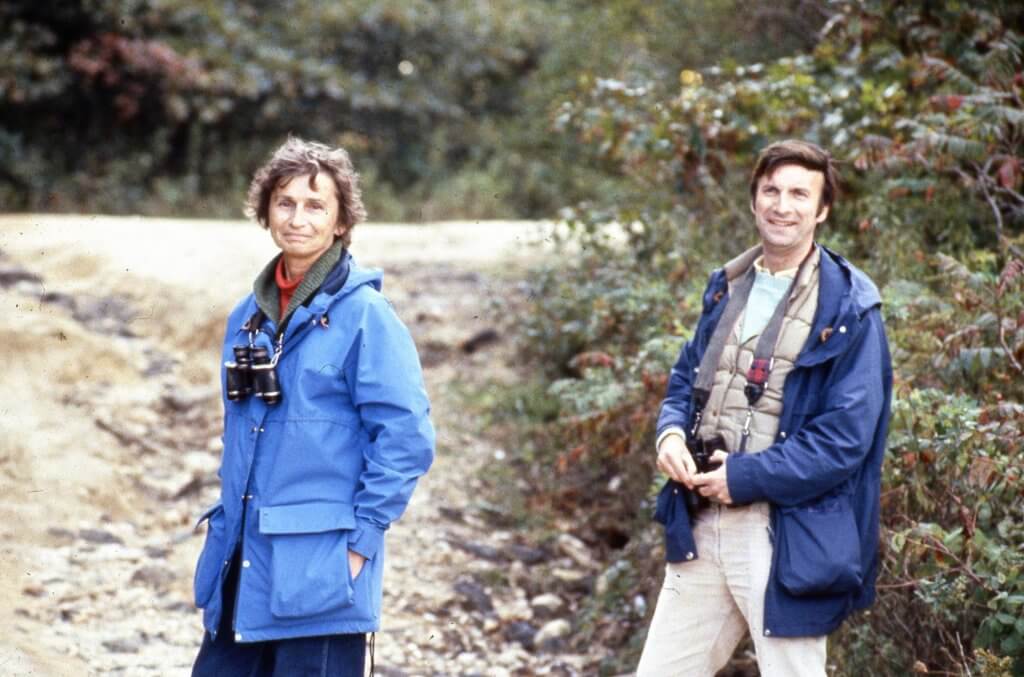
Ida with Barbara and BIll. Undated, photo courtesy of Barbara Drummond.

We won’t be able to replace her, and those of us who knew her are heartbroken.

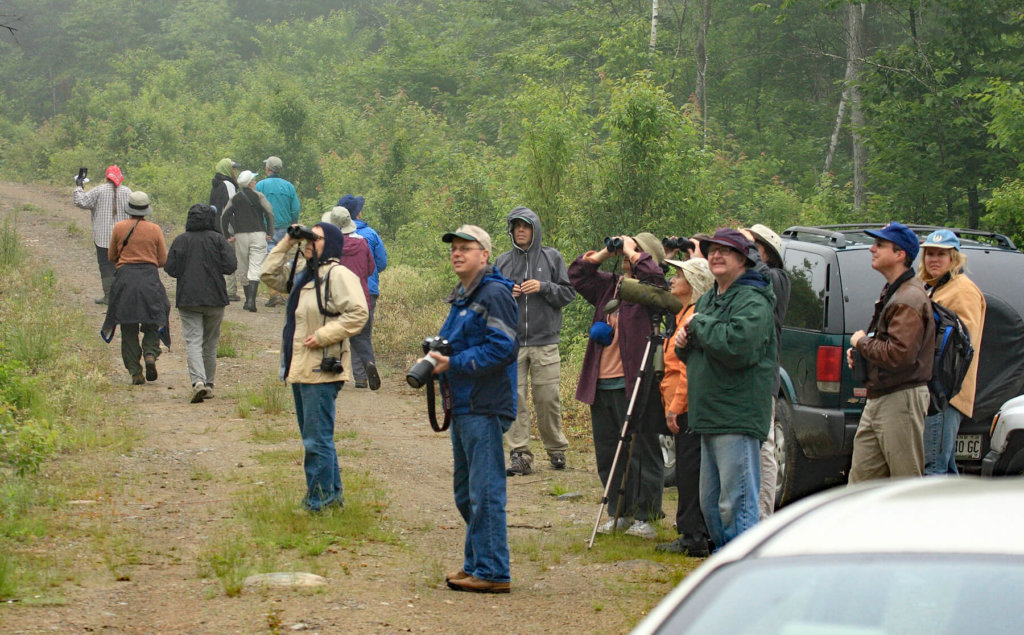
Ida leading BBC trip to Machais Seal Island and Downeast Maine. Photo courtesy of Tom Murray.
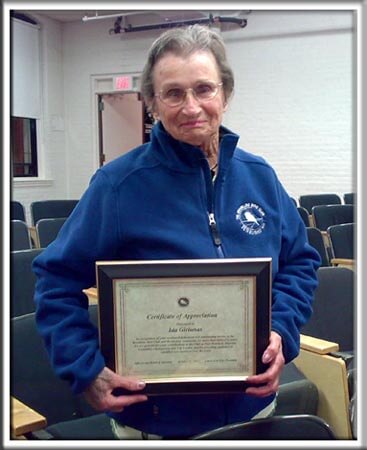
Ida with her certificate of recognition from the Brookline Bird Club, October 12, 2007.
Remembering Ida Giriunas2024-02-14T18:56:33-05:00
Go to Top