Volunteers Needed for Grassland Bird Monitoring

Isabel Bronson, a Land Stewardship Coordinator serving with the Trustees of Reservations, is seeking volunteers to participate in a grassland bird monitoring community science program at Chestnut Hill Farm, The Fruitlands, Old Town Hill, Appleton Farms, Ward Reservation, Moose Hill Farm, Worlds End, or Powisset Farm. Since 2010, the Trustees have been conducting volunteer grassland bird monitoring at their reservations with significant grassland habitat. This monitoring enables the Trustees to assess grassland bird populations on their properties and aids in informing management decisions within their pastures, fields, etc. This year, the Trustees are excited to be expanding the program and, as so, are looking to add monitors to their volunteer roster. The Trustees have found that in addition to this being a fantastic opportunity to enhance birding skills, volunteers participating in the program have developed a strong connection to both the property and birds they monitor and feel empowered about their role protecting local biodiversity.

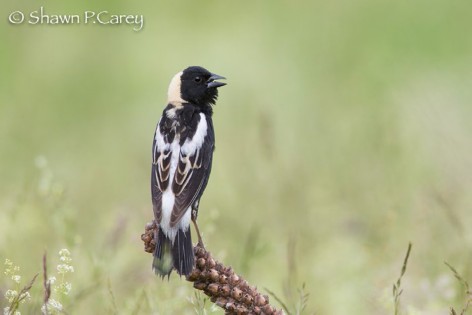
The monitoring season runs from May 1st through July and each volunteer is assigned a monitoring property. The Trustees ask that monitors visit this property at least once a month during the season and conduct point count surveys for grassland birds, with special attention being given to identifying bobolinks. Before the season starts, monitors are provided with onboarding materials such as monitoring maps and detailed instructions on how to conduct bird surveys and submit results.

If anyone in the BBC is interested in this opportunity, please let Isabel Bronson know via email to ibronson@thetrustees.org. Isabel would love to schedule a Teams meeting to say hello and talk more about the program. Additionally, please feel free to check out the Trustees’ volunteer website which lists all their monitoring opportunities across the state: https://volunteer.thetrustees.org/ecology.
Volunteers Needed for Grassland Bird Monitoring2024-02-14T18:51:45-05:00

Donation to Friends of Belle Isle Marsh

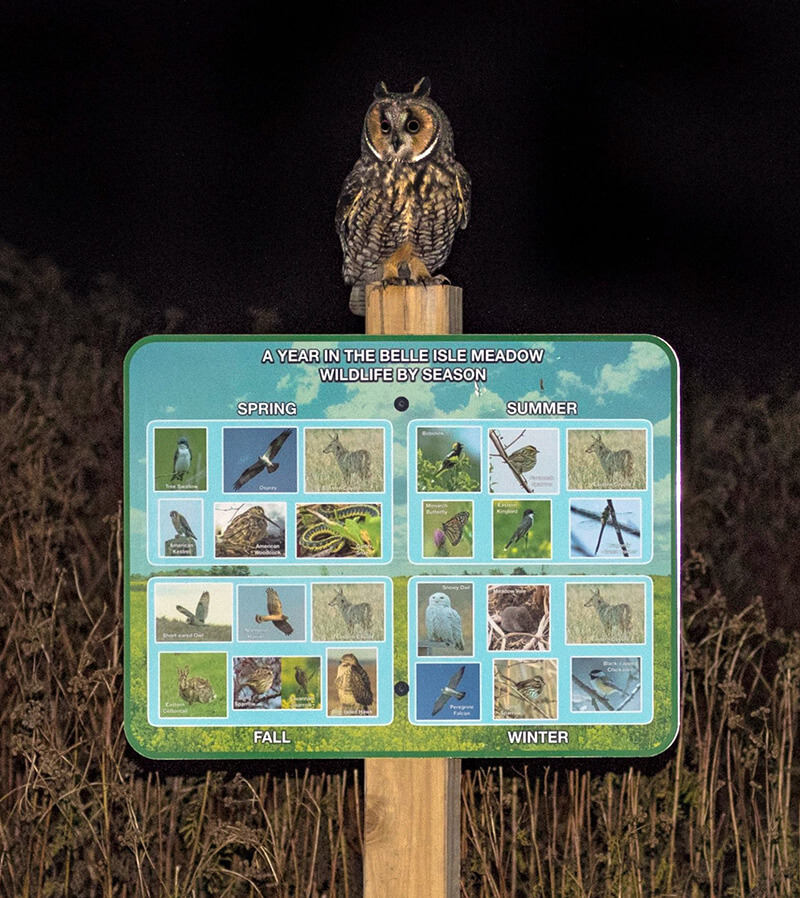
On behalf of the Brookline Bird Club, the BBC Conservation & Education Committee is pleased to announce a donation of $250 to support the conservation and education work of the Friends of Belle Isle Marsh, the largest salt marsh in the city of Boston and vital habitat for salt marsh wildlife. The Friends strive to protect and preserve the marsh and offer regular nature walks to the public to discover the marsh’s varied birds and wildlife.

Donation to Friends of Belle Isle Marsh2023-01-04T09:20:28-05:00

BBC Extreme Pelagic August 27-28, 2022 – Trip Report

Date – 6:00 AM 8/27/22 (Saturday) to 5:00 PM 8/28/22 (Sunday)

Weather – Variable. Saturday started out cloudy as we headed out over the Nantucket shoals to sunny as we hit the shelf edge. Winds moderate out of the SW creating a small, but turbulent sea which kept things very “bouncy” for much of the trip out to Veatch Canyon. But very comfortable as we rode the winds east over the eastern part of Veatch. The winds died down for a nice overnight on the boat, but they picked up and switched to the northeast on Sunday morning, but then died down by noon on the way back. Several birders were sick going out, but most recovered nicely for the 2nd day.

Boat – 100′ long “Helen H” fishing boat out of Hyannis, MA. Captained by Joe Huckemeyer

Participants – 50 participants plus 7 leaders

Leaders – Naeem Yusuff, Bobbie Hodson, Nick Bonomo, Steve Mirick, Seabird McKeon, Tom Johnson, Doug Gochfeld

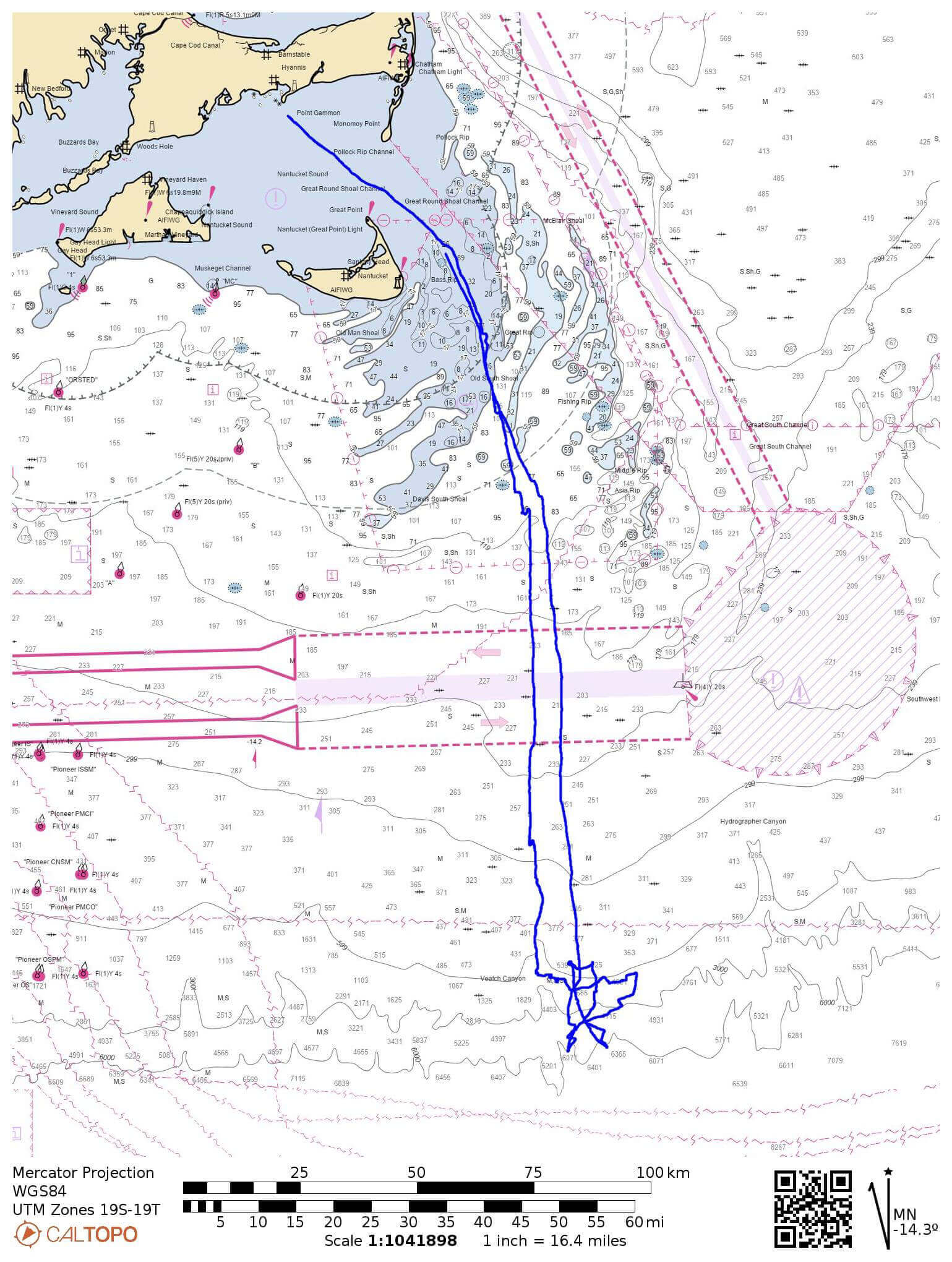
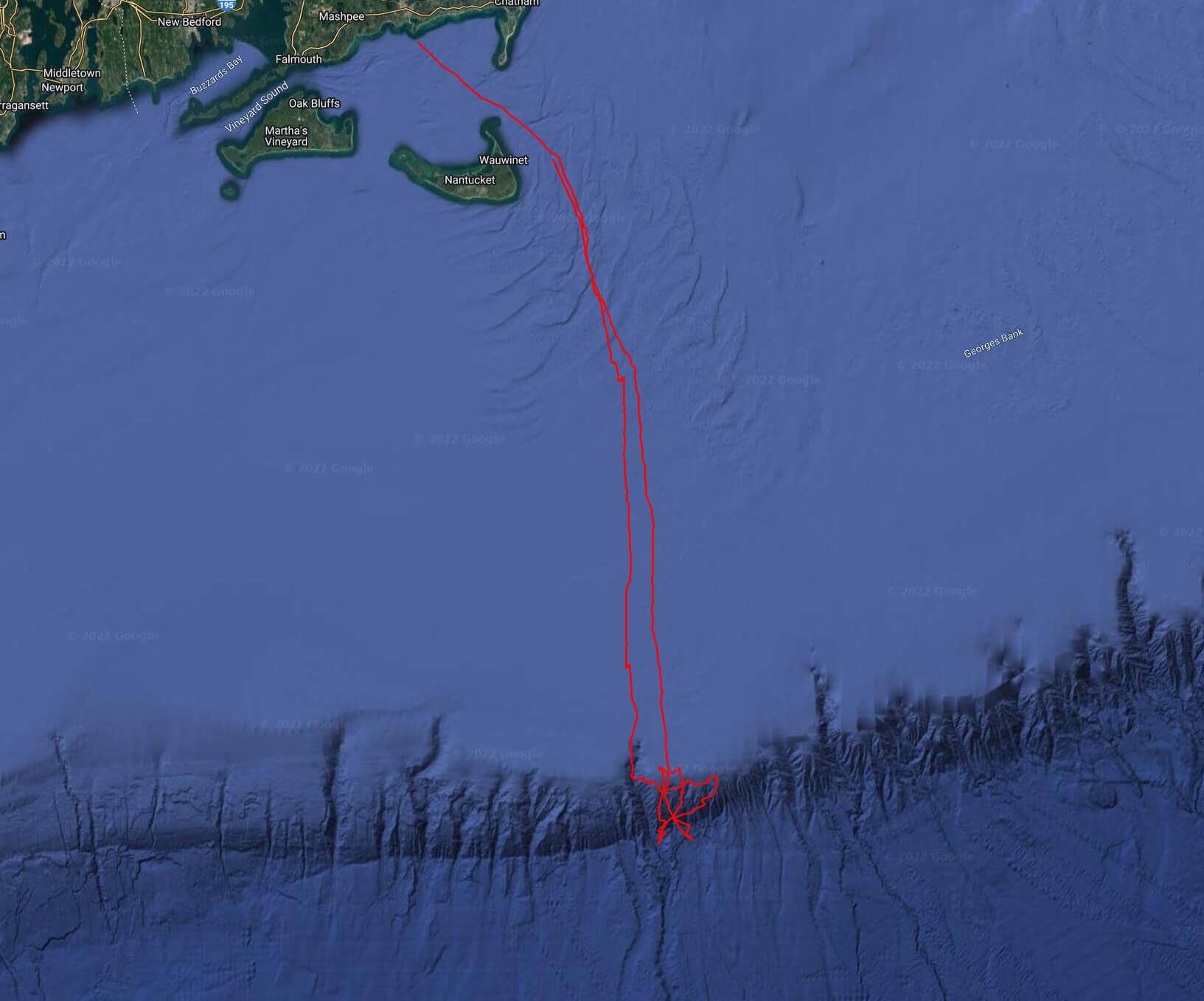
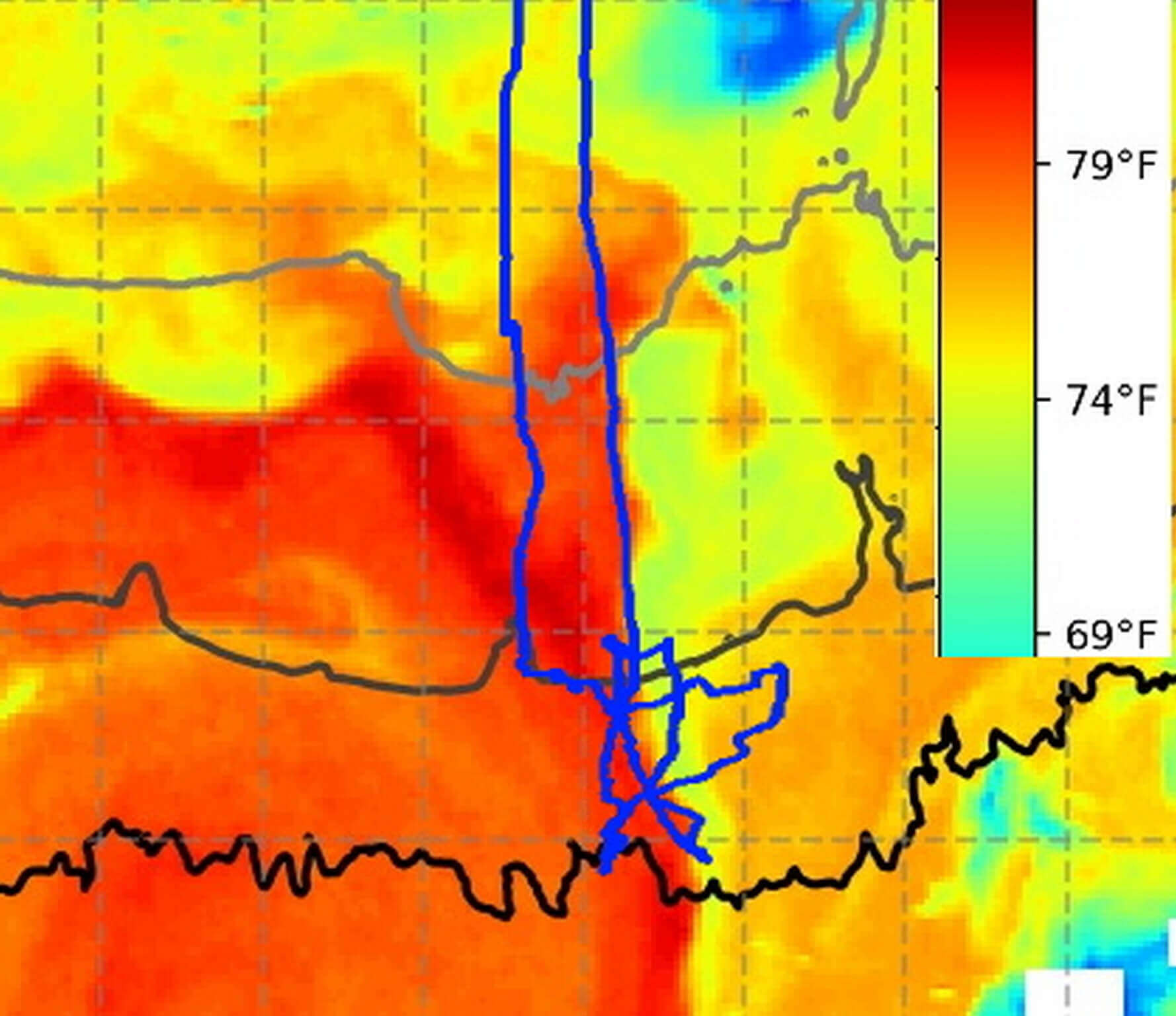
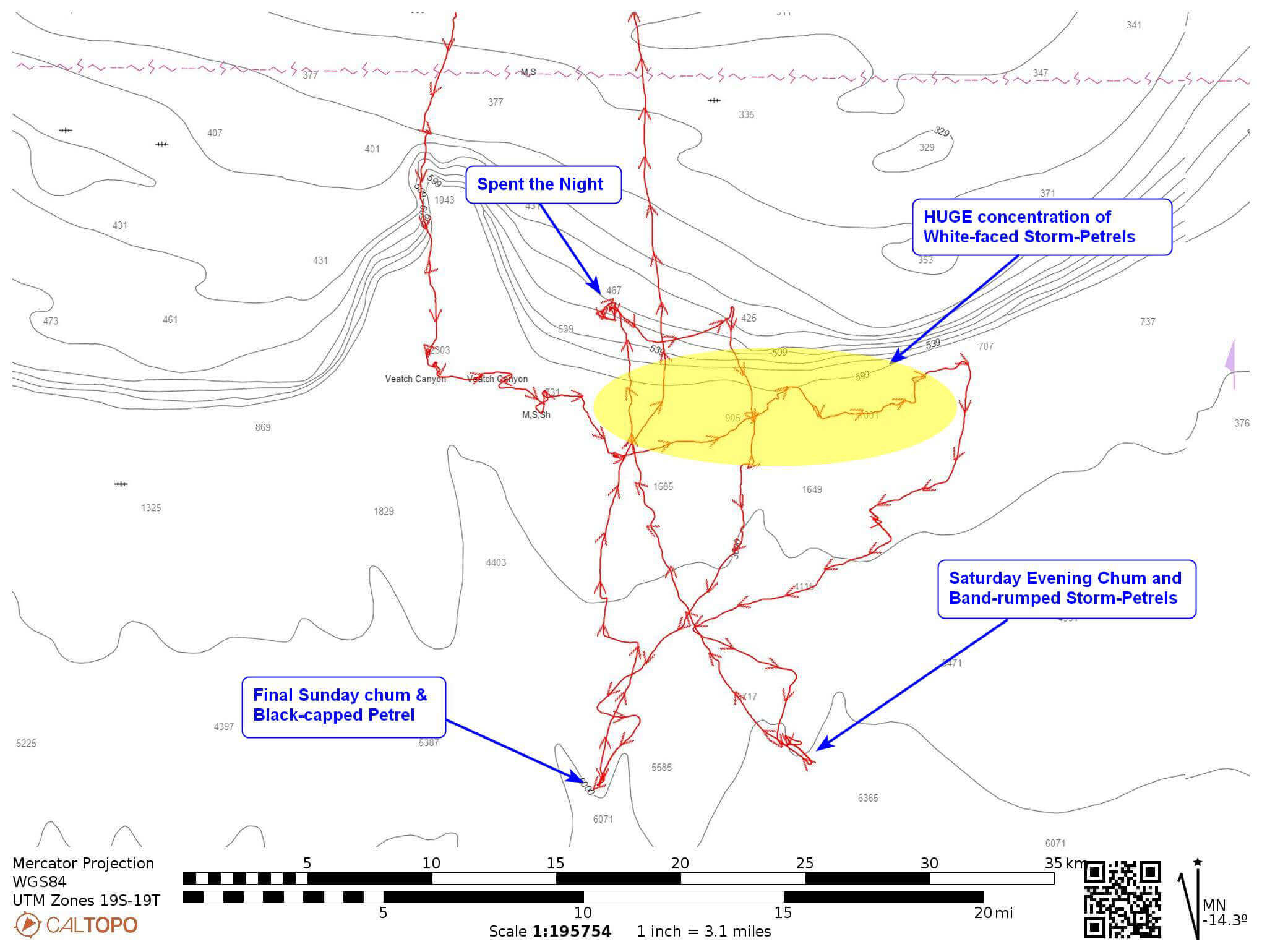
Route – We traveled south along the east side of Nantucket and along the western edge of the cool, shallow, waters of the Nantucket Shoals before turning straight for Veatch Canyon which is an underwater canyon along the edge of the continental shelf. Our target was a sharp temperature gradient along the edge of a warm water eddy which was shown on Sea Surface Water Temperature charts. Once we got to the shelf edge, we traveled south through the middle of the warm waters of the underwater canyon before turning east, bisecting the sharp temperature gradient. We worked this sharp north-south gradient line covering shallow to deep water for the remainder of the trip, finishing with chum in 80F water at the 1,000 fathoms (6,000 feet) water depth on Sunday morning. The highest sea surface temperatures were in the range of 80F to 82F in a strong warm-water eddy centered south of us. Our route is shown in the following maps:

Bird Highlights – There were many highlights of the trip for birds, but I think all will agree, the most memorable highlight of the trip was on Saturday afternoon. After traveling south through the hot ocean water of Veatch Canyon, we were having trouble finding any birds. So, we turned east toward a sharp temperature gradient in the ocean just east of the canyon. As we turned east, we had both the sun and the wind at our back as we cruised comfortably at a nice slow speed and the water temperature suddenly dropped from 81F to 74F! Then all of a sudden, a White-faced Storm-Petrel appeared, then a couple, and suddenly, more appeared, and within a short period of time we realized that they were spread out everywhere as far as you could see!! In one of the most surreal events ever witnessed; staggering numbers of White-faced Storm-Petrels were recorded. The total of 589 birds on Saturday far exceeds any daily totals ever recorded in the United States; and most of these came within about 2 hours! Between the hour of 4:00 PM and 5:00 PM alone 425 White-faced Storm-Petrels were counted!!!

Other specialty rare birds of the shelf edge included numerous excellent views of Leach’s Storm-Petrels and Audubon’s Shearwaters and several nice, but (as usual) brief views of shy Band-rumped Storm-Petrels. Several Long-tailed Jaegers gave spectacular views as they hovered right over the top of the boat! Finishing off in the deep water, we made a last minute “hail Mary” attempt at a Black-capped Petrel by chumming in deep warm waters. And succeeded!! On the way out and back we also had good looks at most of the typical inshore pelagic birds including nice, prolonged views and photos of a “Scopoli’s” Shearwater!

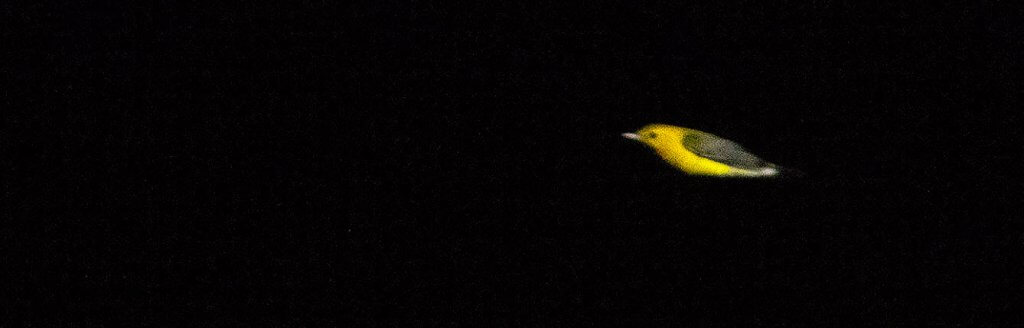
Another bird highlight of the trip (at least for some who weren’t asleep!) was the incredibly rare overnight influx of passerines and shorebirds! Attracted by the running lights of the boat and perhaps impacted by patchy evening fog over the canyon, the boat became surrounded by birds after everyone had gone to bed on Saturday night! These birds circled the boat several times and apparently were calling so loudly that birders on the upper deck were woken up by the calls and even birders inside the cabin reported hearing them! By dawn it was over except for a couple of Barn Swallows which had landed on the boat, but soon left. This remarkable event included several species of shorebird and warblers highlighted by a Prothonotary Warbler which was even photographed!!!

Prothonotary Warbler by Jason

Prothonotary Warbler by Jason

Non-bird Highlights – As usual, there were lots of other wildlife to observe offshore, and while the conditions weren’t as spectacular as last year’s trip, we managed several nice sightings including two of the rarest species of “great whales” with views of Sperm Whales and a North Atlantic Right Whale!

Data Recording – Nick Bonomo, Doug Gochfeld, and Tom Johnson shared the laborious job of recording all bird sightings (and additional marine sightings) into eBird with roughly 1-hour intervals. These checklists will be shared, and details are shown in the eBird “Trip Report” link below. Photographers are also encouraged to enter their sightings in iNaturalist. See Mckeon runs an inaturalist.org project called “Offshore Wildlife”. Photos can be submitted here: https://www.inaturalist.org/projects/offshore-wildlife

Trip Report in eBird – https://ebird.org/nh/tripreport/74021

Complete Bird List

(total of all birds including those inside of Hyannis harbor broken down into daily totals)

Mallard (2,0)
Rock Pigeon (Feral Pigeon) (14,0)
Semipalmated Plover (1,0)
Sanderling (19,4)
Least Sandpiper (1,16)
Semipalmated Sandpiper (5,6)
peep sp. (9,15)
Red-necked Phalarope (113,103)
Red Phalarope (0,4)
phalarope sp. (1,0)
Spotted Sandpiper (0,3)
shorebird sp. (4,0)
Parasitic Jaeger (1,1)
Pomarine/Parasitic Jaeger (1,0)
LONG-TAILED JAEGER (3,7)
jaeger sp. (2,0)
Laughing Gull (0,1)
Herring Gull (19,12)
Herring Gull (American) (9,25)
Lesser Black-backed Gull (2,10)
Great Black-backed Gull (16,25)
Larus sp. (0,3)
gull sp. (10,0)
Least Tern (4,2)
Black Tern (2,0)
Roseate Tern (4,6)
Common Tern (88,49)
Common Tern (hirundo/tibetana) (1,0)
Sterna sp. (160,12)
tern sp. (0,1)
Common Loon (8,0)
Wilson’s Storm-Petrel (380,151)
WHITE-FACED STORM-PETREL (589,42)
Leach’s Storm-Petrel (78,58)
BAND-RUMPED STORM-PETREL (12,1)
Hydrobates sp. (38,2)
storm-petrel sp. (2,5)
BLACK-CAPPED PETREL (0,1)
Cory’s Shearwater (31,17)
CORY’S SHEARWATER (SCOPOLI’S) (1,0)
Cory’s Shearwater (borealis) (12,20)
Great Shearwater (99,35)
Sooty Shearwater (13,6)
Manx Shearwater (9,0)
AUDUBON’S SHEARWATER (29,7)
black-and-white shearwater sp. (1,1)
shearwater sp. (3,1)
Procellariid sp. (1,0)
Northern Gannet (2,4)
Double-crested Cormorant (23,0)
Osprey (carolinensis) (0,1)

Cooper’s Hawk (0,1)

American Crow (0,20)

Barn Swallow (2,2)
Barn Swallow (American) (1,0)

PROTHONOTARY WARBLER (0,1)
American Redstart (0,1)
Cape May Warbler (0,1)
Yellow Warbler (0,3)

Marine Mammals

Fin Whale – Several
Humpback Whale – Including one individual breaching several times, but from a distance.
SPERM WHALE – 2 at the same time. Mostly blow views, but briefly, one right next to the boat before it dove. We played “whack-a-mole” as we rushed back and forth between these two whales as each dove by the time we arrived!
NORTH ATLANTIC RIGHT WHALE – 1 seen over the Nantucket Shoals as we headed back. Distant views as we maintained our distance as required by law. But excellent study of the V-shaped blows produced by this extremely rare whale and got to see the shape and color of the tail when it fluked. This species is in serious trouble as the worldwide population has been steadily decreasing over the last 10 years and now stands at approximately 336 whales.
Bottlenose Dolphin (offshore) – A few small pods.
Common Dolphin – A few small pods.
Gray Seal – 2. Waiting for a handout at the Helen H slip when we returned to port.

Fish

HAMMERHEAD SHARK SP. – At least one cruising back and forth along the side of the boat before dawn on Sunday morning. We photographed Scalloped hammerhead on last year’s trip.
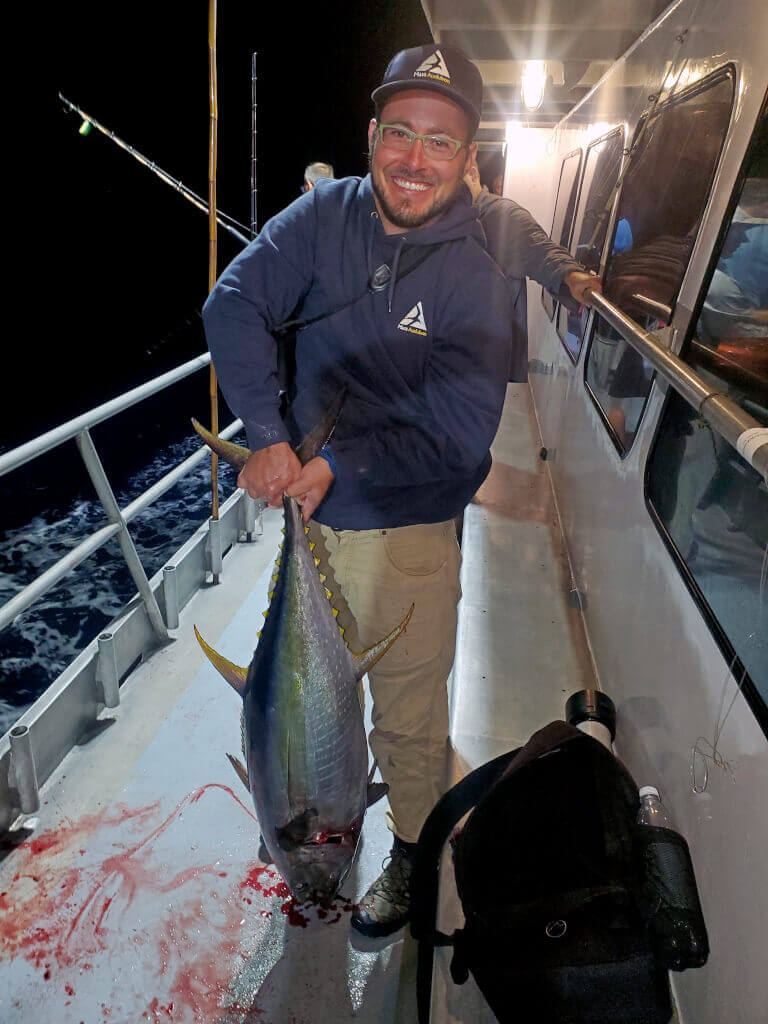
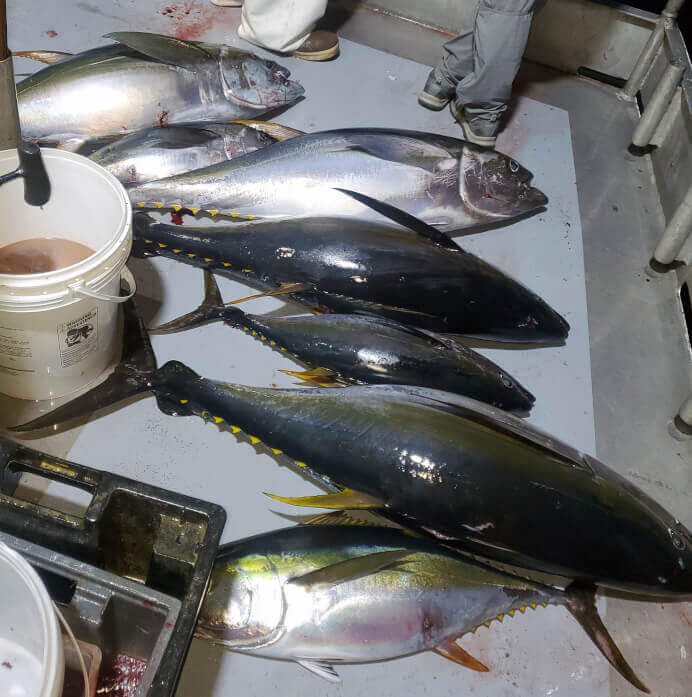
Yellowfin Tuna – Several caught in predawn hours on Sunday! Quite a sudden flurry of activity for fish on Sunday morning. A few reeled in by Nick Bonomo and Jason Lambert! Everyone got to bring home some Ahi!!!

Yellowfin Tuna - Jason by Steve Mirick

Yellowfin Tuna - Jason by Steve Mirick

Yellowfin Tuna by Steve Mirick

Yellowfin Tuna by Steve Mirick

Skipjack Tuna – Lots in predawn feeding frenzy before dawn on Sunday. Several caught.
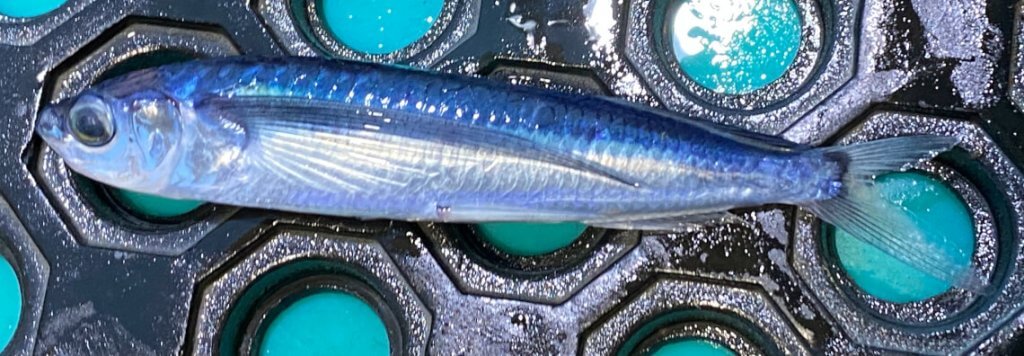
Flying Fish – A small number of flying fish seen in the deep warm water. One flew out and landed on the boat! Appears to be Atlantic Flyingfish (Cheilopogon melanurus).
GIANT MANTA RAY (Mobula birostris) – A couple of sightings of this

Flying Fish sp. by Dave Larson

Flying Fish sp. by Dave Larson

BBC Extreme Pelagic August 27-28, 2022 – Trip Report2024-02-14T18:52:10-05:00

Piping Plover Donation

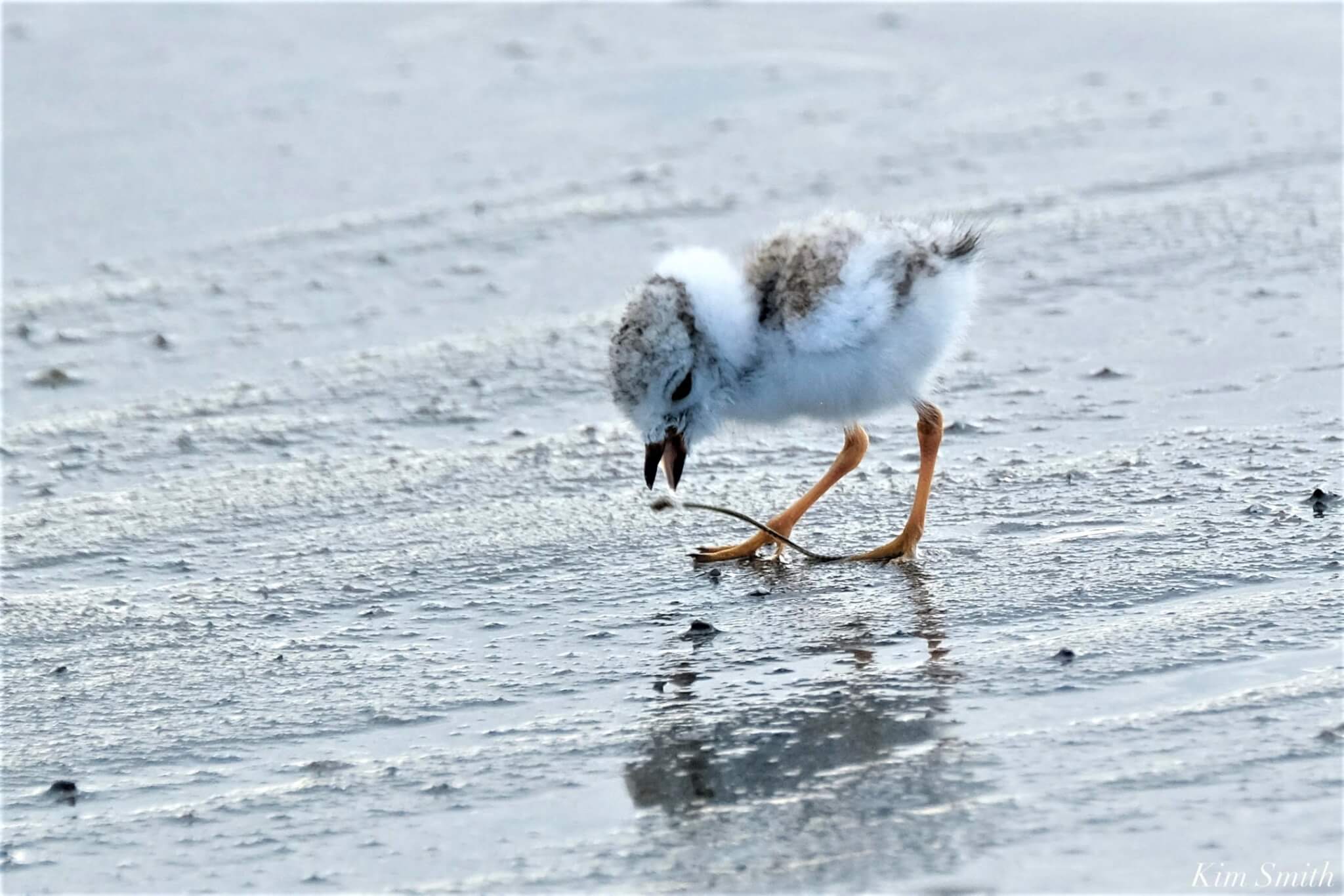
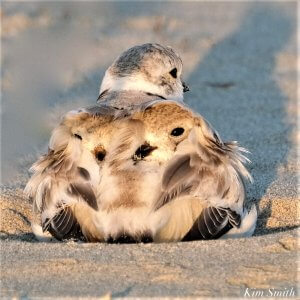
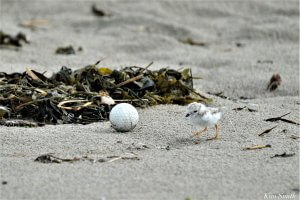
We are pleased to announce a BBC conservation donation of $250 to support the Piping Plover Ambassadors, a group of volunteers who, since 2017, have been dedicated to protecting the Piping Plovers nesting at Good Harbor Beach in Gloucester. We sent the following message with our donation: “The Brookline Bird Club, the largest and most active bird club in Massachusetts, is pleased to donate money to support the Piping Plover Ambassadors in their volunteer efforts to protect the Piping Plovers at Good Harbor Beach, to educate the public about this wonderful and endangered shorebird, and to help many people in Gloucester and beyond to experience the delight of watching these birds and following their story as they breed and raise their young on the beach. On behalf of the birding community and plover lovers everywhere, we thank you.” Ambassador Kim Smith expressed gratitude for the donation on behalf of all the Ambassadors. “To be recognized by the BBC,” she wrote on her Kim Smith Designs website and Facebook page, “is truly an honor.”

Piping Plover Donation2024-02-14T18:52:17-05:00

Update from Hog Island Scholarship Recipients

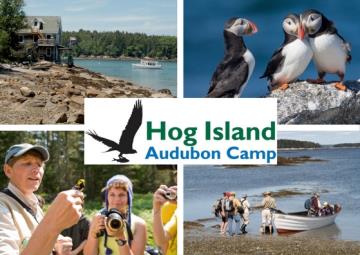
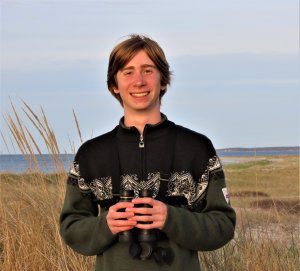
Our 2022 Bill Drummond Young Birder Scholarship recipients, Jocelyn Pyne and Johnny Owens, report that they had wonderful experiences in June in the Coastal Maine Bird Study for Teens program at National Audubon’s camp at Hog Island, Maine.

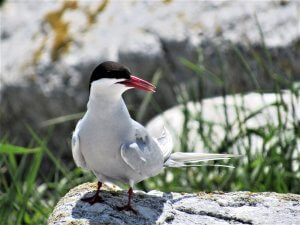
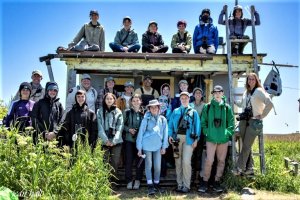
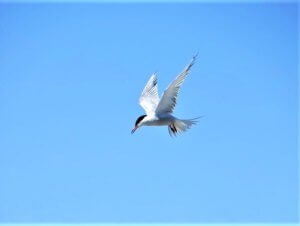
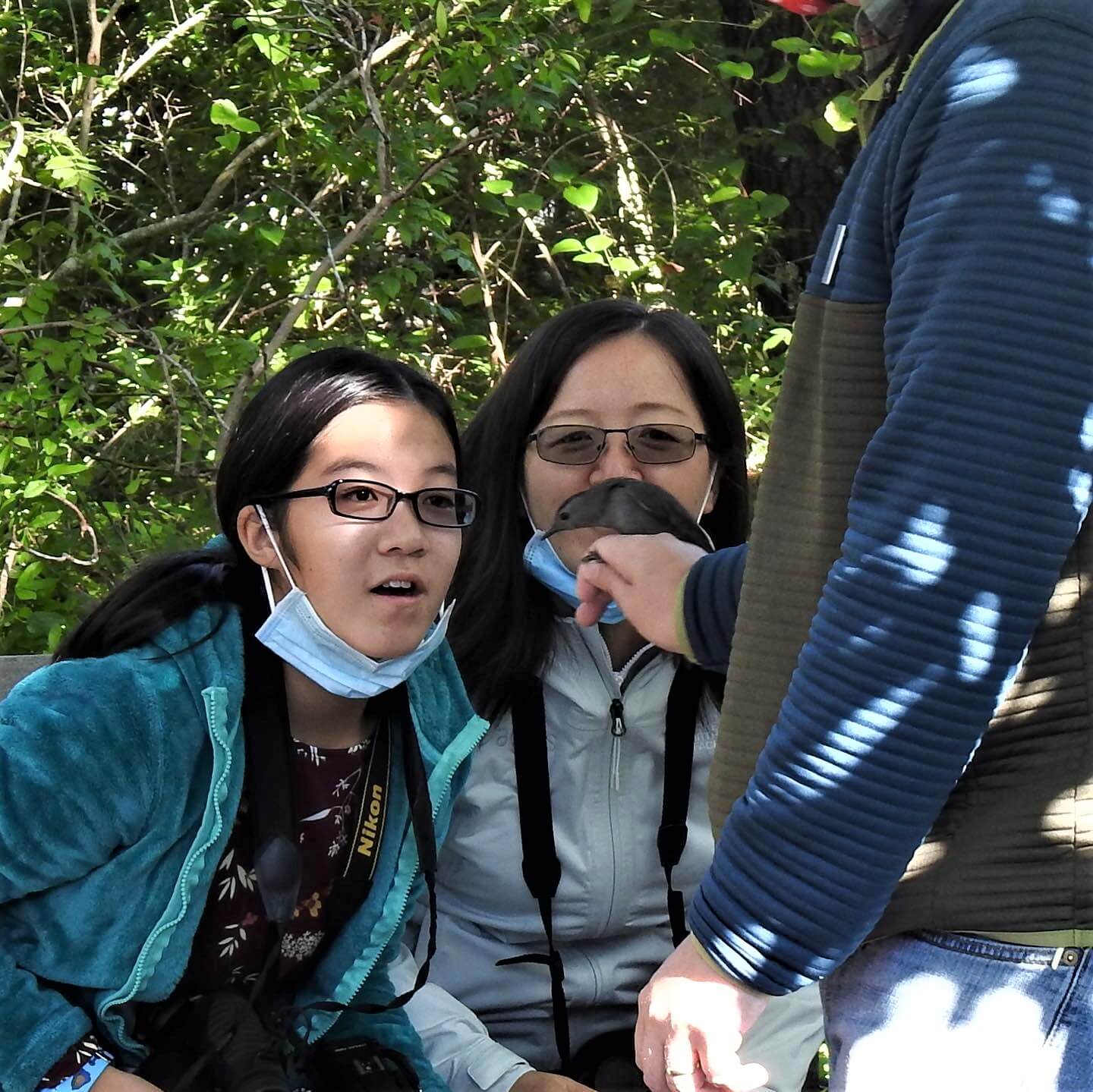
“I had a great time at Hog Island,” Jocelyn says. “I learned so much about not just birds but also the plants and other animals on and around Hog Island! I had so many unforgettable experiences including getting to see a banding demonstration which gave us close up one-of-a-kind views of birds often flitting about in the treetops. Banding has been something I have wanted to do for a long time. Visiting Eastern Egg Rock was truly amazing, an experience you can have nowhere else. We were able to get great views of the nesting species on the island, especially the terns. I loved meeting the researchers who live on Egg Rock during the summer and learning about the research they conduct on the island. It was nice to go birding with other teens who also love birds. Looking back on my trip I can’t help but smile.”

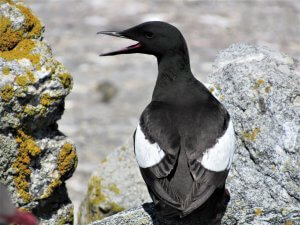
“I thoroughly enjoyed my week on Hog Island,” says Johnny, “from learning about tracking bird migration, to landing on Eastern Egg Rock and seeing the large colony of nesting seabirds, to meeting the researchers who work on Eastern Egg Rock. It was so amazing to have the chance to meet highly influential researchers and conservationists, and to see the successfully restored puffin colony on Eastern Egg Rock up close. I loved spending time with birders my own age with whom I could relate. The camp was not limited to serious birding all the time; now and then people would do a ‘lifer dance’ for life birds. . .I learned the whole story of how Eastern Egg Rock’s puffin colony was reconstructed, how the Merlin sound ID app was created, and how ‘sketch biology’ works. I am immensely thankful for this incredible opportunity that the board of the Brookline Bird Club and the generous donors of the Bill Drummond Scholarship Fund made possible for me.”

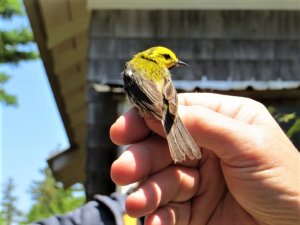
Warbler being banded
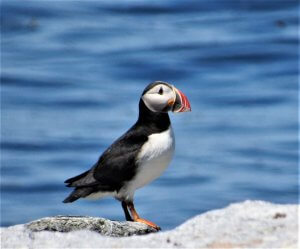
Atlantic Puffin

Update from Hog Island Scholarship Recipients2024-02-14T18:52:21-05:00

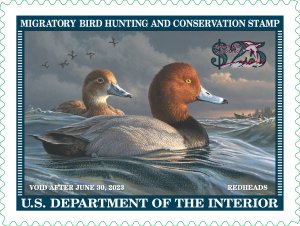
Buy a Duck Stamp to Support National Wildlife Refuges

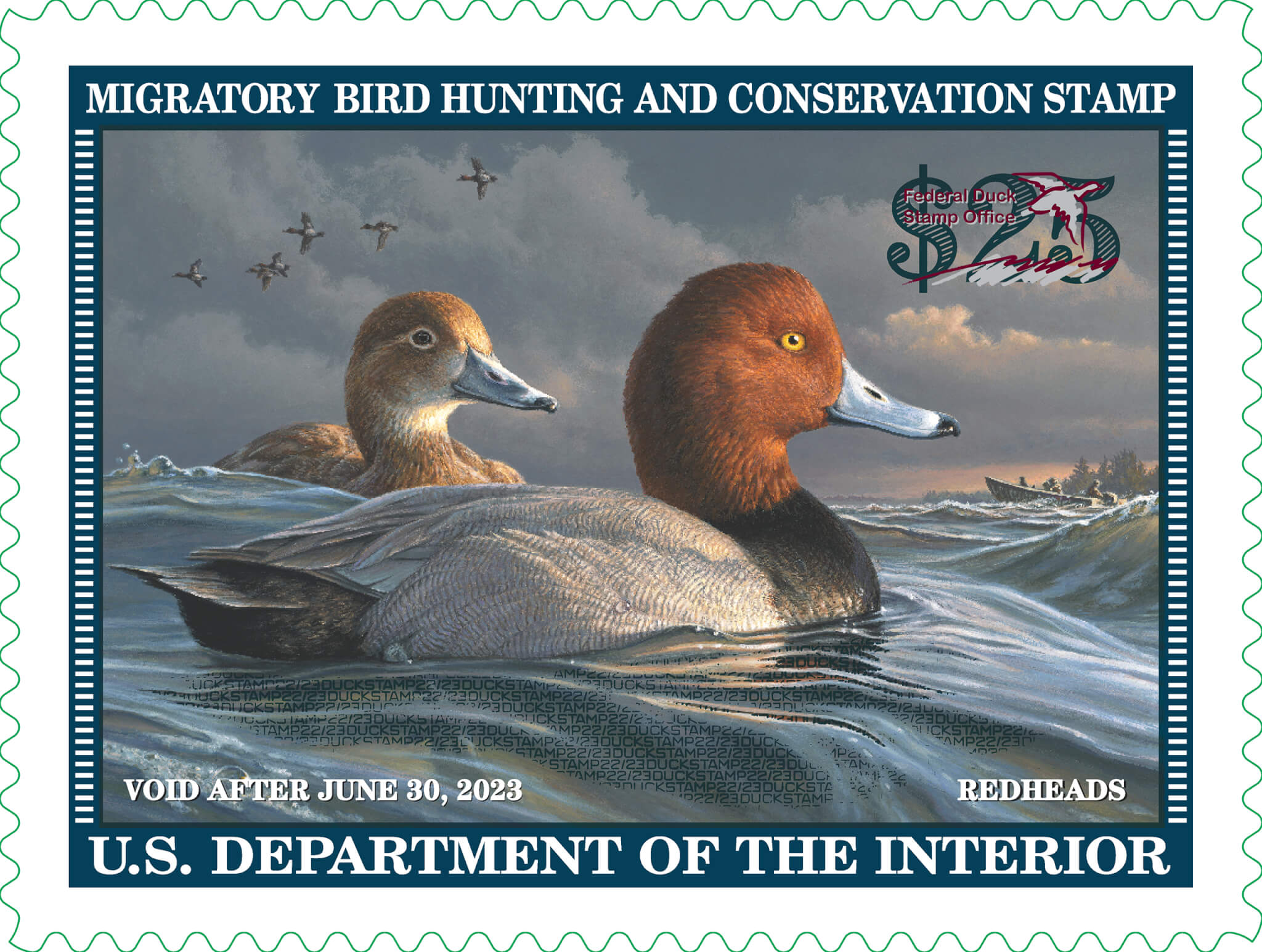
As birders, we treasure our birding visits to national wildlife refuges locally and nationally. Of the 32 refuges in New England, 11 are in Massachusetts, including Parker River, Monomoy, Great Meadows, Oxbow, and Assabet River. By purchasing a Federal Migratory Bird Hunting and Conservation Stamp each year, often referred to as the Duck Stamp, we contribute to the purchase or leasing of newly protected lands.

Since 1934, sales of Duck Stamps have generated more than $1.1 billion to protect over 6 million acres of wetlands habitat on national wildlife refutes around the nation.  For every dollar you spend on Duck Stamps, ninety-eight cents goes directly to protecting vital wetland habitat as part of the National Wildlife Refuge System.

Entrance to any national wildlife refuge in the United States is FREE when you show your Stamp.

Purchase the current Stamp which is valid from July 1, 2022 – June 30, 2023.

Click here for more information about this important program and how to purchase a stamp.

Duck stamp
Buy a Duck Stamp to Support National Wildlife Refuges2024-02-14T18:52:21-05:00

The Brookline Bird Club has launched our own Instagram account!

Instagram, a popular social media application, allows users and viewers to share photos and short messages with viewers. We welcome members to join in by submitting your photos! Our account is monitored by Board members and skilled student birder Mark Price. We adhere to ethical guidelines, and will not accept photos of owls or other sensitive species. As our Instagram collection grows, we will employ hashtags to keep our photos organized. #gobirding!

Our Instagram account is @the_brookline_bird_club

Please send your photos with captions, or any questions to either Leslie Kramer: lkramer@brooklinebirdclub.org or Mark Price: markjprice2005@gmail.com. Thanks to Mark Price and Leslie Kramer for spearheading this effort.

The Brookline Bird Club has launched our own Instagram account!2024-02-14T18:52:33-05:00

Book Fund Donation to Massachusetts Young Birders Club

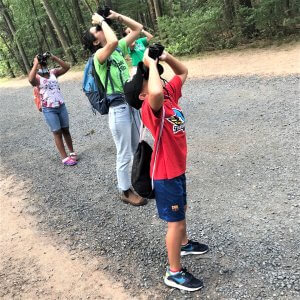
The BBC, through its Conservation and Education Committee, is proud to announce a donation of binoculars and bird guides to the Massachusetts Young Birders Club. The mission of the MYBC is to expand and empower a diverse, sustainable community of young birders in Massachusetts and to guide youth in building their understanding and love of birds and nature. The MYBC especially strives to provide resources, such as bird guides and loaner binoculars, to young birders who do not have the means to purchase their own birding equipment. The BBC supports this effort, and we look forward to future collaborations between our club and the MYBC. In the past year the BBC Book Fund has also made donations to the Philbrook School in Roslindale and to Kestrel Educational Adventures for a school program in Salem. The BBC founders believed they had a “sacred obligation” to nurture young birders, and the BBC Board remains committed to carry out this mission.

The BBC School Fund is supported through the generous donations of club members. To donate, you can designate an amount on the “Book Fund” line on the back page of the club bulletin when you renew your membership or, especially for life members, at any other time you might wish to donate. You can donate online by clicking the Donate link on the BBC home page and entering an amount in the box for “School Book Fund.”

Book Fund Donation to Massachusetts Young Birders Club2024-02-14T18:53:15-05:00

2022 BBC Scholarship Recipients

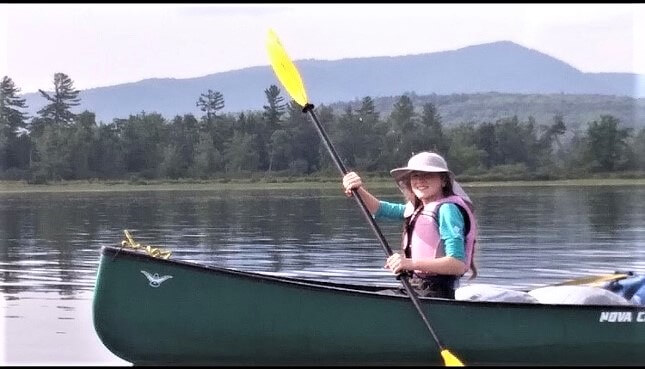
Jocelyn Pyne

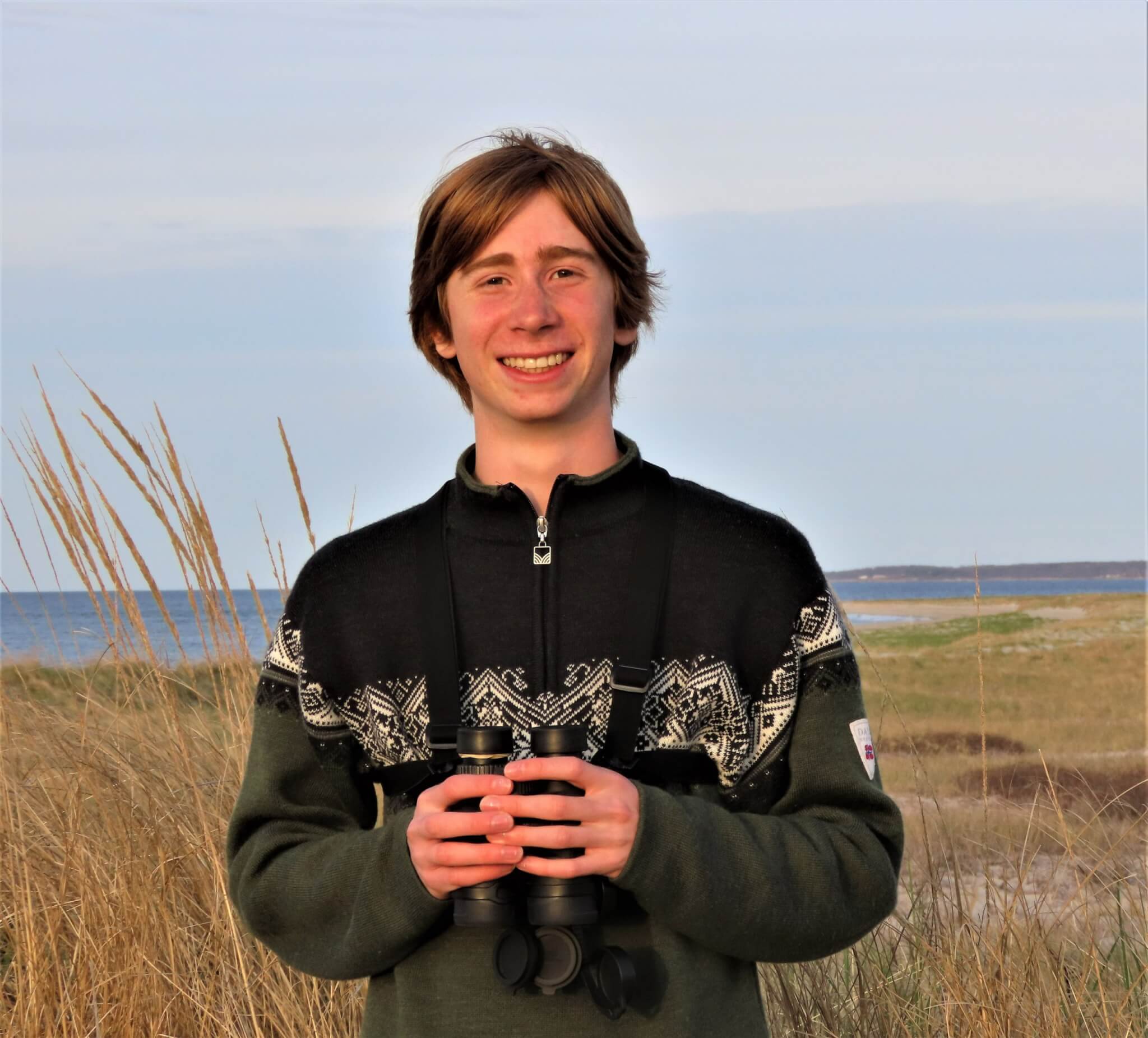
Johnny Owens

The BBC is pleased to announce that this year’s Bill Drummond Young Birder Scholarships have been awarded to Johnny Owens of Essex, MA and Jocelyn Pyne of Harvard, MA. These scholarships, instituted to nurture interest in bird study and conservation among young birders, cover the full cost ($1690) of the Coastal Maine Bird Studies for Teens program at National Audubon’s Hog Island camp in June 2022. The Scholarship Evaluation Committee was impressed by the high quality of all the applications we received, and we thank all the applicants for their interest and effort. Johnny has volunteered for the past six years at Mass Audubon’s Joppa Flats center as a bird bander, Coastal Education intern, teen naturalist trainer, and co-leader of the Joppa Flats youth Bird-a-thon team. Jocelyn takes particular pleasure in sketching birds and collecting field data, and she’s looking forward to the opportunity to experience hands-on bird science and National Audubon’s seabird restoration work at Hog Island. Congratulations, Johnny and Jocelyn!

These scholarships are supported through the generous donations of club members. To donate, you can designate an amount on the “BBC Bill Drummond Young Birder Scholarship” line on the back page of the club bulletin when you renew your membership or, especially for life members, at any other time you might wish to donate. You can donate online by clicking the Donate link on the BBC home page and entering an amount in the box for “Bill Drummond Young Birder Scholarship.”

2022 BBC Scholarship Recipients2024-02-14T18:53:16-05:00
Go to Top