TIME TO RENEW YOUR BBC MEMBERSHIP!

It’s time to renew your BBC membership for 2017!

The Brookline Bird Club membership runs on a calendar year basis.  By sending in your renewal now, you help us save printing and mailing costs for renewal cards.  You save trees, too!

Please send in your renewals by using the form in the back of the Blue Book or by printing out the Membership Form located on our web site:  www.brooklinebirdclub.org.  You may also use the Paypal option by clicking the “Join” tab on our website.  We are happy to welcome new members as well.

If you no longer wish to be a member, please let us know and we will remove you from the active list so that you will not get a renewal card or further emails.

Reminder: we offer a family membership category. Family membership entitles all members of a household to member benefits, including discounted costs for pelagic trips and workshops. It costs $22 per year and comes with one family copy of the club bulletin.  Individual membership is still $15.

If you have moved, the Blue Book does not get forwarded when using Bulk Mail, so please let us know your new address.


Thank you for your support of the Brookline Bird Club!

Judy Hepburn, BBC Membership Secretary
rosyfinchjrh@gmail.com

TIME TO RENEW YOUR BBC MEMBERSHIP!2024-02-14T19:00:19-05:00

2015 STATISTICAL AND YEAR-END REPORT

By Robert H. Stymeist, Statistician

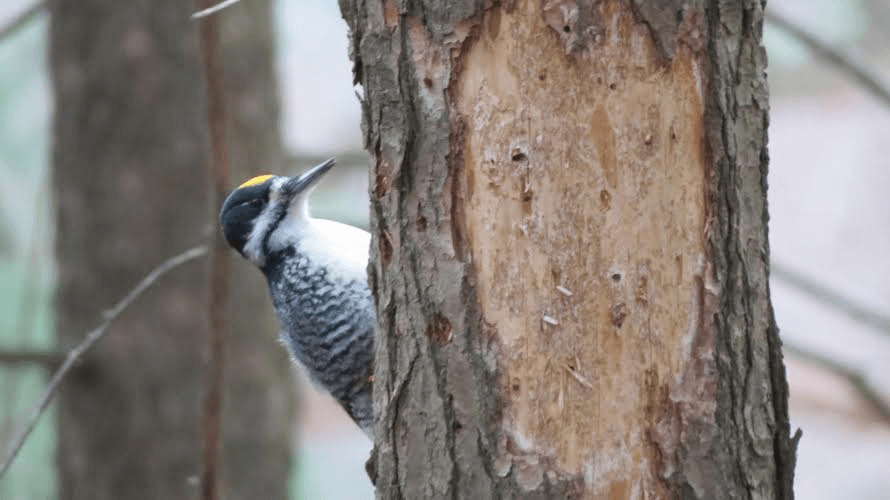
During 2015, the Brookline Bird Club listed 295 species of birds on 182 reported trips, six species less than last year.  A total of 257 trips were scheduled, just two less than last year; however, this year 27 trips were cancelled by weather, most of them during late January, most of February and even into March due to the four big snowstorms that gave Boston and most of the state the distinction of the snowiest winter on record. There were 48 trips that unfortunately went unreported. In Massachusetts the Club listed a total of 280 species. The additional 15 birds seen out of state were: Spruce Grouse, Gray Jay, and Boreal Chickadee from both Vermont and Maine, Black-backed Woodpecker from Vermont, and Arctic and Black tern, Atlantic Puffin, Nelson’s and Seaside sparrows from Maine. In New Hampshire, Bob Petersen extended his Newburyport trip to Seabrook for the Gyrfalcon, Laura de la Flor logged in Bicknell’s Thrush on her summer solstice trip, and on Steve Mirick’s coastal New Hampshire trip on November 1 they added four species not seen in Massachusetts: Redhead, Cattle Egret, Lesser Black-backed Gull and Orange-crowned Warbler! Overall 2015 was about average in terms of the number of trips scheduled and a little less in the number of birds reported. This year the Club scheduled 46 all day, 182 morning, 20 afternoon or evening, five pelagic, and four weekend trips.


One new species, a White-tailed Tropicbird, was added to the overall Brookline Bird Club list of birds. Imagine two species of tropicbirds on the August 22 Extreme Pelagic! The Red-billed Tropicbird was the second record for the Club, the first just last August from Hydrographer Canyon. The Prairie Falcon found on New Year’s Day on Plum Island would have been the first state record but was rejected when several photographs showed the bird had falconer’s jesses attached to one leg. Nonetheless birders on the trip were pretty excited, getting exceptional views.


Some of the more unusual species noted in 2015 included Greater White-fronted Goose in Ipswich, an American Avocet, a Sabine’s Gull at Race Point, an Ash-throated Flycatcher from Rockport, a Townsend’s Solitaire and a Summer Tanager from Plum Island. The extreme pelagic trips added, besides the the tropicbirds, the only sightings of Black-capped Petrel, Audubon’s Shearwater, White-faced, Leach’s and Band-rumped Storm-Petrels, Red-necked Phalarope, Long-tailed Jaeger, South Polar Skua, and Bridled Tern.


Missing from the Club list of routinely seen species in 2015 were Canvasback, Barrow’s Goldeneye, Little Blue Heron, Black Vulture, Sora Rail, Marbled Godwit, Northern Shrike, and Lapland Longspur. Five other species that are often found on Massachusetts trips—Redhead, Cattle Egret, Lesser-black-backed Gull, Orange-crowned Warbler and Seaside Sparrow—were noted from New Hampshire.


The Club visited Essex County most often, with a total of 84 trips (48 to Newburyport and Plum Island area, 24 to Cape Ann, as well trips to Marblehead Neck Wildlife Sanctuary, three trips to Ipswich, and three to Nahant, and visits to Boxford, Manchester, and Topsfield). The trips in Essex County accounted for 219 species, which is 78% of all the birds reported on Club trips. Mount Auburn Cemetery in Cambridge was second with 43 trips totaling 109 species, 24 of them warblers including a very cooperative Yellow-breasted Chat. There were 27 trips scheduled in the Metropolitan Boston area. Twenty-eight trips to Cape Cod and the South Shore recorded 185 species. There were 14 trips in the Sudbury River Valley area, which includes Great Meadows NWR, Oxbow NWR, and the Assabet NWR and 14 trips to areas in both central and western Massachusetts. There were five pelagic trips scheduled for a combined total of 37 species including twelve species that were not found anywhere else but on the high seas.


Out-of-state trips included a weekend trip to the Machias area and a weekend trip criss-crossing the Northeast Kingdom of Vermont. Ida Giriunas led her 32nd annual Club trip to the Machias area, which includes the famous Machias Seal Island, where an estimated 5,000 Atlantic Puffins are breeding. This island is fantastic; no matter where you stand thousands of birds surround you. In addition to the puffins the group tallied 1,500 Common Murre, almost 5,000 Razorbills, and 300 Arctic Terns. Other highlights of the Maine weekend were 24 Spruce Grouse, though most of those were tennis ball–sized young, several Boreal Chickadees, a Gray Jay, and ten Black Terns. A mid-June trip to the Northeast Kingdom of Vermont logged in 109 species which included the “grand slam” of boreal birds: Spruce Grouse, Black-backed Woodpecker, Gray Jay, and Boreal Chickadee. In addition to 19 species of warblers, the group enjoyed pumping American Bitterns, winnowing Wilson’s Snipe, Olive-sided and Yellow-bellied Flycatchers and a chorus of Veery, Hermit, Swainson’s and Wood thrushes.


Highlights from the 2015 Brookline Bird Club Year


Laura de la Flor and Mark Burns as always opened up 2015 by leading their 19th annual New Year’s Day birding trip in the Newburyport area. Twenty-eight members enjoyed a mild of birding with temperatures in the upper 40s. During the customary welcoming toast of sparkling apple cider a hot line call came in that a probable Prairie Falcon was on the Refuge. Needless to say the trip bolted onto Plum Island. Everyone had great looks as the bird made several close approaches. Unfortunately, several photographs showed the bird had falconer’s jesses attached to one leg and was most likely an escaped bird. The group tallied 58 species including the only Greater White-fronted Goose seen during the year.


The weather turned nasty with the first bitter cold as early as January 8 when the temperature hit minus 1 in Boston, then the first of four major snow storms arrived dumping a record 108.6 inches of snow, surpassing the previous record of 107.6 inches set in 1995–96. A total of 21 trips during January-March were cancelled because of weather


The 2015 winter meeting of the Club was on Friday, February 27, at the John Glenn Middle School in Bedford. Mark Lynch and Sheila Carroll presented a comprehensive tour of birding as well as all other aspects of nature of Central Massachusetts and the Blackstone Valley, which continues into Rhode Island. The spring meeting at the Harvard Museum of Natural History on April 24 featured Massachusetts resident Dorian Anderson, who left a post-doctoral position at Mass General Hospital to pursue a yearlong biking and birding adventure. During 2014 he biked nearly 18,000 miles around the United States and recorded an amazing 617 species. Dorian was very entertaining as he relived this unique birding adventure. The guest speaker at the fall lecture meeting at Harvard on October 16 was Tom French, the assistant director of the Mass Division of Fisheries and Wildlife, who presented an informative history of the division’s work and his involvement with the Endangered Species Program.


Spring trips to Mt. Auburn Cemetery in Cambridge recorded 109 species including 24 species of warblers wwith great looks at several Cape May and a very cooperative Yellow-breasted Chat. Glenn d’Entremont led four Thursday morning trips to Moose Hill in Sharon and tallied 55 species and among the 14 species of warblers was a very cooperative Cape May on May 12. In June the Club focus is on breeding birds, and on June 6 Linda Ferraresso organized a trip to Westover Air Force Base in Chicopee to see nesting grassland species. The Club had great looks at 10 Upland Sandpipers, four Grasshopper Sparrows and over 15 Eastern Meadowlarks; all of these species are of critical concern in the Northeast. Mount Greylock is visited every year by the Club, and this year the Club tallied 82 Red-eyed Vireos and 32 Ovenbirds in those Berkshire Hills.


Summer trips are highlighted by morning and evening trips to Plum Island searching for early migrating shorebirds and flocks of herons flying to roost. On August 2 the Club recorded the only American Avocet of the year, and other noteworthy shorebirds found on the refuge included a Baird’s, Buff-breasted and Western sandpipers on August 29.


Two of the five scheduled pelagic trips had to be cancelled because of weather. The three trips that ran recorded 37 species; the Extreme Pelagic trips are the most exciting. The July 18 trip recorded nearly 200 Cory’s Shearwaters including at least two Scopoli’s type. A total of 196 Leach’s Storm-Petrels were tallied (the highest count ever on these trips) and two well-photographed Band-rumped Storm-Petrels. The marine mammal show was also fantastic, with three species of dolphin and close encounters with a Fin Whale. The August 22–23 Extreme Pelagic was an outstanding success. The Club recorded its first-ever White-tailed Tropicbird, with one on August 22 and three on August 23; a Red-billed Tropicbird was also seen. Both tropicbirds gave everyone on board fantastic views. A record number of at least 16 White-faced and as many as 17 Band-rumped Storm-Petrels were tallied.


The fall migration started off with a two-day Cape Cod Blitz hitting the hot spots on the outer Cape from Wellfleet to Provincetown with a total of 117 species. Highlights included incredible numbers of shearwaters off Race Point; among them we found an adult Little Gull and an adult Sabine’s Gull. The passerine migration was lackluster and we found no Philadelphia Vireos, the first time this species was missed on this weekend. For the second year, Karsten Hartel led a combined Brookline and Menotomy Bird Club walk every Wednesday during September and October to Danehy Park in Cambridge. The combined total of the eight walks was 61 species including 11 species of warblers, a Philadelphia Vireo, and a Clay-colored Sparrow. October is the height of the sparrow migration, and the Club visits community gardens in Wayland and Newton as wells as the Cumberland Farms fields and Bolton Flats. A combined Owl Prowl with the South Shore Bird Club in mid-October logged in five Screech and four Barred Owls in the south shore towns of Halifax and Middleboro.


November and December found our members visiting Cape Ann six times and the Plum Island/Newburyport area six times. On November 21 Bill Drummond led seven members on a memorable trip around Cape Ann highlighted by re-finding the Townsend’s Solitaire at Halibut Point State Park that was first noted on November 12. On December 12 Bob Peterson found the Club’s only Common Murre of the year and added Ash-throated Flycatcher for the last new bird, the 295th bird of 2015.


At the end of the year the Club suspends scheduled trips so that our members can participate in the Christmas Bird Counts (CBC). There are 34 count circles in Massachusetts .


A total of 62 leaders guided our members around the state throughout the year. All of our dedicated leaders deserve a special thank-you including several leaders that deserve recognition for not only many years of leading but the number of trips each year they lead. Ida Giriunas, the energizer bunny that keeps going and going, led a total of 24 trips, including organizing the extreme pelagic trips that have put the Brookline Bird Club on the map as a premier destination for pelagic birding!  Glenn d’Entremont led 17 trips, all south of Boston and many of which were co-sponsored with the South Shore Bird Club. Jonathan Center and Eddie Giles each led 11 trips, and another eight dedicated leaders accounted for eight or more trips each.


The biggest trip list this year was Glenn d’Entremont’s South Shore Century Run, recording 113 species on May 9. This trip, entirely within Plymouth County, recorded the Club’s only Upland Sandpiper and Worm-eating Warbler seen in Massachusetts in 2015. Other highlights included a late Red-necked Grebe, three Barred Owls, two Vesper Sparrows, and a Pine Siskin.

In the following table you can see which trip in each month recorded the most species; this may help in planning

for a big year of birding.


January 1                     Essex County              58 species        Laura de la Flor, leader

February                      n/a; ten trips cancelled because of record snowstorms

March                          n/a; seven trips cancelled due to several snowstorms

April 27                                   Nahant to Marblehead 55 species        Linda Pivacek, leader

May 9                          So. Shore Century Run            113 species      Glenn d’Entremont, leader

June 20                       Mt. Greylock area        68 species        Glenn d’Entremont, leader

July 3                           Quabbin area               63 species        Glenn d’Entremont, leader

August 15                    Plum Island                  63 species        Sabrina Hepburn, leader

September 20               P’town-Truro               99 species        Bob Stymeist, leader

October 3                     Outer Cape Cod                       62 species        Glenn d’Entremont, leader

November 28               Outer Cape Cod                       73 species        Glenn d’Entremont, leader

December 13               Plum Island                  40 species        Zack Weber, leader

The Club recorded nearly 75% of all the birds that were noted during 2015—pretty impressive! A total of at least 373 species were observed and reported by birders across the state during 2015.

Weather-wise 2015 was the warmest year world-wide on record, surpassing that record just last year!


2015 STATISTICAL AND YEAR-END REPORT2024-02-14T19:01:00-05:00

Rusty Blackbird Blitz – Surveying Rusty Blackbirds in the Lynnfield Marsh IBA

Arthur C. Bent (in Life Histories of North American Blackbirds, Orioles, Tanagers and Allies, (New York: Dover, 1965), 294) described flocks of Rusty Blackbirds stretching as far as the eye could see that once migrated through Lynnfield, MA.


When the flight is well underway it is sometimes quite spectacular. Wendell Taber tells me that, at Lynnfield, Mass., on October 10, 1937, he saw a migrating flock that extended for at least a mile, or as far as he could see; the birds were flying southward on a broad front extending from east to west; the wave was from 20 to 40 birds deep from vanguard to rearguard, and only one bird deep vertically.


Rusty Blackbird populations have declined by 85-95% since the mid-1900’s http://rustyblackbird.org/species-information/conservation-issues/, but Lynnfield is still on a Rusty Blackbird migration route. Recent efforts by eBird and the International Rusty Blackbird Working Group to encourage local birders to look for Rusty Blackbirds  have documented a major stopover roost in the Lynnfield Marsh.  The Spring 2015 Survey Group organized by Constance Lapite (Beverly, MA) and Carol Foss (NH Audubon, International Rusty Blackbird Working Group) observed the largest number of migrating Rusty Blackbirds seen north of Pennsylvania and east of New York (ebird.org, see High Counts link from the Explore Data tab).

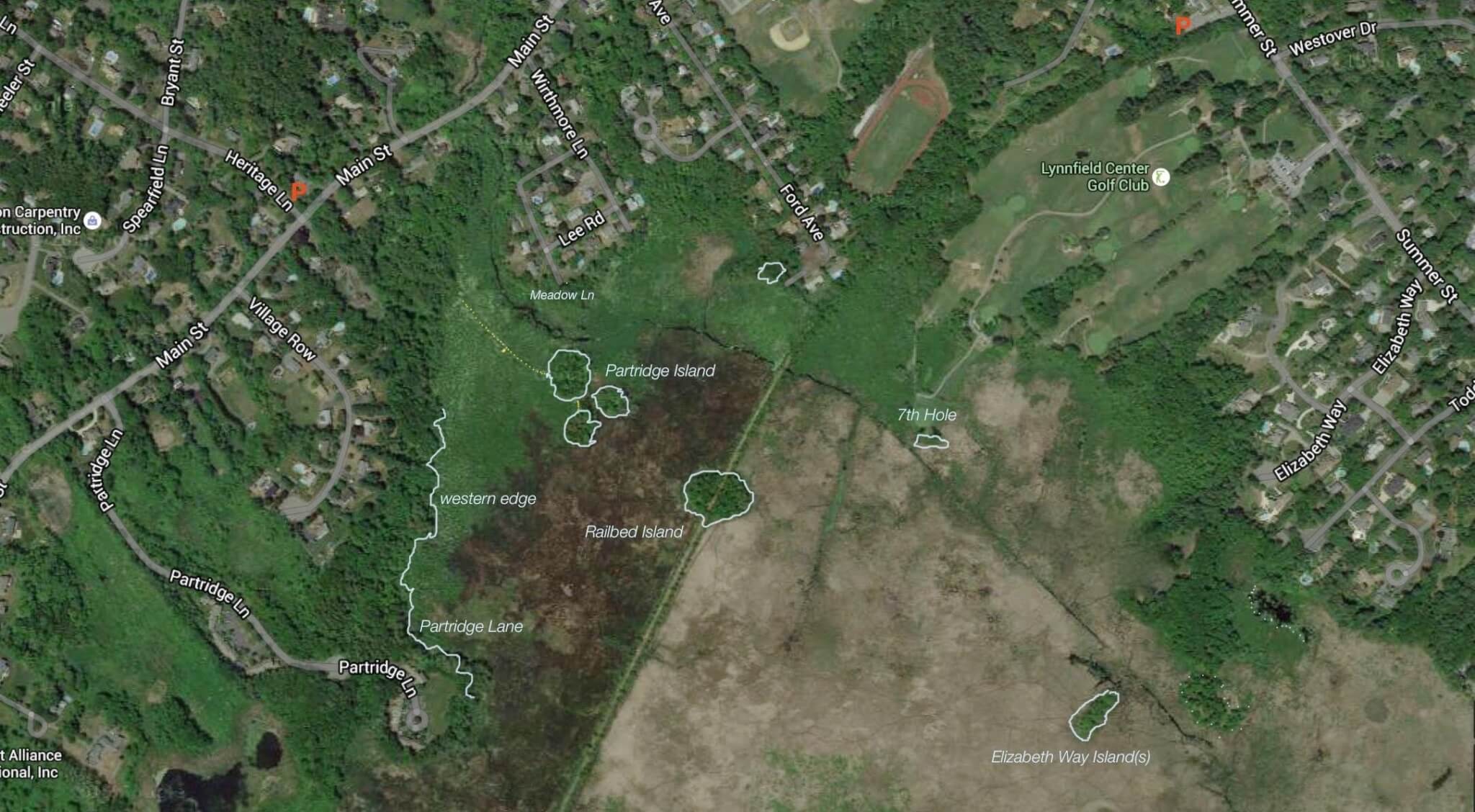
During the day, Rusty Blackbirds are opportunistic feeders, flipping over wet leaves and foraging in shallow wetlands both inside and outside the Lynnfield Marsh. In mid-April large flocks of Rusty Blackbirds forage north and northwest of the marsh, and the flight trajectory of blackbirds returning to the marsh passes close to the first boardwalk at Partridge Island (see map). The observation platform off of the first boardwalk offers good views of these incoming flocks.


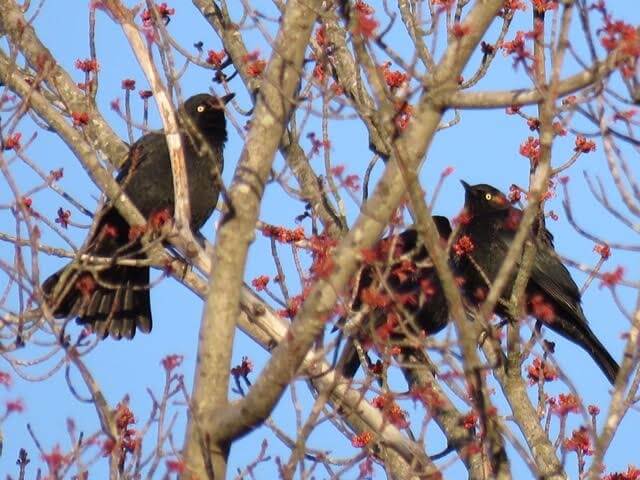
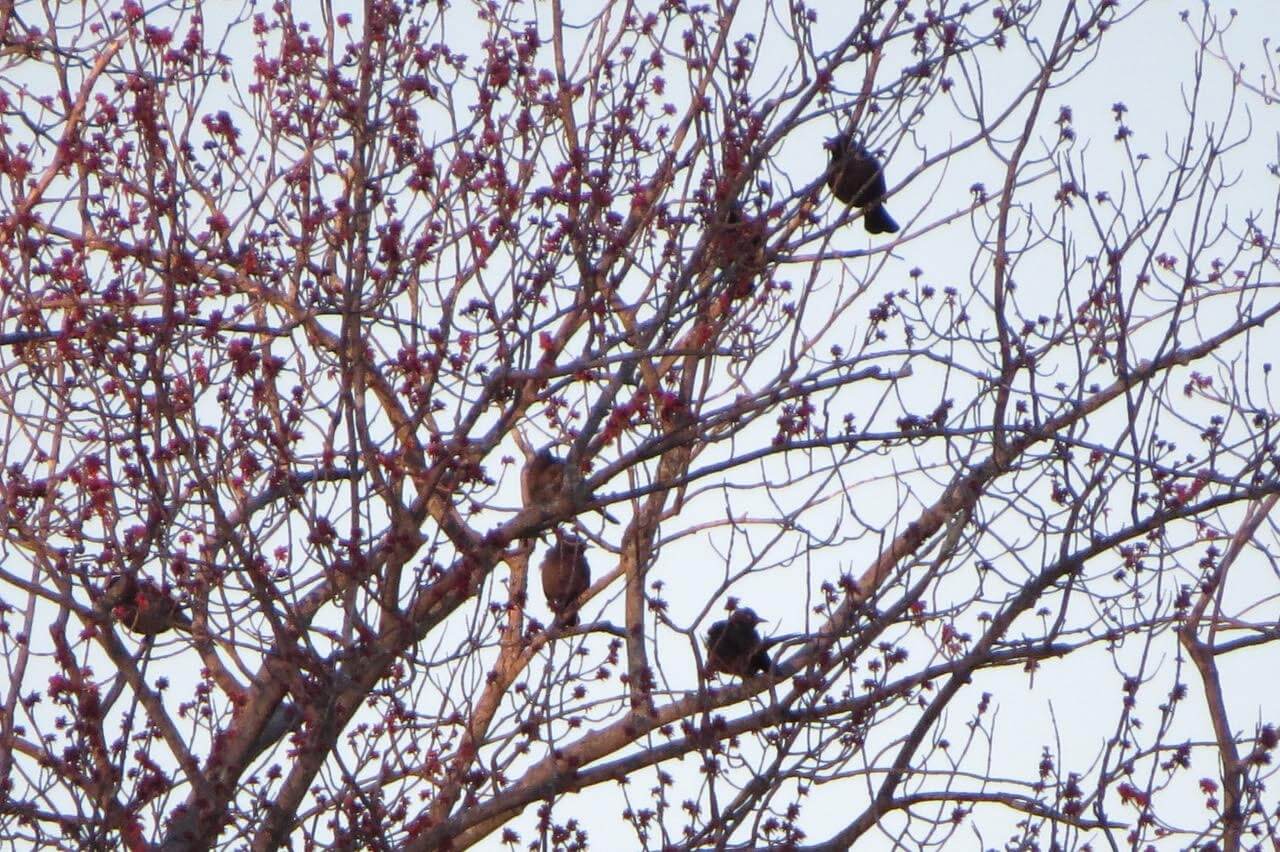
In the hour before sunset, Rusty Blackbirds assemble on trees surrounded by marsh (Partridge Island, Railbed Island, 7th Hole) or trees adjacent to the marsh (Meadow Ln and the western edge). They vocalize with “squiggle” and “kerglee” (or gurgles and creaks http://earbirding.com/blog/archives/4193 ) often with simultaneous wing and tail-spread displays, a collection of behaviors termed “staging to roost”. Actual roosting occurs close to sunset when blackbirds drop down into the marsh to roost at ground level.


On survey nights, our approach has been to count total incoming blackbirds as they fly by the first boardwalk at Partridge Island and confirm identification when they settle on nearby trees at Partridge and/or Railbed Island. The best opportunity for close views is from the second boardwalk at Partridge Island. However, luck and patience is needed for close viewing. Compared to other blackbirds, Rusty Blackbirds flush easily.  Noise or movement may prevent incoming blackbirds from settling on Partridge Island or flush them from Railbed Island to the eastern edge of the marsh.


With stationary observers noting location and time of arrival at both Partridge and Railbed Island, we are learning more about the locations preferred by Rusty Blackbirds. Rusty Blackbirds are more likely to be seen at Railbed Island than at Partridge Island. Rusties that initially stage to roost at Partridge Island fly to Railbed Island trees (or to trees southeast of the railbed) approximately ten to twenty minutes before sunset. They briefly resume staging to roost before small groups begin flying from the trees and settling into the marsh for the night.


2016 Lynnfield Marsh IBA Survey Team


Melissa Sovay, Chris Martone, Pamela Low and Linda Ireland recently joined forces with Phil Brown and Mary Margaret Halsey to start the Spring 2016 Survey. Rusty Blackbird numbers have remained relatively low through the first week of April http://ebird.org/ebird/hotspot/L207382/activity, however we expect to see hundreds of Rusty Blackbirds arriving next week (April 12-19) during peak migration.


The 2016 Lynnfield Marsh IBA Survey Team is looking for volunteers to monitor Rusty Blackbirds in the Lynnfield Marsh throughout April and begin breeding bird surveys for marsh-nesting birds in May. Since we try to record time and location with our counts, it is helpful to synchronize your watch and camera to official US time http://time.gov . Observers should plan to be in place at least an hour before sunset. Those interested in joining the Spring 2016 Survey are invited to contact Constance Lapite (shaka_pete@yahoo.com or 978.621.8641). For more information on how to document your Rusty Blackbird sighting in eBird using the Rusty Blackbird Spring Migration Blitz protocol ( Habitat; Vocalizations; Behavior) contact Linda Ireland (connecttonature@icloud.com).

Submitted by BBC member Linda Ireland (Melrose, MA) on April 10, 2016.


Rusty Blackbird Blitz – Surveying Rusty Blackbirds in the Lynnfield Marsh IBA2024-02-14T19:01:23-05:00

Scholarship Report

The BBC’s first scholarship winner, Aidan Pavao, recently returned from the Hog Island summer camp and sent along a brief report. Check out the scholarship page for more information about the program and how to contribute and expect to hear more from Aidan in the future.

My experience at Hog Island was undoubtedly a highlight of my summer. I had the opportunity and pleasure to meet some amazing people and pioneering ornithologists. The program taught me loads about research and studies on birds, including topics such as nesting programs, banding, audio and video recording, and study skin preparations. It brought me much closer than I expected to birds: I envisioned getting good looks at puffins, but my expectations were shattered when I found myself just feet from them in an observation blind. But far more important than getting good looks at birds was the immersive experience in which I lived with people who dedicate their whole lives to birds. Whether I gained knowledge from formal presentations or from conversation at the dinner table, the stories that these people offered were worth the entire week on their own.
Defending the Nest


Some of my pictures are posted here. I will try to go through them again and get some more uploaded soon.

Scholarship Report2024-02-14T19:01:28-05:00

Tips for inspiring Young Birders

The Brookline Bird Club has a long history of its experienced birder members encouraging and supporting rising young birders, and, for decades, has been scheduling trips targeted to children and families. But how do you give youngsters that experience that makes them birders for life? And once they’ve got the spark, how do you keep supporting their interest? The following are tips from BBC trip leader and educator Dave Hursh on how to inspire and lead trips for young birders:

  1. Get the word out! Once they’re on a bird walk, getting kids excited about birding is the easy part. But many families who would love to participate just don’t know about the resources available to them. Let your friends and coworkers with children know about the Brookline Bird Club, and encourage them to give it a try. Or, if you have school-aged children, consider spreading the word through a school newsletter or parent network.
  2. Know your audience. Different age groups will tend to respond more readily to different aspects of birding, so it’s important to try to determine early on the character of any particular group. The fantasy aspect of walking through the woods looking for birds may appeal more to younger children, while older kids may enjoy more the “collecting” aspect, such as completing a checklist, or the “cool factor” of finding a rarity.
  3. Scout a route. While it’s good advice to scout ahead for any trip, when leading a trip for kids, it’s especially critical to have some spots staked out where you know that birds will be found and visible. You don’t want a child’s first birding experience to come up empty. Keep the element of surprise – you don’t need to let on that you know what’s going to be there!
  4. Find a nest. Depending on the season, it’s good to locate a nest or two in advance. Hawk nests are wonderful, but even a robin’s nest is appealing. This kind of sighting allows kids – even very young kids who may not be proficient with binoculars – a guaranteed experience of observing something stationary and also a fascinating piece of nature.
  5. Bring a scope (if you can). New birders cannot always use their binoculars effectively. Having a scope ensures everyone can get an up close look at an oriole, phoebe, tanager, or any other relatively stationary bird. Plus, many kids have never have looked through a telescope before, and will think it’s cool.
  6. Learn names. Try to learn each of the kids’ names as quickly as possible and continue to address each kid by name throughout the day, especially the quieter and shy kids. Address each kid in turn every few minutes or so, to make each one feel involved and comfortable speaking.
  7. Provide a foundation. At the beginning, it can help to introduce some of the birds that might be seen on the trip, showing pictures from a print field guide or a phone, and highlighting the adventure of trying to track down these different birds. The approach to introducing the birds may be different depending on the age group and personalities of the kids present that day, and someone experienced working with kids can adapt to match the tone of the group.
  8. Let them find the bird. Dave describes a trip with 10- and 11-year-olds a few years ago where he told the kids if they found a Northern Waterthrush, which was “probably impossible,” then their parents would have to do their homework that night. After intentionally walking right by the spot where a waterthrush had been scouted, one of the kids spotted it, and they worked to identify it. On realizing what it was they all started jumping up and down screaming in excitement that they had found a waterthrush, and exclaiming that their parents were going to have to do their homework (the parents were there and had fun going along with it).
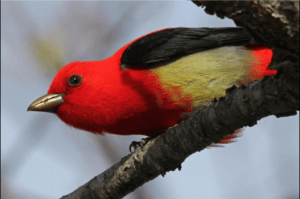
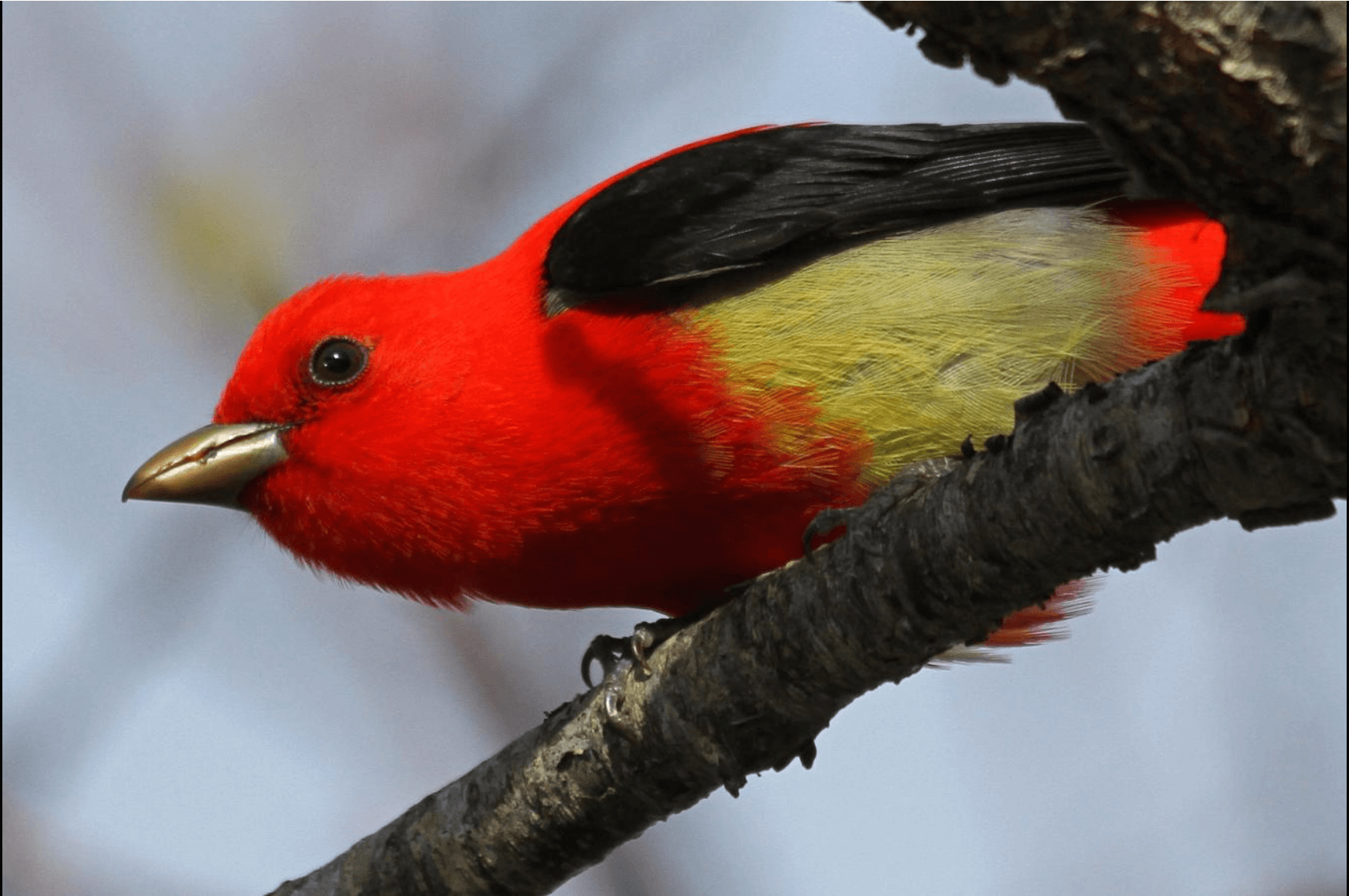
  9. Build a narrative. Especially with young kids, the goal is to create a memorable and an impactful experience. Dave will plan an “arc” for the walk, with a beginning (introducing the potential birds, dramatizing the adventure, highlighting the idea of the rarities), a middle (birding around different habitats, general exploration and pointing out songs, nests, or any other teachable moments), and an end (usually leading toward known spots, nests, or location of an aforementioned “rarity,”). The “rare” bird doesn’t have to be of hotline caliber, but can be a flashy or big bird (think scarlet tanager or great horned owl) that is something he’s explained the group will be lucky to find, creating the “big moment” of the trip. This appeals to the young child’s sense of fantasy and wonder, and creates a truly magical moment in finding the bird later on.
  10. See birds! Focus on birds that are easy to see, rather than birds that are frustrating. Even a very common birds like a robin or mallard can be a good opportunity, if the bird is showing well, rather than spending time on birds that are moving fast and are tough to see. In general, go for birds that are perched and out in the open, but in some cases if group members are old enough, they may be up for the challenge of finding a bird that is more difficult to see. It always is important to consider the character and abilities of the group.
  11. Stay positive. Sometimes birds may not cooperate and not everyone will see the bird. Stay positive and maybe switch to a funny topic, or start directly talking to the kid or kids who missed the bird about something else. Even something as simple as, “So what’s your favorite bird so far?” will keep the conversation going and get them thinking positively.
  12. End on a high note. It is great to try to end with something exciting, so if there is a hawk nest or rarity staked out, save that for last.

Leading trips for kids is about having fun, adapting your style to the group present, and feeling that you’re on an adventure with them. In short, you have to be a leader who remembers what it’s like to be a kid!

Tips for inspiring Young Birders2024-02-14T19:01:28-05:00
Go to Top